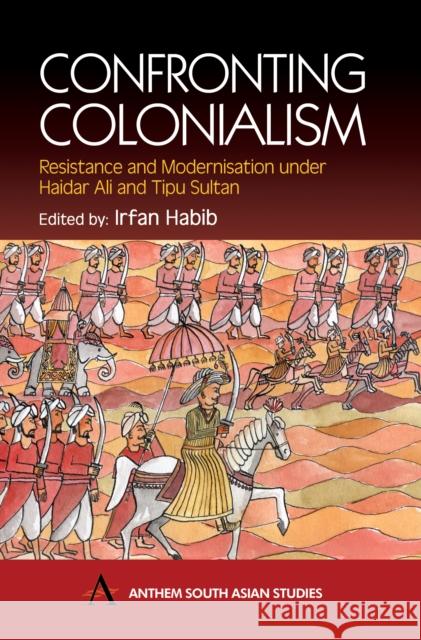
Edited and with an introduction by Professor Habib, 'Confronting Colonialism' is a series of essays commemorating the second centenary of Tipu's final battle against the British at Sriranagapatnam in 1799. The essays, devoted to the history of Mysore under Haider Ali and Tipu Sultan, underscore the need to defend the memory of two rulers, who were indomitable opponents of the colonial regime; they also emphasize the centrality of Haider Ali and Tipu Sultan in Indian nationalist historiography. This collection is of particular importance, especially in light of the recent tendency to...
Edited and with an introduction by Professor Habib, 'Confronting Colonialism' is a series of essays commemorating the second centenary of Tipu's fi...
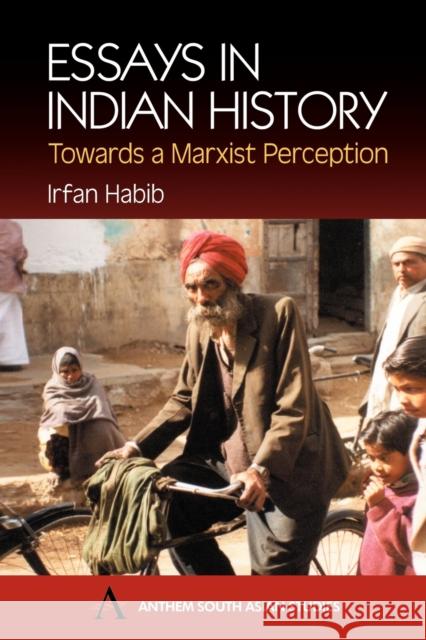
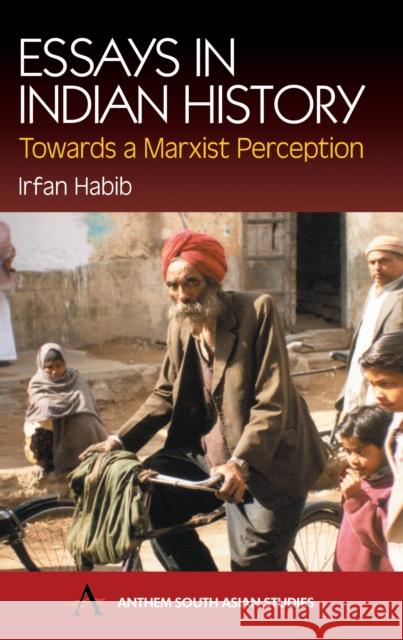
This volume brings together, for the first time, several of Professor Habib's essays, representing three decades of scholarship and providing an insightful interpretation of the main currents in Indian history from the standpoint of Marxist historiography. The collection examines the role played by the peasantry and caste in Indian history; explores the forms of class struggle and the stage of Indian economic development in Mughal India; analyses the impact of colonialism on the Indian economy; and chronicles the changes in Marx's perception of India. These painstakingly researched and...
This volume brings together, for the first time, several of Professor Habib's essays, representing three decades of scholarship and providing an in...
Edited and with an introduction by Professor Habib, 'Confronting Colonialism' is a series of essays commemorating the second centenary of Tipu's final battle against the British at Sriranagapatnam in 1799. The essays, devoted to the history of Mysore under Haider Ali and Tipu Sultan, underscore the need to defend the memory of two rulers, who were indomitable opponents of the colonial regime; they also emphasize the centrality of Haider Ali and Tipu Sultan in Indian nationalist historiography. This collection is of particular importance, especially in light of the recent tendency to...
Edited and with an introduction by Professor Habib, 'Confronting Colonialism' is a series of essays commemorating the second centenary of Tipu's fi...
This volume brings together, for the first time, several of Professor Habib's essays, representing three decades of scholarship and providing an insightful interpretation of the main currents in Indian history from the standpoint of Marxist historiography. The collection examines the role played by the peasantry and caste in Indian history; explores the forms of class struggle and the stage of Indian economic development in Mughal India; analyses the impact of colonialism on the Indian economy; and chronicles the changes in Marx's perception of India. These painstakingly researched and...
This volume brings together, for the first time, several of Professor Habib's essays, representing three decades of scholarship and providing an in...
Post-Mauryan India, 200 BC - AD 300: A Political and Economic History, as part of the People's History of India series, deals with the five hundred years that, in the political sphere, are associated with the dominance of Indo-Greeks, Sakas, Kushans, and Satavahanas. The volume also offers a detailed survey of the economy of the period, which saw important changes, in craft production as well as overseas trade. (The changes in the caste system and cultural life during this long period will be treated in a separate volume.) A special feature of the present volume is that the information...
Post-Mauryan India, 200 BC - AD 300: A Political and Economic History, as part of the People's History of India series, deals with the five hun...
State and Diplomacy under Tipu Sultan: Documents and Essays supplements Confronting Colonialism: Resistance and Modernization under Haidar Ali and Tipu Sultan, which was published in 1999 by the Indian History Congress as part of the Srirangapatnam bicentennial. The main object of this volume is not only to add fresh contributions to the papers collected in Confronting Colonialism, but also to present documentary evidence that has not received its due in studies on Haidar Ali and Tipu Sultan. It is hoped that the translations of texts, commentaries on documents, and...
State and Diplomacy under Tipu Sultan: Documents and Essays supplements Confronting Colonialism: Resistance and Modernization under Haidar A...
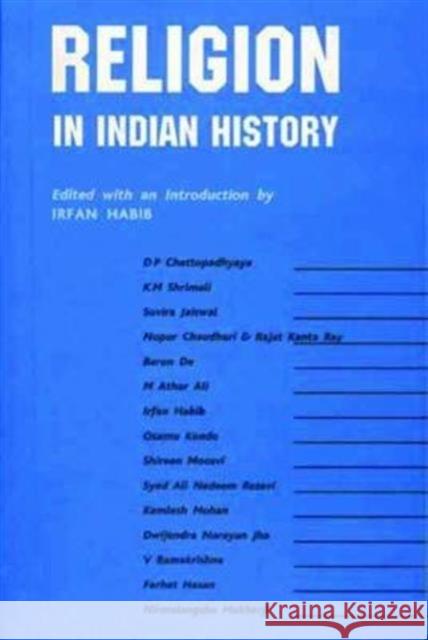
Religion has been, and is, an important element in Indian society and history. It is, however, rare for the subject to be discussed with the necessary degree of detachment. This volume was, therefore, planned with the object of providing a collection of studies that would deal with the role of religion in Indian history on the basis of a rigorous application of academic criteria. The results may surprise those who are more familiar with chauvinistic or apologetic interpretations. The editor's introduction and the fifteen chapters range over an extensive period, from prehistory to the present...
Religion has been, and is, an important element in Indian society and history. It is, however, rare for the subject to be discussed with the necessary...
Mauryan India, as part of the People's History of India series, covers the period from about 350 bc to about 185 bc, thereby encompassing the invasion of Alexander (327-325 bc) and the history of the Mauryan Empire (c.324-185 bc). There is a detailed account of the inscriptions of Ashoka and their significance. A picture of the economy, society and culture of the time follows, constructed out of the varied sources available, epigraphic, textual and archaeological. An effort is made throughout to keep the reader abreast of recent discoveries, and to share with him the reasons for all...
Mauryan India, as part of the People's History of India series, covers the period from about 350 bc to about 185 bc, thereby encompassing the invasion...
Increasing interest has been shown in recent decades in matters relating to ecology, especially under the influence of the debate on climate change. The scope of ecology is, of course, much wider than that of climate alone, and involves in addition not only human relation with all species of animals and plants but also those conditions of human societies (material and intellectual) that influence our responses to the opportunities and challenges posed by nature. It is with this wider sense in mind that the history of ecology has been treated in this volume. Extensive extracts from sources...
Increasing interest has been shown in recent decades in matters relating to ecology, especially under the influence of the debate on climate change. T...
The Vedic Age completes the first set of three monographs in the People's History of India series. It deals with the period c. 1500 to c. 700 bc, during which it sets the Rigveda and the subsequent Vedic corpus. It explores aspects of geography, migrations, technology, economy, society, religion, and philosophy. It draws on these texts to reconstruct the life of the ordinary people, with special attention paid to class as well as gender. In a separate chapter, the major regional cultures as revealed by archaeological evidence are carefully described. Much space is devoted to the...
The Vedic Age completes the first set of three monographs in the People's History of India series. It deals with the period c. 1500 to c. 700 b...