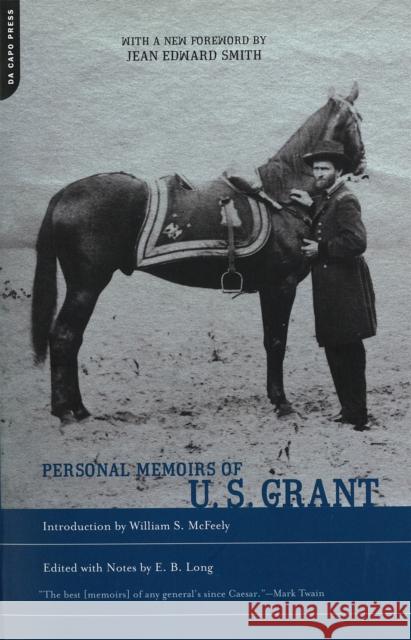
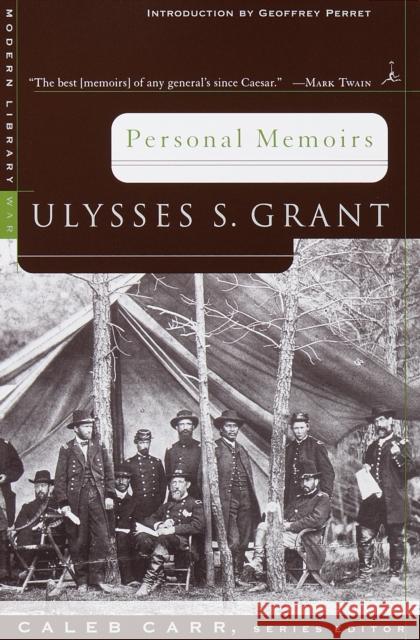
Among the autobiographies of generals and presidents, the Personal Memoirs of U.U. Grant ranks with the greatest. It is even more impressive in light of the circumstances in which it was created: Faced with terminal cancer, virtual bankruptcy, and a family he would leave without means of support, he took the advice of his publisher, mark Twain, and went to work. He completed the manuscript in eleven months-and died a week later, on July 23, 1885. Frank and unpretentious, Grant's memoirs tell the story of his boyhood in Ohio, his graduation from West Point, and the military campaigns in...
Among the autobiographies of generals and presidents, the Personal Memoirs of U.U. Grant ranks with the greatest. It is even more impressive in...
"One of the most unflinching studies of war in our literature." --William McFeeley
Among the autobiographies of great military figures, Ulysses S. Grant's is certainly one of the finest, and it is arguably the most notable literary achievement of any American president: a lucid, compelling, and brutally honest chronicle of triumph and failure. From his frontier boyhood to his heroics in battle to the grinding poverty from which the Civil War ironically "rescued" him, these memoirs are a mesmerizing, deeply moving account of a brilliant man, told with great courage as he reflects on the...
"One of the most unflinching studies of war in our literature." --William McFeeley
Among the autobiographies of great military figures, Ulysses S. ...
From the Western frontier to the battlefields of Vicksburg, Chattanooga, Franklin, Petersburg, and Richmond, Grant saw the war from the front lines and made the decisions that affected lives on a day-to-day basis. His writings provide a revealing look into the life of the commander in chief of the Union army as well as the seminal eyewitness account of the War between the States.
The Civil War Memoirs of Ulysses S. Grant is a popular abridgment of his two-volume Personal Memoirs, which he arranged to have published to provide for his family after his death. (It was a huge...
From the Western frontier to the battlefields of Vicksburg, Chattanooga, Franklin, Petersburg, and Richmond, Grant saw the war from the front lines...
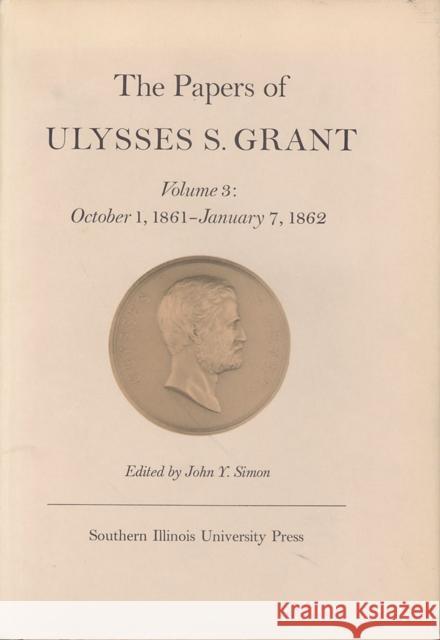
This comprehensive volume contains all known documents, both military and private, written by and to Grant during the first six months of the Civil War. Of unusual interest are his letters to his wife, father, and sister which provide the best insight into his complex character. Thirty of the letters to Julia have never before been published. The letters trace Grant's early career as a Civil War officer to his promotion to brigadier general. His assignments to command at Ironton and Jefferson City, Missouri, and Cairo, Illinois, are fully covered. At Cairo, Grant's area of...
This comprehensive volume contains all known documents, both military and private, written by and to Grant during the first six months of the Civil Wa...
Grant's career in the closing months of 1861 has been obscured by the success which came to him on the battlefield early in the following year, beginning with the victory at Fort Donelson in February 1862.Hence, Volume 3 of this definitive edition will be especially valuable to historians of the presidency as well as the Civil War for the clear, com-prehensive insight itprovides into Grant's attitudes and motives on the eve of his military victories. The fourteen-week period covered by this volume has been exhaustively researched, and includes a great store of...
Grant's career in the closing months of 1861 has been obscured by the success which came to him on the battlefield early in the following year, beginn...
Grant's trials and tribulations as a general after his victory at Fort Donelson is the scope of this 88-day period. The end of the Confederate power in western Kentucky and Ten-nessee began with the Union's capture of Fort Henry on February 6. After the victory at Fort Donelson on February 16, Union occupation of the region was only a matter of time. Tried and tested in the victory at Fort Henry, Grant seemed to be on his own as a general. Yet, his direct links with Halleck broken, and with unsatisfactory communications with Gen-eral George W. Cullum, Halleck's Chief of...
Grant's trials and tribulations as a general after his victory at Fort Donelson is the scope of this 88-day period. The end of t...
Covering the period of Shiloh to the prelude to Vicksburg, Volume 5 of this distinguished series converges on the many dramatic changes taking place in Grant's military career. The bloody two-day battle of Shiloh, the dominating event covered in this volume, shocked both North and South, caused public opinion to run against Grant, placed his career at a low point, and tested his will to remain in service. The period, therefore, is significant for the portrait emerging of Grant meeting a variety of problems ranging from grand strategy to mundane detail. The volume is particu-larly rich...
Covering the period of Shiloh to the prelude to Vicksburg, Volume 5 of this distinguished series converges on the many dramatic changes taking place i...
In the period covered by Volume 6 of this distinguished series, Grant again drove deep into the Confederacy, dis-playing an instinct for the offensive lacking in other chief commanders. But by the end of the year Confederate suc-cesses had forced Grant to abandon all ground he had won. It was, nevertheless, an important period in Grant's career. Command of the Army of the Tennessee brought Grant, a former slaveholder, into the heart of the Cotton Kingdom and to issuing the notorious General Order No. 11, expelling the Jews from his department. Increasingly...
In the period covered by Volume 6 of this distinguished series, Grant again drove deep into the Confederacy, dis-playing an instinct for the offensive...
Volume 7 documents Grant's winter of discontent. In late December, his Mississippi Central campaign, an overland drive toward Vicksburg, was fatally dis-rupted by Confederate cavalry raids. Forced to withdraw northward, Grant could not apply pressure on the enemy when Major General William T. Sher-man attacked Vicksburg directly. Sher-man suffered a disastrous repulse at Chickasaw Bayou, and Grant pulled back to Memphis and, during the win-ter, continued to cope with the myriad administrative problems of his de-partment. Balancing the North's need for cotton against the need to...
Volume 7 documents Grant's winter of discontent. In late December, his Mississippi Central campaign, an overland drive toward Vicksburg, was fatally d...