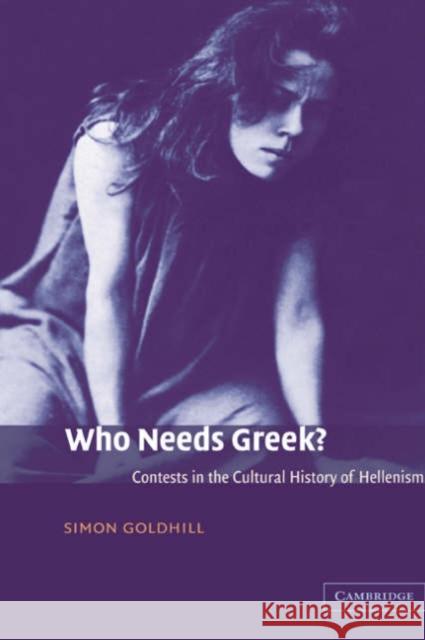
Who Needs Greek? is an interdisciplinary study of arguments on what ancient Greece has meant to western culture from the ancient world to today. The battles between artists and literary critics, historians and journalists, politicians and scholars, are often violent, hilarious, and always passionate. This cutting-edge cultural history ranges from ancient Greece via the Renaissance to modern opera, and treats a central question of culture in a way which will intrigue academics as well as a more general audience.
Who Needs Greek? is an interdisciplinary study of arguments on what ancient Greece has meant to western culture from the ancient world to today. The b...
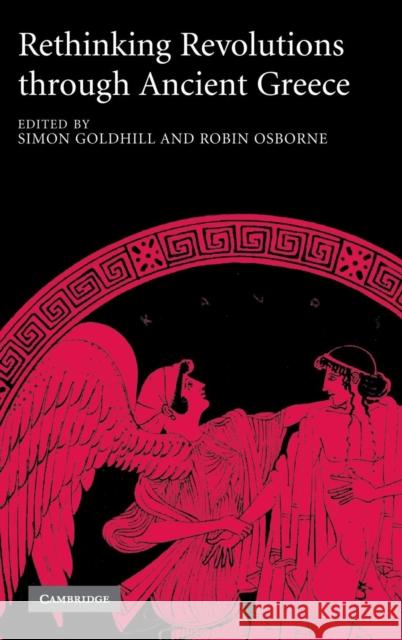
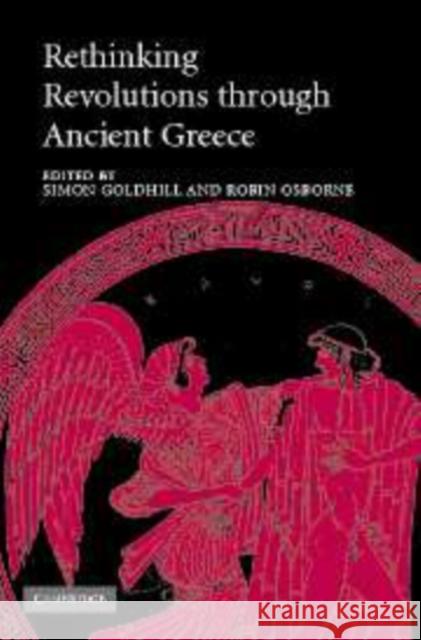
From the time of the Roman Empire onwards, fifth- and fourth-century Greece have been held to be the period and place in which civilization as the West knows it developed. Classical scholars have sought to justify these claims in detail by describing developments in fields such as democratic politics, art, rationality, historiography, literature, philosophy, medicine and music, in which classical Greece has been held to have made a revolutionary contribution. In this volume a distinguished cast of contributors offers a fresh consideration of these claims, asking both whether they are well...
From the time of the Roman Empire onwards, fifth- and fourth-century Greece have been held to be the period and place in which civilization as the Wes...
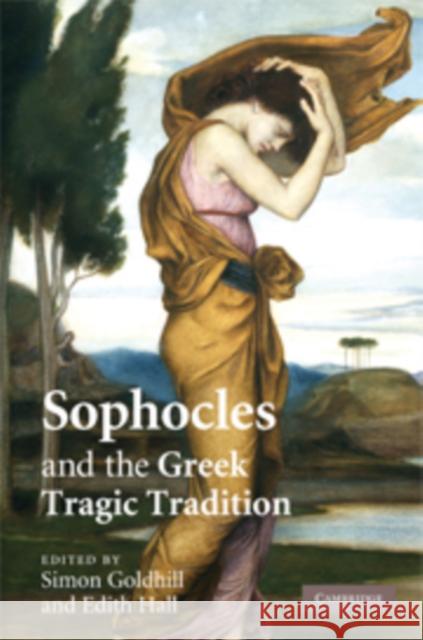
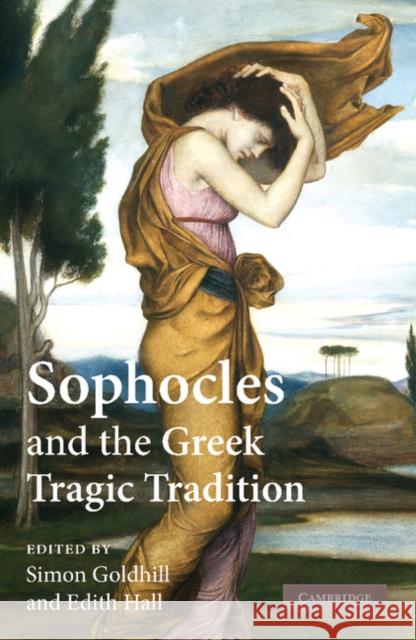
This book contains thirteen essays by senior international experts on Greek tragedy looking at Sophocles' dramas. They reassess their crucial role in the creation of the tragic repertoire, in the idea of the tragic canon in antiquity, and in the making and infinite re-creation of the tragic tradition in the Renaissance and beyond. The introduction looks at the paradigm shifts during the twentieth century in the theory and practice of Greek theatre, in order to gain a perspective on the current state of play in Sophoclean studies. The following three sections explore respectively the way that...
This book contains thirteen essays by senior international experts on Greek tragedy looking at Sophocles' dramas. They reassess their crucial role in ...
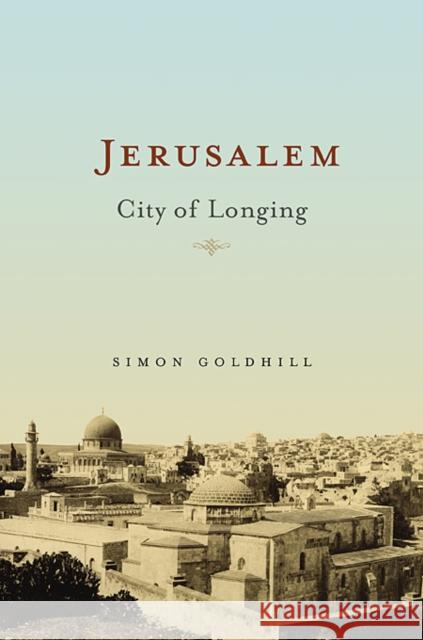
Jerusalem is the site of some of the most famous religious monuments in the world, from the Dome of the Rock to the Church of the Holy Sepulchre to the Western Wall of the Temple. Since the nineteenth century, the city has been a premier tourist destination, not least because of the countless religious pilgrims from the three Abrahamic faiths.
But Jerusalem is more than a tourist site--it is a city where every square mile is layered with historical significance, religious intensity, and extraordinary stories. It is a city rebuilt by each ruling Empire in its own way: the Jews, the...
Jerusalem is the site of some of the most famous religious monuments in the world, from the Dome of the Rock to the Church of the Holy Sepulchre to...
From the time of the Roman Empire onwards, fifth- and fourth-century Greece have been held to be the period and place in which civilization as the West knows it developed. Classical scholars have sought to justify these claims in detail by describing developments in fields such as democratic politics, art, rationality, historiography, literature, philosophy, medicine and music, in which classical Greece has been held to have made a revolutionary contribution. In this volume a distinguished cast of contributors offers a fresh consideration of these claims, asking both whether they are well...
From the time of the Roman Empire onwards, fifth- and fourth-century Greece have been held to be the period and place in which civilization as the Wes...
The Victorian era was the high point of literary tourism. Writers such as Charles Dickens, George Eliot, and Sir Walter Scott became celebrities, and readers trekked far and wide for a glimpse of the places where their heroes wrote and thought, walked and talked. Even Shakespeare was roped in, as Victorian entrepreneurs transformed quiet Stratford-upon-Avon into a combination shrine and tourist trap.
Stratford continues to lure the tourists today, as do many other sites of literary pilgrimage throughout Britain. And our modern age could have no better guide to such places than Simon...
The Victorian era was the high point of literary tourism. Writers such as Charles Dickens, George Eliot, and Sir Walter Scott became celebrities, a...
This book contains thirteen essays by senior international experts on Greek tragedy looking at Sophocles' dramas. They reassess their crucial role in the creation of the tragic repertoire, in the idea of the tragic canon in antiquity, and in the making and infinite re-creation of the tragic tradition in the Renaissance and beyond. The introduction looks at the paradigm shifts during the twentieth century in the theory and practice of Greek theatre, in order to gain a perspective on the current state of play in Sophoclean studies. The following three sections explore respectively the way that...
This book contains thirteen essays by senior international experts on Greek tragedy looking at Sophocles' dramas. They reassess their crucial role in ...
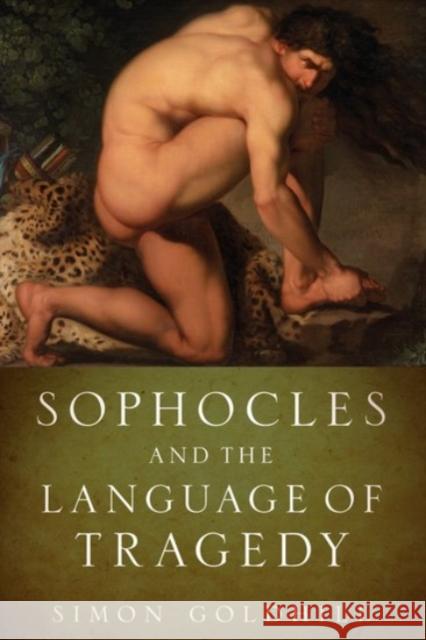
Written by one of the best-known interpreters of classical literature today, Sophocles and the Language of Tragedy presents a revolutionary take on the work of this great classical playwright and on how our understanding of tragedy has been shaped by our literary past. Simon Goldhill sheds new light on Sophocles' distinctive brilliance as a dramatist, illuminating such aspects of his work as his manipulation of irony, his construction of dialogue, and his deployment of the actors and the chorus. Goldhill also investigates how nineteenth-century critics like Hegel, Nietzsche, and...
Written by one of the best-known interpreters of classical literature today, Sophocles and the Language of Tragedy presents a revolutionary t...
"We can begin with a kiss, though this will not turn out to be a love story, at least not a love story of anything like the usual kind." So begins A Very Queer Family Indeed, which introduces us to the extraordinary Benson family. Edward White Benson became Archbishop of Canterbury at the height of Queen Victoria's reign, while his wife, Mary, was renowned for her wit and charm--the prime minister once wondered whether she was "the cleverest woman in England or in Europe." The couple's six precocious children included E. F. Benson, celebrated creator of the Mapp and Lucia novels,...
"We can begin with a kiss, though this will not turn out to be a love story, at least not a love story of anything like the usual kind." So begin...
"We can begin with a kiss, though this will not turn out to be a love story, at least not a love story of anything like the usual kind." So begins A Very Queer Family Indeed, which introduces us to the extraordinary Benson family. Edward White Benson became Archbishop of Canterbury at the height of Queen Victoria's reign, while his wife, Mary, was renowned for her wit and charm--the prime minister once wondered whether she was "the cleverest woman in England or in Europe." The couple's six precocious children included E. F. Benson, celebrated creator of the Mapp and Lucia novels,...
"We can begin with a kiss, though this will not turn out to be a love story, at least not a love story of anything like the usual kind." So begin...