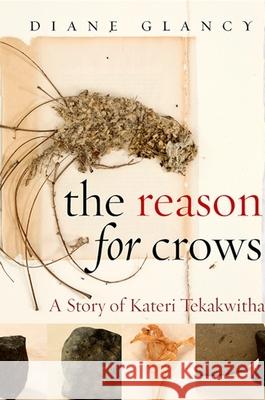
In The Reason for Crows, award-winning author Diance Glancy retells the story of Kateri Tekakwitha, a seventeenth-century Mohawk woman who converted to Christianity and later became known as the "Lily of the Mohawks." Left frail, badly scarred, and nearly blind from a smallpox epidemic that killed her parents, Kateri nevertheless took part in the daily activities of her village--gathering firewood, preparing meals, weaving, and treating the wounded after skirmishes with the French and enemy tribes. When the Jesuits arrived in her village, she received their message and converted to...
In The Reason for Crows, award-winning author Diance Glancy retells the story of Kateri Tekakwitha, a seventeenth-century Mohawk woman who converted t...
Pushing the Bear: After the Trail of Tears tells the story of the Cherokees' resettlement in the hard years following Removal, a story never before explored in fiction. In this sequel to her popular 1996 novel Pushing the Bear: A Novel of the Trail of Tears, author Diane Glancy continues the tale of Cherokee brothers O-ga-na-ya and Knobowtee and their families, as well the Reverend Jesse Bushyhead, a Cherokee Christian minister. The book follows their travails in Indian Territory as they attempt to build cabins, raise crops, and adjust to new realities.
Pushing the Bear: After the Trail of Tears tells the story of the Cherokees' resettlement in the hard years following Removal, a story never before ex...
In this innovative novel, a librarian of Cherokee ancestry rekindles and reinvents her Native identity by discovering the rhythm and spark of traditionally told stories in the most unusual places in the modern world. Ada Ronner, a librarian at Northeastern State University in Tahlequah, Oklahoma, hears books speak and senses their restless flow as they circulate. The same relentless energy and liberation of the story is also felt by Ada as she roller-skates at the Dust Bowl, a local skating rink, floating far ahead of her husband, Ether, a physics professor. Hearing "the old Cherokee voices"...
In this innovative novel, a librarian of Cherokee ancestry rekindles and reinvents her Native identity by discovering the rhythm and spark of traditio...
In American Gypsy, a collection of six plays, Diane Glancy uses a melange of voices to invoke the myths and realities of modern Native American life. Glancy intermixes poetry and prose to address themes of gender, generational relationships, acculturation, myth, and tensions between Christianity and traditional Native American belief systems. The six plays included, "The Woman Who Was a Red Deer Dressed for the Deer Dance," "The Women Who Loved House Trailers," "American Gypsy," "Jump Kiss," "Lesser Wars," and "The Toad (Another Name for the Moon) Should Have a Bite," run the gamut from...
In American Gypsy, a collection of six plays, Diane Glancy uses a melange of voices to invoke the myths and realities of modern Native American life. ...
At the end of the Southern Plains Indian wars in 1875, the War Department shipped seventy-two Kiowa, Cheyenne, Arapaho, Comanche, and Caddo prisoners from Fort Sill, Oklahoma, to Fort Marion in St. Augustine, Florida. These most resistant Native people, referred to as trouble causers, arrived to curious, boisterous crowds eager to see the Indian warriors they knew only from imagination. Fort Marion Prisoners and the Trauma of Native Education is an evocative work of creative nonfiction, weaving together history, oral traditions, and personal experience to tell the story of these...
At the end of the Southern Plains Indian wars in 1875, the War Department shipped seventy-two Kiowa, Cheyenne, Arapaho, Comanche, and Caddo prisone...
A professor hears the voices of Biblical women. She begins writing. What was it like for Dorcas to die and be brought back to life? What was it like for Philips daughters to live with the threat of persecution after Christ was crucified? What did Miriam feel when she sat in the leprosy tent? What did they all say as the professor wove her own story between their voices? It was Michal, Davids first wife, who made a bolster of goats hair for Davids bed when Saul, her father, was trying to kill him. The bolster made it look as if David were there. Likewise, these womens voices are not their...
A professor hears the voices of Biblical women. She begins writing. What was it like for Dorcas to die and be brought back to life? What was it like f...
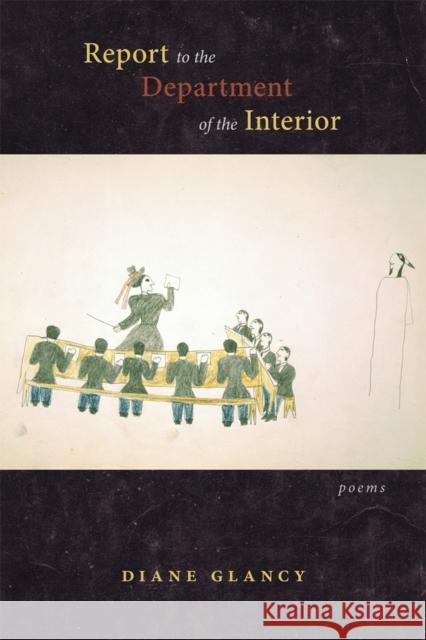
Constructed as a series of reports to the Department of the Interior, these poems of grief, anger, defiance, and resistance focus on the oppressive educational system adopted by Indian boarding schools and the struggle Native Americans experienced to retain and honour traditional ways of life and culture.
Constructed as a series of reports to the Department of the Interior, these poems of grief, anger, defiance, and resistance focus on the oppressive ed...
Many towns have their murderers, but are they also members of a church, a Boy Scout leader, or president of the congregation? Could they be trusted to bring a covered dish faithfully to church suppers? This novel takes the BTK murders in Wichita, Kansas, as inspiration to question issues of evil. How could a man commit murder and yet sit in church all those years until he was caught? What is a Christian? What is Christianity? Can a Christian murderer go to heaven? Mark Cabot and Ralph Gheary, minister and assistant minister of the church to which murderer Thomas Fout belonged, disagree as...
Many towns have their murderers, but are they also members of a church, a Boy Scout leader, or president of the congregation? Could they be trusted to...
A minister's wife finds herself in hell. The story of Lazarus and the rich man in Luke 16:19-31 gives a chilling insight into the afterlife. It is a story that is not often addressed because it makes clear the separation of people upon death. Frank Winscott, a retired minister, works at comparing translations of the Bible. Eugena has ignored her husband's work and his sermons all her life. Instead, she finds meaning in her potter's shed, where she makes different forms of ziggurats that she places in her kiln, a little symbol of hell. Though Eugena rejects Frank's insistence that there is a...
A minister's wife finds herself in hell. The story of Lazarus and the rich man in Luke 16:19-31 gives a chilling insight into the afterlife. It is a s...