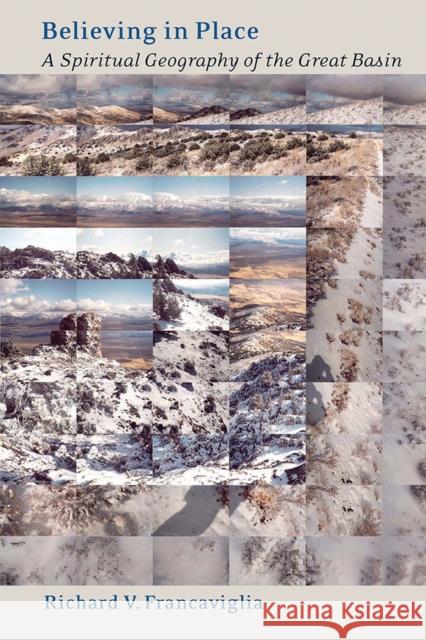
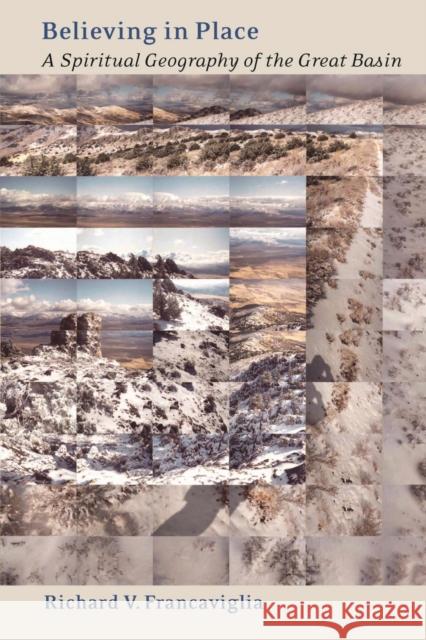
This publication explores how spiritual beliefs affect both the environment and the human spirit in the vast region between California's Sierra Nevada and Utah's Wasatch Mountains. It is a reflection on the ways in which human needs and spiritual traditions can shape perceptions of the land.
This publication explores how spiritual beliefs affect both the environment and the human spirit in the vast region between California's Sierra Nevada...
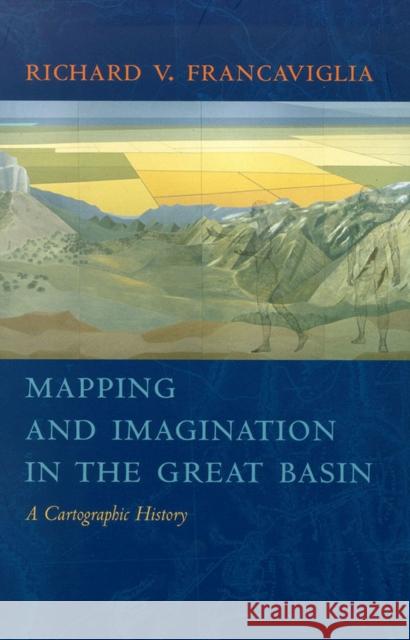
The Great Basin was the last region of continental North America to be explored and mapped, and it remained largely a mystery to European Americans until well into the nineteenth century. In Mapping and Imagination in the Great Basin, geographer-historian Richard Francaviglia shows how the Great Basin's gradual emergence from its "large cartographic silence" both paralleled the development of the sciences of surveying, geology, hydrology, and cartography, and reflected the changing geopolitical aspirations of the European colonial powers and the United States. Francaviglia's compelling,...
The Great Basin was the last region of continental North America to be explored and mapped, and it remained largely a mystery to European Americans un...
For a hundred and fifty years, historians have debated contradictory claims about the origins of the Mexican War and ignored the impact of the social, historical, and geographical features of both the United States and Mexico on that war. Instead, scholars have focused primarily on military strategy and campaigns. "North American historiography," claims El Colegio de Mexico historian Josefina Zoraida Vazquez, "has elucidated all aspects of the war: battles, strategy, weapons, casualties, desertions, background of the soldiers, finances, and regional variations. Mexican scholars, until...
For a hundred and fifty years, historians have debated contradictory claims about the origins of the Mexican War and ignored the impact of the social,...
Why has the American Southwest been celebrated as a place of beauty and history even as it was condemned as a place without any past or, indeed, an inhabitable present? The contributors to this volume all address how and why America's image of the Southwest has evolved. D. W. Meinig once wrote: "The Southwest is a distinctive place to the American mind but a somewhat blurred place on American maps." Actually, it has been a somewhat blurred place even to the mind. The Southwest's physical extremes--urban and rural, tame and wild, ugly and beautiful, polluted and pure--complicate its...
Why has the American Southwest been celebrated as a place of beauty and history even as it was condemned as a place without any past or, indeed, an in...
Texas-shaped ashtrays, belt buckles, earrings, kitchen utensils--"Texas kitsch"--fill gift shops alongside highways and in airports. The Lone Star State's unmistakable shape is appropriated by advertisers to hawk everything from beans to automobiles inside Texas' borders and beyond. As a billboard-sized neon sign glowing atop a popular honkey-tonk, the Texas map illuminates the Fort Worth night sky, attracting tourists in search of a good time--and a share of the Texas experience. Over the years America's most recognizable state outline has become one of its most potent symbols, a...
Texas-shaped ashtrays, belt buckles, earrings, kitchen utensils--"Texas kitsch"--fill gift shops alongside highways and in airports. The Lone Star Sta...
Like the rosary itself, the influence of Catholicism on the social and historical development of the American West has been both visible and hidden: visible in the effects of personal conviction on lives and communities; hidden in that the fuller context of this important American religious group has been largely marginalized or undervalued in traditional historiographic treatments of the region. This volume, an outgrowth of the 2004 Walter Prescott Webb Memorial Lectures, seeks to redress this imbalance. Editors Roberto R. Trevino and Richard Francaviglia have assembled here a variety...
Like the rosary itself, the influence of Catholicism on the social and historical development of the American West has been both visible and hidden: v...
"Believing in Place" is the personal testimony of a scientist who discovers the divine in the land he has studied for decades. Geographer Richard V. Francaviglia recounts his own awakening to the spirituality of place as he suddenly sees the sacred dimension of science. The Great Basin is the focus of Francaviglia s meditations. It is a huge, physically diverse, and often misunderstood region that lies between the Sierra Nevada and Wasatch Mountains. It is also an area that fills the author with awe. I feel more closely connected to the universe here than in other places. That epiphany has...
"Believing in Place" is the personal testimony of a scientist who discovers the divine in the land he has studied for decades. Geographer Richard V. F...