Since the early 1980s, the U.S. economy has experienced a growing wage differential: high-skilled workers have claimed an increasing share of available income, while low-skilled workers have seen an absolute decline in real wages. How and why this disparity has arisen is a matter of ongoing debate among policymakers and economists. Two competing theories have emerged to explain this phenomenon, one focusing on international trade and labor market globalization as the driving force behind the devaluation of low-skill jobs, and the other focusing on the role of technological change as a...
Since the early 1980s, the U.S. economy has experienced a growing wage differential: high-skilled workers have claimed an increasing share of availabl...
Every time you buy a can of tuna or a new television, its bar code is scanned to record its price and other information. These "scanner data" offer a number of attractive features for economists and statisticians, because they are collected continuously, are available quickly, and record prices for all items sold, not just a statistical sample. But scanner data also present a number of difficulties for current statistical systems. "Scanner Data and Price Indexes" assesses both the promise and the challenges of using scanner data to produce economic statistics. Three papers present the...
Every time you buy a can of tuna or a new television, its bar code is scanned to record its price and other information. These "scanner data" offer a ...
In less than three decades, China has grown from playing a negligible role in international trade to being one of the world's largest exporters, a substantial importer of raw materials, intermediate outputs, and other goods, and both a recipient and source of foreign investment. Not surprisingly, China's economic dynamism has generated considerable attention and concern in the United States and beyond. While some analysts have warned of the potential pitfalls of China's rise the loss of jobs, for example others have highlighted the benefits of new market and investment opportunities for US...
In less than three decades, China has grown from playing a negligible role in international trade to being one of the world's largest exporters, a ...
In less than three decades, China has grown from playing a negligible role in international trade to being one of the world's largest exporters, a substantial importer of raw materials, intermediate outputs, and other goods, and both a recipient and source of foreign investment. Not surprisingly, China's economic dynamism has generated considerable attention and concern in the United States and beyond. While some analysts have warned of the potential pitfalls of China's rise-the loss of jobs, for example-others have highlighted the benefits of new market and investment opportunities for US...
In less than three decades, China has grown from playing a negligible role in international trade to being one of the world's largest exporters, a sub...
Developed in the classroom by two of the most prominent researchers in the field, Feenstra and Taylor s International Economics is a modern textbook for a modern audience, connecting theory to empirical evidence and expanding beyond the traditional focus on advanced companies to cover emerging markets and developing economies. Essentials of International Economics, Third Edition is the brief version of that textbook designed for a one-semester course covering both international trade and international macroeconomics.The new edition has been thoroughly updated, including the...
Developed in the classroom by two of the most prominent researchers in the field, Feenstra and Taylor s International Economics is a modern tex...
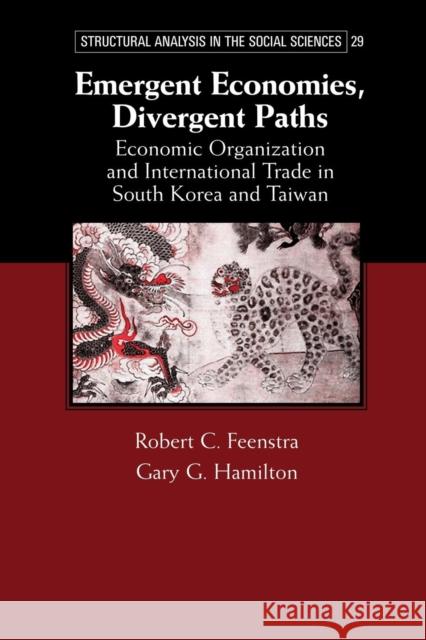
The result of a collaboration between a leading trade economist and a leading economic sociologist specializing in East Asia, this volume offers an original explanation of the development paths of post-World War II Korea and Taiwan. that attempts to reshape the way economists, sociologists, and political scientists will think about economic organization in the future. One of the principal empirical findings, within their theory of how capitalist economies become organized, is that a primary cause for the industrialization of East Asia is the retail revolution in the United States and the...
The result of a collaboration between a leading trade economist and a leading economic sociologist specializing in East Asia, this volume offers an or...