A remarkable compendium of the worst military decisions and the men who made them
The annals of history are littered with horribly bad military leaders. These combat incompetents found amazing ways to ensure their army's defeat. Whether it was a lack of proper planning, miscalculation, ego, bad luck, or just plain stupidity, certain wartime stratagems should never have left the drawing board. Written with wit, intelligence, and eminent readability, How to Lose a Battle pays dubious homage to these momentous and bloody blunders, including:
Cannae,...
A remarkable compendium of the worst military decisions and the men who made them
The annals of history are littered with horribly bad ...
The U.S. Navy SEALs have long been considered among the finest, most courageous, and professional soldiers in American military history--an elite fighting force trained as parachutists, frogmen, demolition experts, and guerrilla warriors ready for sea, air, and land combat. Born out of a proud naval tradition dating back to World War II, the first SEAL teams were commissioned in the early 1960s. Vietnam was their proving ground.
In this remarkable volume, fifteen former SEALs--most of them original founding team members, or "plankowners"--share their vivid first-person remembrances...
The U.S. Navy SEALs have long been considered among the finest, most courageous, and professional soldiers in American military history--an elite f...
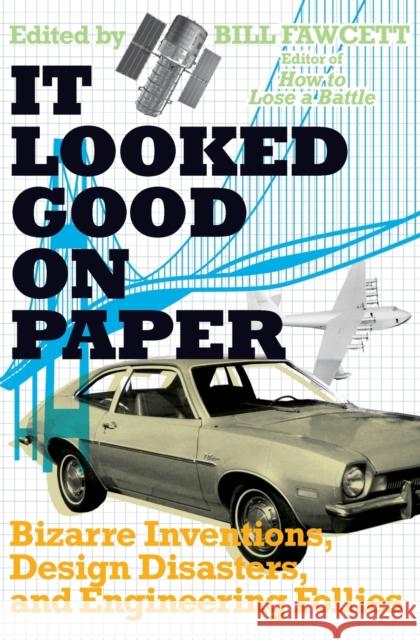
A remarkable compendium of wild schemes, mad plans, crazy inventions, and truly glorious disasters
Every phenomenally bad idea seemed like a good idea to someone. How else can you explain the Ford Edsel or the sword pistol--absolutely absurd creations that should have never made it off the drawing board? It Looked Good on Paper gathers together the most flawed plans, half-baked ideas, and downright ridiculous machines throughout history that some second-rate Einstein decided to foist on an unsuspecting populace with the best and most optimistic intentions. Some failed...
A remarkable compendium of wild schemes, mad plans, crazy inventions, and truly glorious disasters
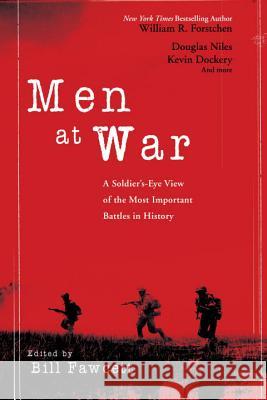
Epic battles?as seen through the eyes of the men who fought them. From Gettysburg to D-Day, history's most momentous battles have been recounted to the world on a grand scale. This book, for the first time ever, looks at man's most epic battles from the point of view of the soldiers on the front lines; providing new insight into the great wars of history. Stories told by the Roman Legionaire, the British Doughboy, and the American Doggie, delve into these battles and battlefronts: Roman Legion Third Crusade under Richard Lionheart Waterloo, French under Napoleon...
Epic battles?as seen through the eyes of the men who fought them. From Gettysburg to D-Day, history's most momentous battles have been re...
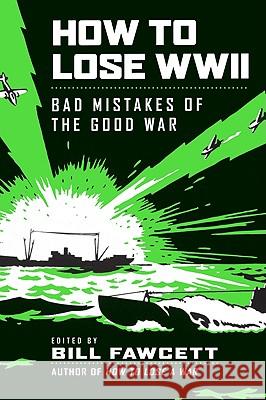
How to Lose WWII is an engrossing, fact-filled collection from Bill Fawcett that sheds light on the biggest, and dumbest, screw-ups of the Great War. In the vein of his other phenomenal compendiums of amazing battlefield blunders, How to Lose a Battle and How to Lose a War, Fawcett focuses on some amazing catastrophic missteps of Axis and Allies alike.
How to Lose WWII is an engrossing, fact-filled collection from Bill Fawcett that sheds light on the biggest, and dumbest, screw-ups of the Gr...
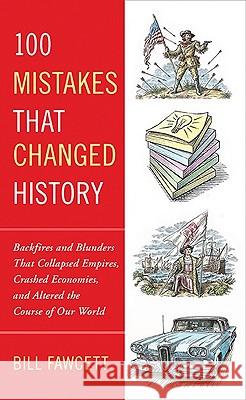
Collected in one volume, here are backfires and blunders that collapsed empires, crashed economies, and altered the course of the world. From the Maginot Line to the Cuban Missile Crisis, history is filled with bad moves and not-so-bright ideas that snowballed into disasters and unintended consequences. This engrossing book looks at one hundred such tipping points. Japan bombs Pearl Harbor. The Caliphs of Baghdad spend themselves into bankruptcy. The Aztecs greet the Conquistadors with open arms. Mexico invites the Americans to Texas-and the Americans never leave. And...
Collected in one volume, here are backfires and blunders that collapsed empires, crashed economies, and altered the course of the world. ...
Hindsight hurts. * The British Parliament passes the Stamp Act, having the American colonies pay for their own defense which instead starts a revolution. * In 1929, President Herbert Hoover decides to let the economy fix itself and the Great Depression gets greater. * Nixon tapes everything he says in the Oval Office, believing it will all be of great historical value. He turns out to be right when those same tapes cost him his presidency. * Charles the First cuts a deal with the Irish to fight Parliament that instead loses him public support and later his head. Along with...
Hindsight hurts. * The British Parliament passes the Stamp Act, having the American colonies pay for their own defense which instead starts a revo...
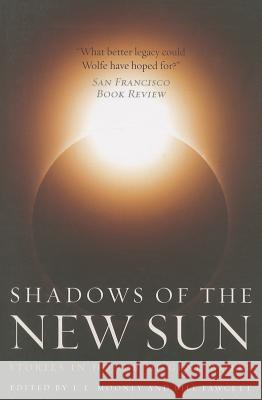
Perhaps no living author of imaginative fiction has earned the awards, accolades, respect, and literary reputation of Gene Wolfe. His prose has been called subtle and brilliant, inspiring not just lovers of fantasy and science fiction, but readers of every stripe, transcending genre and defying preconceptions.
In this volume, a select group of Wolfe's fellow authors pay tribute to the award-winning creator of The Book of the New Sun, The Fifth Head of Cerberus, Soldier of the Mist, The Wizard Knight and many others, with entirely new stories written specifically to...
Perhaps no living author of imaginative fiction has earned the awards, accolades, respect, and literary reputation of Gene Wolfe. His prose has bee...
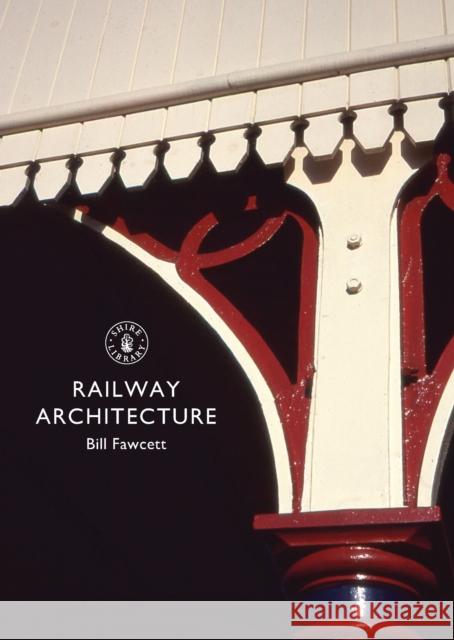
A guide to the architecture that gives British railways their identity, from stations to signal boxes. Roots of Britain's railways lie in the wooden-railed colliery wagonways of around 1600, but it was almost 1830 before specific railway architecture became needed. This evolved rapidly down to 1850, and for some time afterwards Britain led the world in designing passenger stations. Though stylistic dress followed contemporary fashions, their handling of space and of large crowds of people was something quite new. Glass and iron were used to produce elegant platform roofs, many exploiting the...
A guide to the architecture that gives British railways their identity, from stations to signal boxes. Roots of Britain's railways lie in the wooden-r...
An all-new compendium of 101 historic screw-ups from the author of 100 Mistakes that Changed History. DID I DO THAT When asked to name a successor, Alexander the Great declared that his empire should go "to the strongest." . . but would rival factions have descended into war if he'd been a little more specific? What if the Vienna Academy of Art took a chance on a hopeful young student named Adolf Hitler? If Pope Clement VII granted King Henry VIII an annulment, England would likely still be Catholic...
An all-new compendium of 101 historic screw-ups from the author of 100 Mistakes that Changed History. DID I DO THAT ...