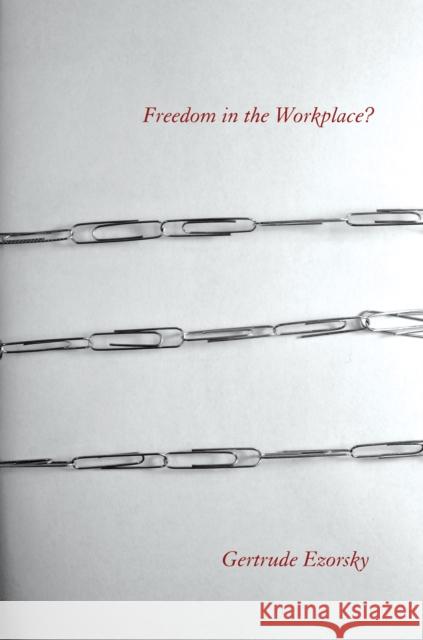
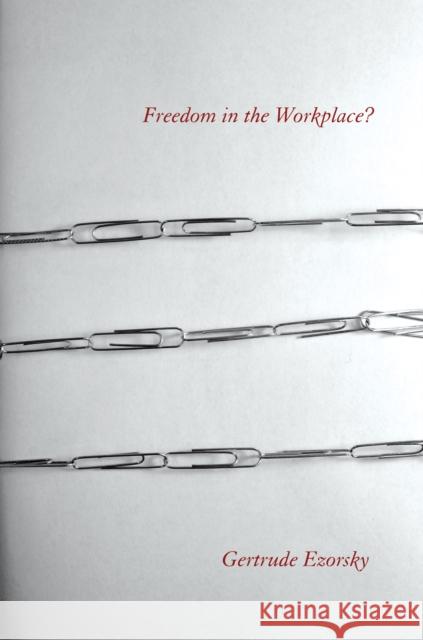
Are workers in the United States free? Gertrude Ezorsky traces the severe limits placed on their freedom by illegal coercion against organizing unions and by low wage offers barely enough to feed their families that workers are pressured to accept. Older, sick workers are forced to stay in exhausting jobs to be eligible for pensions. Ezorsky shows that the notions of freedom held by most contemporary social scientists and philosophers are far too limited to account for the reality of the workplace, where a lack of freedom abounds. Students preparing to enter the workplace will be informed of...
Are workers in the United States free? Gertrude Ezorsky traces the severe limits placed on their freedom by illegal coercion against organizing unions...
Are workers in the United States free? Gertrude Ezorsky traces the severe limits placed on their freedom by illegal coercion against organizing unions and by low wage offers barely enough to feed their families that workers are pressured to accept. Older, sick workers are forced to stay in exhausting jobs to be eligible for pensions. Ezorsky shows that the notions of freedom held by most contemporary social scientists and philosophers are far too limited to account for the reality of the workplace, where a lack of freedom abounds. Students preparing to enter the workplace will be informed of...
Are workers in the United States free? Gertrude Ezorsky traces the severe limits placed on their freedom by illegal coercion against organizing unions...
Affirmative action: does it really counteract racism? Is it morally justifiable? In her timely and tough-minded book, Gertrude Ezorsky addresses these central issues in the ongoing controversy surrounding affirmative action, and comes up with some...
Affirmative action: does it really counteract racism? Is it morally justifiable? In her timely and tough-minded book, Gertrude Ezorsky addresses these...
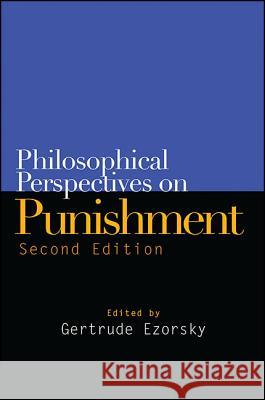
Bringing together classic and contemporary texts, this collection considers general philosophical concepts about and justifications for punishment, along with particular issues such as the death penalty and possible alternatives to punishment. New to the second edition are sections on prison labor, solitary confinement, and issues relating to the punishment of people of color, women, and the poor. Drawing from philosophy, law, literature, and activism, Gertrude Ezorsky provides a comprehensive and up-to-date account of the philosophical issues underlying and growing out of punishment.
Bringing together classic and contemporary texts, this collection considers general philosophical concepts about and justifications for punishment, al...
Bringing together classic and contemporary texts, this collection considers general philosophical concepts about and justifications for punishment, along with particular issues such as the death penalty and possible alternatives to punishment. New to the second edition are sections on prison labor, solitary confinement, and issues relating to the punishment of people of color, women, and the poor. Drawing from philosophy, law, literature, and activism, Gertrude Ezorsky provides a comprehensive and up-to-date account of the philosophical issues underlying and growing out of punishment.
Bringing together classic and contemporary texts, this collection considers general philosophical concepts about and justifications for punishment, al...