Desiderius Erasmus Clarence H. Miller Clarence H. Miller
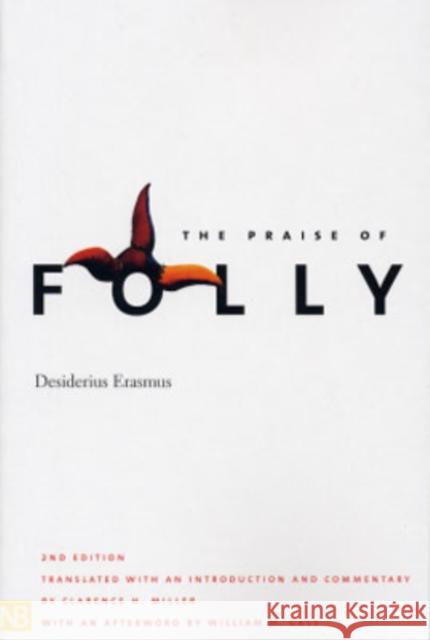
First published in Paris in 1511, The Praise of Folly hasenjoyed enormous and highly controversial success from the author's lifetime down to our own day.It hasno rival, except perhaps Thomas More's Utopia, as the most intense and lively presentation of the literary, social, and theological aims and methods of Northern Humanism. Clarence H. Miller's highly praised translation of The Praise of Folly, based on the definitive Latin text, echoes Erasmus' own lively style while retaining the nuances of the original text. In his introduction, Miller places...
First published in Paris in 1511, The Praise of Folly hasenjoyed enormous and highly controversial success from the author's lifetime do...
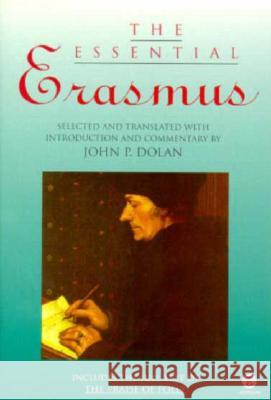
In his own day a center of controversy, in the four hundred years since his death known too often solely as an apostle of mockery and irreverence, Erasmus can be seen today in a new light--as a humanist whose concen is at once contemporary and Christian.
The Essential Erasmus is the first single volume in English to show the full spectrum of this Renaissance man's thought, which is no less profound because it is expressed with the grace, wit, and ironic detachment only a great writer can achieve.
Contains the full text of In Praise of Folly
In his own day a center of controversy, in the four hundred years since his death known too often solely as an apostle of mockery and irreverence, Era...
This is a new student edition of Erasmus' crucial treatise on political theory and also contains a new, excerpted translation from his Panegyric. The Education of a Christian Prince is one of the most important "advice-to-princes" texts published in the Renaissance and was dedicated to Charles V. It is a strongly pacifist work in which Erasmus sought to ensure that the prince governed justly and benevolently. This edition also includes an original introduction, a chronology of the life and work of Erasmus, and a comprehensive guide to further reading.
This is a new student edition of Erasmus' crucial treatise on political theory and also contains a new, excerpted translation from his Panegyric. The ...
The correspondence of Erasmus has never been completely translated into English, although it has long been acknowledged to be one of the most illuminating sources for the history of northern humanism and the first two decades of the Protestant Reformation. In his letters, to and from scholars and religions leaders, printers and patrons, princes and prelates in every country of western Europe, the interests and issues of that critical era found free expression. They are connected by the thread of Erasmus' personal experience, his joys and sorrows, triumphs and tribulations, and his...
The correspondence of Erasmus has never been completely translated into English, although it has long been acknowledged to be one of the most illum...
The correspondence of Erasmus has never been completely translated into English, although it has long been acknowledged to be one of the most illuminating sources for the history of northern humanism and the first two decades of the Protestant Reformation. In his letters to and from scholars and religious leaders, printers and patrons, princes and prelates in every country of western Europe, the interests and issues of that critical era found free expression. They are connected by the thread of Erasmus' personal experience, his joys and sorrows, triumphs and tribulations, and his...
The correspondence of Erasmus has never been completely translated into English, although it has long been acknowledged to be one of the most illum...
Volume 3 contains Erasmus' surviving correspondence from August 1514 to August 1516, including one letter by Erasmus never before published in a collection of his correspondence. There are one hundred and fifty-one letters from this period, more than survive from the whole of the first forty years of his life. They range in character from hasty personal notes to extended formal treatises, and they appear with remarkable regularity. This closely woven and uniform fabric of evidence coincides with the moment in Erasmus' career that marks his departure from England and his reception on the...
Volume 3 contains Erasmus' surviving correspondence from August 1514 to August 1516, including one letter by Erasmus never before published in a co...
'A knowledge of proverbs contributes to a number of things, ' wrote Erasmus in his Introduction to the Adages, 'but to four especially: philosophy, persuasiveness, grace and charm in speaking, and the understanding of the best authors...' This volume contains the second 500 of the more than 4000 adages gathered and commented on by Erasmus, sometimes in a few lines and sometimes in full-scale essays. The notes identify the classical sources and indicate how Erasmus' reading and thinking developed over the quarter-century spanned by the eight revisions of the original work. Many of...
'A knowledge of proverbs contributes to a number of things, ' wrote Erasmus in his Introduction to the Adages, 'but to four especially: ph...
At the beginning of this volume, Erasmus leaves Louvain to live in Basel. Weary from the many controversies reflected in the letters of the previous volumes, he is also anxious to see the annotations to his third edition of the New Testament through Johann Froben's press. Above all he fears that pressure from the imperial court in the Netherlands will force him to take a public stand against Luther.
Erasmus completes a large number of works in the span of this volume, including the Paraphrases on Matthew and John, two new expanded editions of the Colloquies, an...
At the beginning of this volume, Erasmus leaves Louvain to live in Basel. Weary from the many controversies reflected in the letters of the previou...
The tranquil world reflected in Erasmus' early letters from Louvain gradually disintegrated in the years covered by Volume 7. In the letters of Volume 8, which spans the period of Erasmus' last fifteen months in the Netherlands and his move to Basel during 1520 and 1521, his situation worsens.
On the political front, the golden age of peace for which he had hoped is further destroyed by the war-mongering of Francis I, Henry VIII, Leo X and Charles V. In spiritual matters, Erasmus continues to be pressed harder to take a firm position for or against Luther. He persists in his earlier...
The tranquil world reflected in Erasmus' early letters from Louvain gradually disintegrated in the years covered by Volume 7. In the letters of Vol...
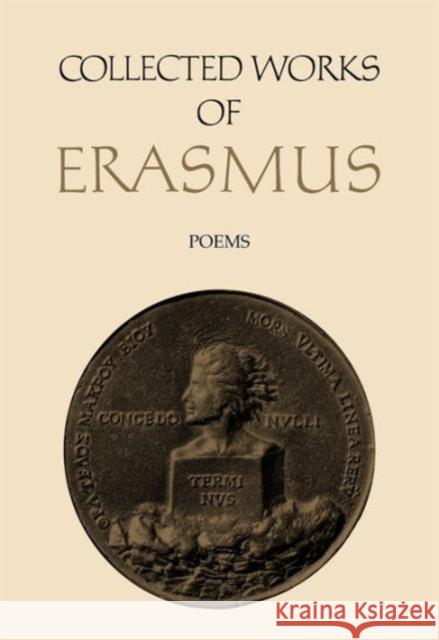
The final two volumes in the CWE contain an edition and translation of Erasmus's poetry. For Erasmus scholars this work affords the first opportunity to evaluate and analyse Erasmus' poems in English. And for those interested in Renaissance and Reformation poetry in general, these offer an intriguing look at the work of one of the towering figures of the period writing in a genre that was, for him, unusual.
The annotations include a path-breaking commentary piece by Harry Vredeveld on Erasmus' most famous poem, Poem on the Trouble of Old Age.' Another important feature is the...
The final two volumes in the CWE contain an edition and translation of Erasmus's poetry. For Erasmus scholars this work affords the first opportuni...