The journals from 1854 to 1861 show the ripeness of Emerson's thought overshadowed by the gravest problem of his time--slavery. In addition to completing English Traits (1856) and Conduct of Life (1860), Emerson wrote many of the lectures and articles that made up his next book, Society and Solitude. He also contributed often to The Atlantic Monthly after helping to found that magazine in 1857. Throughout these years he extended his strenuous trips as a lyceum lecturer, crossing and recrossing the frozen Mississippi several times each winter. In Concord, he...
The journals from 1854 to 1861 show the ripeness of Emerson's thought overshadowed by the gravest problem of his time--slavery. In addition to comp...
The Civil War is a pervasive presence in the journals in this volume. "The war searches character," Emerson wrote. Both his reading and his writing reflected his concern for the endurance of the nation, whose strength lay in the moral strength of the people. He read military biographies and memoirs, while turning again to Persian, Chinese, and Indian literature. The deaths of Clough, Thoreau, Hawthorne, and his aunt Mary Moody Emerson prompted him to reread their letters and journals, remembering and reappraising.
These were stirring, poignant years for Emerson. The times were hard,...
The Civil War is a pervasive presence in the journals in this volume. "The war searches character," Emerson wrote. Both his reading and his writing...
The final volume of the Harvard edition presents the journals of Emerson's last years. In them, he reacts to the changing America of the post-Civil War years, commenting on Reconstruction, immigration, protectionism in trade, and the dangers of huge fortunes in few hands--as well as on baseball and the possibilities of air travel. His role as a Harvard Overseer evokes his thoughts on education during crucial years of reform in American universities.
His travels take him to Europe for the third time, and for the first time he encounters the new garden of California and the enigma of...
The final volume of the Harvard edition presents the journals of Emerson's last years. In them, he reacts to the changing America of the post-Civil...
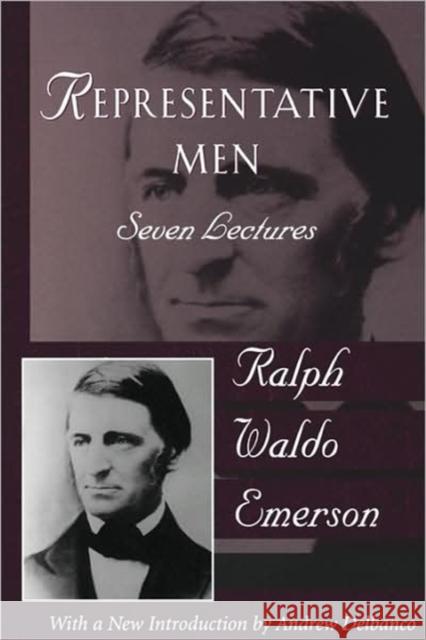
"At first reading, Representative Men seems the most alien of Emerson's books. First published in 1850 (having taken form over the five preceding years as a series of lectures intended as 'winter evening entertainments'), it was inspired by the romantic belief that there exists a 'general mind' that expresses itself with special intensity through certain individual lives. It was an appreciation of genius as a quality distributed to the few for the benefit of the many. When, according to Longfellow, Emerson began to speak on these themes in Boston in 1845, the Odeon theater was...
"At first reading, Representative Men seems the most alien of Emerson's books. First published in 1850 (having taken form over the five prec...
Henry David Thoreau Brooks Atkinson Ralph Waldo Emerson
Introduction by Ralph Waldo Emerson Commentary by Van Wyck Brooks and E. B. White Naturalist, philosopher, champion of self-reliance and moral independence, Henry David Thoreau remains not only one of our most influential writers but also one of our most contemporary. This unique and comprehensive edition gathers all of Thoreau's most significant works, including his masterpiece, Walden (reproduced in its entirety); A Week on the Concord and Merrimack Rivers; selections from Cape Cod and The Maine Woods; as well as "Walking,"...
Introduction by Ralph Waldo Emerson Commentary by Van Wyck Brooks and E. B. White Naturalist, philosopher, champion...
Ralph Waldo Emerson's 1860 book, The Conduct of Life is among the gems of his mature works. First published in the year of Abraham Lincoln's election as President, this work poses the questions of human freedom and fate. The book, here newly edited from the original 1860 edition and fully annotated to illuminate and trace Emerson's references, is a great classic of American philosophy and literature.
Ralph Waldo Emerson's 1860 book, The Conduct of Life is among the gems of his mature works. First published in the year of Abraham Lincoln's election ...
Ralph Waldo Emerson's 1860 book, The Conduct of Life is among the gems of his mature works. First published in the year of Abraham Lincoln's election as President, this work poses the questions of human freedom and fate. The book, here newly edited from the original 1860 edition and fully annotated to illuminate and trace Emerson's references, is a great classic of American philosophy and literature.
Ralph Waldo Emerson's 1860 book, The Conduct of Life is among the gems of his mature works. First published in the year of Abraham Lincoln's election ...
Ralph Waldo Emerson Eric W. Carlson Eric W. Carlson
Ralph Waldo Emerson has always fascinated students of criticism and of American literature and thought. Emerson s Literary Criticism supplies the continuing need for an anthology. This collection brings together Emerson s literary criticism from a wide variety of sources.Eric W. Carlson has culled both the major statements of Emerson's critical principles and many secondary observations that illuminate them. Here are more than sixty selections on thirty-five critical topics. Headnotes provide valuable background. Carlson relates Emerson s critical principles to his philosophy, social...
Ralph Waldo Emerson has always fascinated students of criticism and of American literature and thought. Emerson s Literary Criticism supplies t...
The full texts of four seminal works by Emerson are presented in this volume: 'Nature, ' 'The American Scholar, ' 'The Divinity School Address, ' and 'The Transcendentalist.' Edward Ericson assesses that impact in his helpful introduction and evaluates anew Emerson's continuing influence on American culture in our century.
The full texts of four seminal works by Emerson are presented in this volume: 'Nature, ' 'The American Scholar, ' 'The Divinity School Address, ' and ...
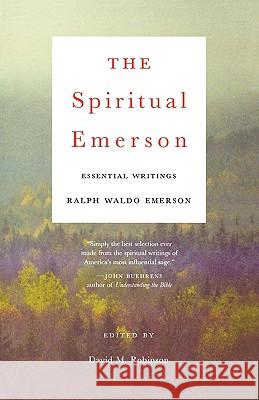
"Simply the best selection ever made from the spiritual writings of America's most influential sage." -John Buehrens, author of Understanding the Bible 'A guided anthology that takes the reader through Emerson's own spiritual evolution.' -Robert D. Richardson, Jr., author of Emerson: The Mind on Fire Ralph Waldo Emerson (1803n1882) is known best in the twenty-first century as a literary innovator and early architect of American intellectual culture, but his writings still offer spiritual sustenance to the thoughtful reader. The Spiritual Emerson, originally published on the two hundredth...
"Simply the best selection ever made from the spiritual writings of America's most influential sage." -John Buehrens, author of Understanding the Bibl...