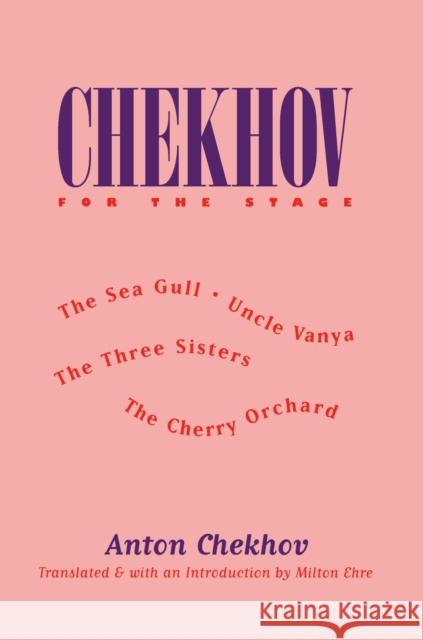
While the influence of Chekhov in modern theater worldwide, and especially in America, has been immense, translations into English have tended to be too literary and have not communicated the full emotional power and precise attention to detail of Chekhov's Russian. Milton Ehre began translating Chekhov's plays to provide professional theaters with performance texts that capture the feel and rhythms of spoken, rather than written, language. Chekhov for the Stage is the first publication of his revised versions of The Three Sisters, Uncle Vanya, The Cherry Orchard, and The...
While the influence of Chekhov in modern theater worldwide, and especially in America, has been immense, translations into English have tended to be t...
These translations of Gogol's plays restore the vitality of Gogol's language and humour, finally allowing his dramatic art to speak directly to Western readers, directors, actors and theatre-goers.
These translations of Gogol's plays restore the vitality of Gogol's language and humour, finally allowing his dramatic art to speak directly to Wester...
Goncharov's novels have been popular in Russia since their publication, and Oblomov, the central character of his most famous novel, has become the prototype of a fat and lazy man. Milton Ehre offers new interpretations of the complex personality of Goncharov and shows how in many ways Oblomov was a self-portrait of his creator. The introductory chapter neither idealizes Goncharov nor glosses over his weaknesses but shows a sensitive understanding of this major nineteenth-century Russian writer.
The author goes beyond the standard critical cliches about Goncharov to a contemporary...
Goncharov's novels have been popular in Russia since their publication, and Oblomov, the central character of his most famous novel, has become the...
Goncharov's novels have been popular in Russia since their publication, and Oblomov, the central character of his most famous novel, has become the prototype of a fat and lazy man. Milton Ehre offers new interpretations of the complex personality of Goncharov and shows how in many ways Oblomov was a self-portrait of his creator. The introductory chapter neither idealizes Goncharov nor glosses over his weaknesses but shows a sensitive understanding of this major nineteenth-century Russian writer.
The author goes beyond the standard critical cliches about Goncharov to a contemporary...
Goncharov's novels have been popular in Russia since their publication, and Oblomov, the central character of his most famous novel, has become the...