The development of Charles Darwin's views on evolution by natural selection has fascinated biologists since the 1859 publication of his landmark text On The Origin of Species. His experiences, observations and reflections during and after his pivotal journey on the Beagle during 1831 36 were of critical importance. Darwin was not, however, a man to be rushed. While his autobiography claims that the framework of his theory was laid down by 1839, its first outline sketch did not emerge until 1842. That essay was heavily edited, with many insertions and erasures. It formed the vital kernel of...
The development of Charles Darwin's views on evolution by natural selection has fascinated biologists since the 1859 publication of his landmark text ...
John Fiske was an American historian and philosopher. Much of his writing supported the work of Charles Darwin. After meeting Darwin he wrote Outlines of Cosmic Philosophy which was popular in the US and Europe. By 1880 his interests turned to American History, which he viewed through evolutionary theory.
John Fiske was an American historian and philosopher. Much of his writing supported the work of Charles Darwin. After meeting Darwin he wrote Outlines...
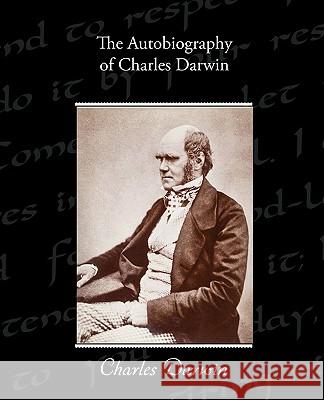
The authentic Autobiography. "My father's autobiographical recollections were written for his children, and written without any thought that they would ever be published. To many this may seem an impossibility; but those who knew my father will understand how it was not only possible, but natural. The autobiography bears the heading 'Recollections of the Development of my Mind and Character, ' and end with the following note: "- Aug. 3, 1876. This sketch of my life was begun about May 28th at Hopedene (Mr. Hensleigh Wedgwood's house in Surrey.), and since then I have written for nearly an...
The authentic Autobiography. "My father's autobiographical recollections were written for his children, and written without any thought that they woul...
Charles Darwin (1809 1882) first published this work in 1868 in two volumes. The book began as an expansion of the first two chapters of On the Origin of Species: 'Variation under Domestication' and 'Variation under Nature', and it developed into one of his largest works; Darwin referred to it as his 'big book'. Volume 1 deals with the variations introduced into species as a result of domestication, through changes in climate, diet, breeding and an absence of predators. He began with an examination of dogs and cats, comparing them with their wild counterparts, and moved on to investigate...
Charles Darwin (1809 1882) first published this work in 1868 in two volumes. The book began as an expansion of the first two chapters of On the Origin...
Charles Darwin (1809 1882) first published this work in 1868 in two volumes. The book began as an expansion of the first two chapters of On the Origin of Species: 'Variation under Domestication' and 'Variation under Nature' and it developed into one of his largest works; Darwin referred to it as his 'big book'. In volume 2, concerned with how species inherit particular characteristics, Darwin first published his 'provisional hypothesis' of pangenesis. This theory of 'gemmules' was not met with much acceptance and today is not valuable as scientific explanation, but it was important in laying...
Charles Darwin (1809 1882) first published this work in 1868 in two volumes. The book began as an expansion of the first two chapters of On the Origin...
Many of the earliest books, particularly those dating back to the 1900s and before, are now extremely scarce and increasingly expensive. We are republishing these classic works in affordable, high quality, modern editions, using the original text and artwork.
Many of the earliest books, particularly those dating back to the 1900s and before, are now extremely scarce and increasingly expensive. We are republ...
Charles Darwin (1809 - 1882) was a British naturalist whose theory or evolution by natural selection became the basis of modern theories of evolution. Darwin shocked the Victorians by suggesting that humans and animals shared the same ancestry. The Origin of Species is his most famous work. His five-year voyage on HMS Beagle established him as an eminent geologist whose observations and theories supported Charles Lyell's uniformitarian ideas, and publication of his journal of the voyage made Darwin famous as a popular author.
Charles Darwin (1809 - 1882) was a British naturalist whose theory or evolution by natural selection became the basis of modern theories of evolution....