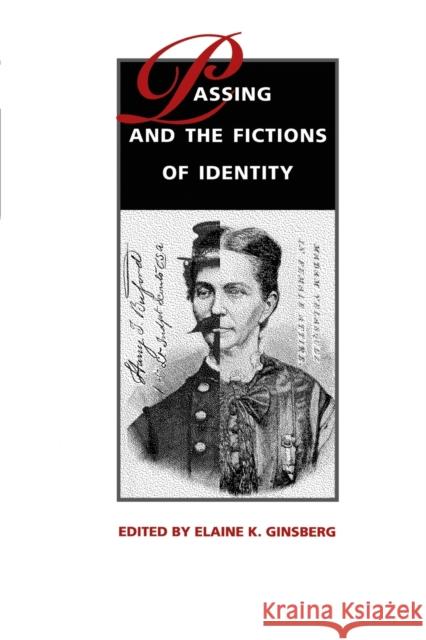
Passing refers to the process whereby a person of one race, gender, nationality, or sexual orientation adopts the guise of another. Historically, this has often involved black slaves passing as white in order to gain their freedom. More generally, it has served as a way for women and people of color to access male or white privilege. In their examination of this practice of crossing boundaries, the contributors to this volume offer a unique perspective for studying the construction and meaning of personal and cultural identities. These essays consider a wide range of texts and moments from...
Passing refers to the process whereby a person of one race, gender, nationality, or sexual orientation adopts the guise of another. Historically, this...
Passing refers to the process whereby a person of one race, gender, nationality, or sexual orientation adopts the guise of another. Historically, this has often involved black slaves passing as white in order to gain their freedom. More generally, it has served as a way for women and people of color to access male or white privilege. In their examination of this practice of crossing boundaries, the contributors to this volume offer a unique perspective for studying the construction and meaning of personal and cultural identities. These essays consider a wide range of texts and moments from...
Passing refers to the process whereby a person of one race, gender, nationality, or sexual orientation adopts the guise of another. Historically, this...
-Women should be seen and not heard.- That was a well-known maxim in nineteenth century America.
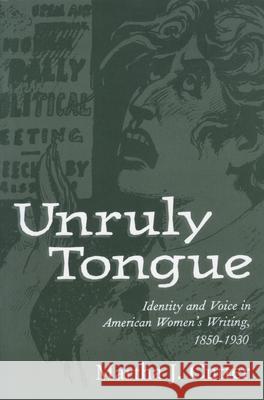
American women writers--such as Louisa May Alcott, Kate Chopin, and Willa Cather--devised a brilliant method for crashing that barrier to creativity. In her new book, UNRULY TONGUE: IDENTITY AND VOICE IN AMERICAN WOMEN'S WRITING, 1850-1930 (University Press of Mississippi, $40, cloth) Martha Cutter says the ten African American and Anglo American women she studied wrote as inside agitators. Over time they created a new theory of language.
Cutter says, -From 1780 to 1860 American...
-Women should be seen and not heard.- That was a well-known maxim in nineteenth century America.
American women writers--such as Louisa May Alco...