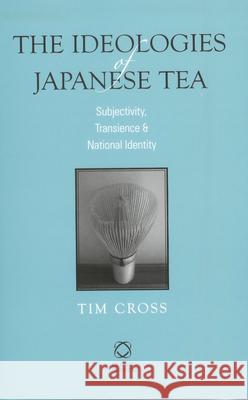
This provoking new study of the Japanese tea ceremony (chanoyu) examines the ideological foundation of its place in history and the broader context of Japanese cultural values where it has emerged as a so called 'quintessential' component of the culture. It was in fact, Sen Soshitsu Xl, grandmaster of Urasenke, today the most globally prominent tea school, who argued in 1872 that tea should be viewed as the expression of the moral universe of the nation. A practising teamaster himself, the author argues, however, that tea was many other things: it was privilege, politics, power and the...
This provoking new study of the Japanese tea ceremony (chanoyu) examines the ideological foundation of its place in history and the broader con...