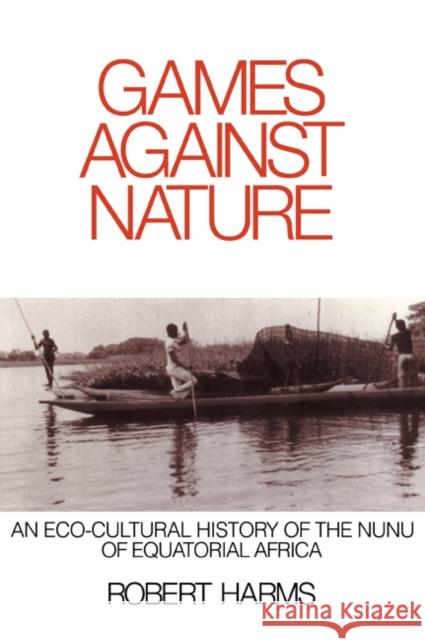
In this book, Robert Harms makes an important advance toward recovering the history of the people of the rain forest by telling the story of the Nunu, who live in and around swampy floodplains of the middle Zaire River. Using concepts drawn from game theory, Professor Harms explores the changing relationship between nature and culture among the Nunu. Picturing Nunu society as animated by a never-ending competition among lineages and households, he traces how the competition pushed people into new environments, and how adaption to the new environment, in turn, led to new forms of competition.
In this book, Robert Harms makes an important advance toward recovering the history of the people of the rain forest by telling the story of the Nunu,...
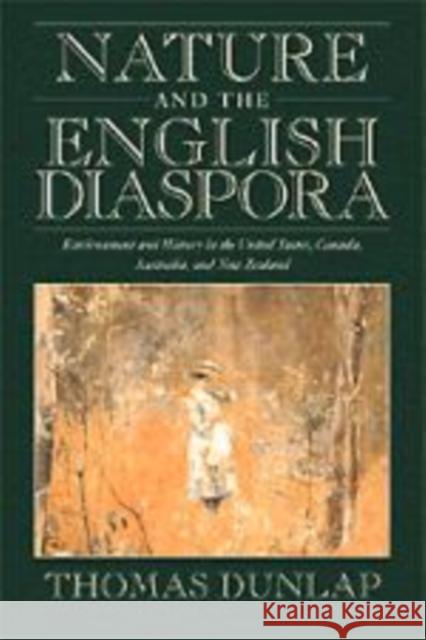
This book is a comparative history of the development of ideas about nature, particularly of the importance of native nature in the Anglo settler countries of the United States, Canada, Australia, and New Zealand. It examines the development of natural history, settlers' adaptations to the end of expansion, scientists' shift from natural history to ecology, and the rise of environmentalism. Addressing not only scientific knowledge but also popular issues from hunting to landscape painting, this book explores the ways in which English-speaking settlers looked at nature in their new lands.
This book is a comparative history of the development of ideas about nature, particularly of the importance of native nature in the Anglo settler coun...
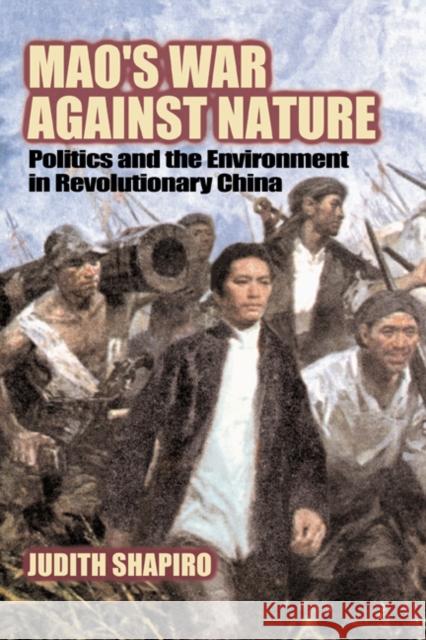
In clear and compelling prose, Judith Shapiro relates the great, untold story of the devastating impact of Chinese politics on China's environment during the Mao years. Maoist China provides an example of extreme human interference in the natural world in an era in which human relationships were also unusually distorted. Under Mao, the traditional Chinese ideal of "harmony between heaven and humans" was abrogated in favor of Mao's insistence that "Man Must Conquer Nature." Mao and the Chinese Communist Party's "war" to bend the physical world to human will often had disastrous consequences...
In clear and compelling prose, Judith Shapiro relates the great, untold story of the devastating impact of Chinese politics on China's environment dur...
In clear and compelling prose, Judith Shapiro relates the great, untold story of the devastating impact of Chinese politics on China's environment during the Mao years. Maoist China provides an example of extreme human interference in the natural world in an era in which human relationships were also unusually distorted. Under Mao, the traditional Chinese ideal of "harmony between heaven and humans" was abrogated in favor of Mao's insistence that "Man Must Conquer Nature." Mao and the Chinese Communist Party's "war" to bend the physical world to human will often had disastrous consequences...
In clear and compelling prose, Judith Shapiro relates the great, untold story of the devastating impact of Chinese politics on China's environment dur...
While cultural and scholarly traditions have led us to believe that war and control of nature are separate, there are many more similarities than most people might suspect. Tracing the history of chemical warfare and pest control, Edmund Russell shows how war and control of nature coevolved. Ideologically, institutionally, and technologically, the paths of chemical warfare and pest control intersected repeatedly in the twentieth century. War and Nature helps us to understand the impact of war on nature and vice versa, as well as the development of total war, and the rise of the modern...
While cultural and scholarly traditions have led us to believe that war and control of nature are separate, there are many more similarities than most...
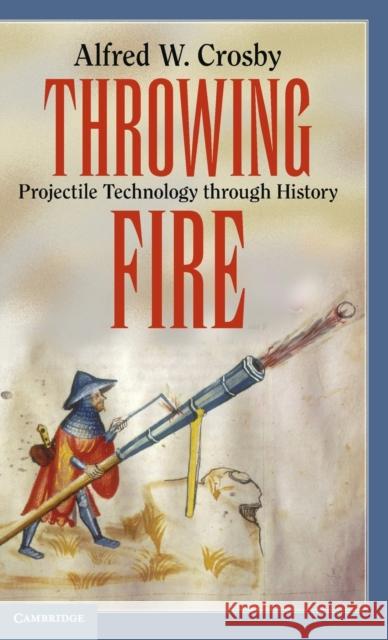
In Throwing Fire, historian Alfred W. Crosby looks at hard, accurate throwing and the manipulation of fire as unique human capabilities. Humans began throwing rocks in prehistory and then progressed to javelins, atlatls, bows and arrows. We learned to make fire by friction and used it to cook, drive game, burn out rivals, and alter landscapes to our liking. Our exploitation of these two capabilities figured in the extinction of many species, and may have played a role in the demise of Neanderthals. In historic times we invented catapults, trebuchets, and such flammable liquids as Greek Fire,...
In Throwing Fire, historian Alfred W. Crosby looks at hard, accurate throwing and the manipulation of fire as unique human capabilities. Humans began ...
While cultural and scholarly traditions have led us to believe that war and control of nature are separate, there are many more similarities than most people might suspect. Tracing the history of chemical warfare and pest control, Edmund Russell shows how war and control of nature coevolved. Ideologically, institutionally, and technologically, the paths of chemical warfare and pest control intersected repeatedly in the twentieth century. War and Nature helps us to understand the impact of war on nature and vice versa, as well as the development of total war, and the rise of the modern...
While cultural and scholarly traditions have led us to believe that war and control of nature are separate, there are many more similarities than most...
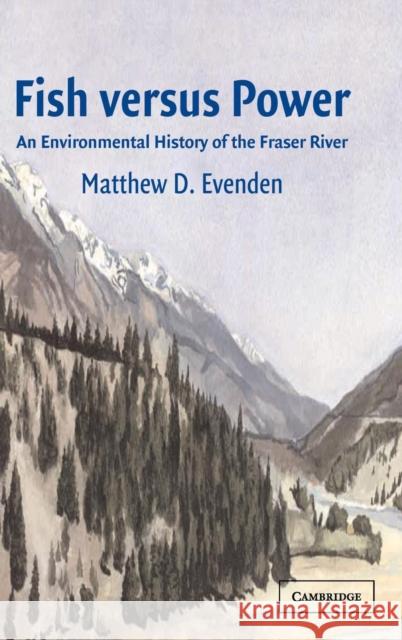
Amid contemporary debates over large dam development and declines in fisheries, this book offers a case study of a river basin where development decisions did not ultimately dam the river, but rather conserved its salmon. Although the case is local, the implications of this environmental history of the Fraser River (British Columbia), and the attempts to dam it for power and defend it for salmon, are global. Matthew Evenden explores the transnational forces that affected the river, the changing knowledge and practices of science, and the role of environmental change in influencing...
Amid contemporary debates over large dam development and declines in fisheries, this book offers a case study of a river basin where development decis...
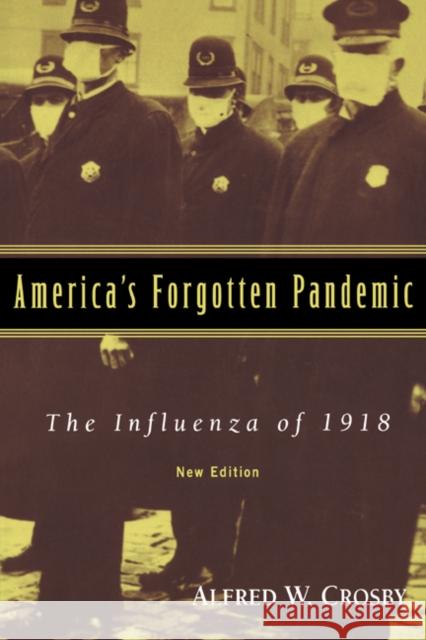
Between August 1918 and March 1919 the Spanish influenza spread worldwide, claiming over 25 million lives, more people than those perished in the fighting of the First World War. It proved fatal to at least a half-million Americans. Yet, the Spanish flu pandemic is largely forgotten today. In this vivid narrative, Alfred W. Crosby recounts the course of the pandemic during the panic-stricken months of 1918 and 1919, measures its impact on American society, and probes the curious loss of national memory of this cataclysmic event. In a new edition, with a new preface discussing the recent...
Between August 1918 and March 1919 the Spanish influenza spread worldwide, claiming over 25 million lives, more people than those perished in the figh...
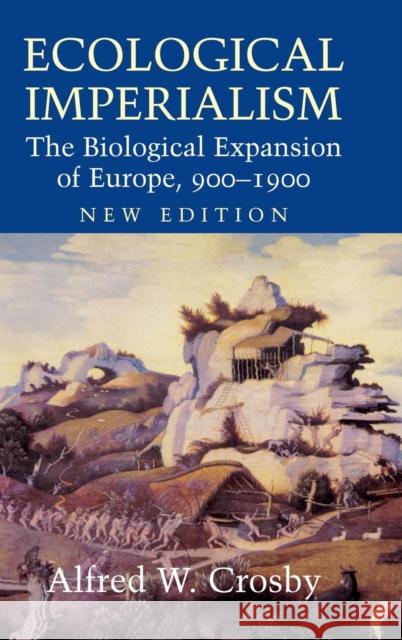
People of European descent form the bulk of the population in most of the temperate zones of the world--North America, Australia and New Zealand. The military successes of European imperialism are easy to explain because in many cases they were achieved by using firearms against spears. Alfred Crosby, however, explains that the Europeans' displacement and replacement of the native peoples in the temperate zones was more a matter of biology than of military conquest. Now in a new edition with a new preface, Crosby revisits his classic work and again evaluates the ecological reasons for...
People of European descent form the bulk of the population in most of the temperate zones of the world--North America, Australia and New Zealand. The ...