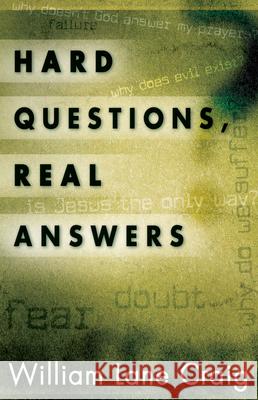
Why doesn't God answer my prayers? If God is so powerful, why does evil exist? And if He is so good, why do we suffer?
Nonbelievers, and even Christians, are often troubled by questions about suffering, doubt, failure, and unanswered prayer. Yet careful, compassionate answers are hard to find, in part because evangelicals have not taken the life of the mind seriously enough. The intellectual currents of our day are just too strong for simplistic responses.
In Hard Questions, Real Answers, William Lane Craig doesn't offer trite phrases or pat answers-he...
Why doesn't God answer my prayers? If God is so powerful, why does evil exist? And if He is so good, why do we suffer?
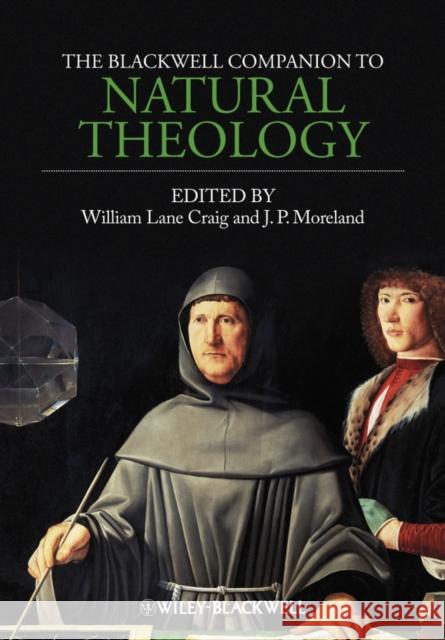
With the help of in-depth essays from some of the world's leading philosophers, The Blackwell Companion to Natural Theology explores the nature and existence of God through human reason and evidence from the natural world.
Provides in-depth and cutting-edge treatment of natural theology's main arguments
Includes contributions from first-rate philosophers well known for their work on the relevant topics
Updates relevant arguments in light of the most current, state-of-the-art philosophical and scientific discussions
Stands in useful...
With the help of in-depth essays from some of the world's leading philosophers, The Blackwell Companion to Natural Theology explores the nature...
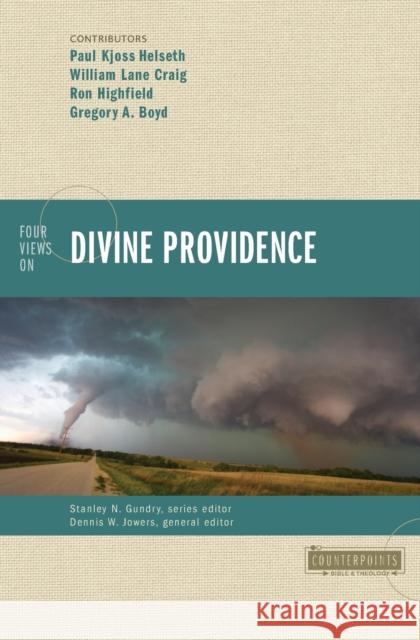
Gregory A. Boyd William Lane Craig Paul Kjoss Helseth
Questions about divine providence have preoccupied Christians for generations: Are people elected to salvation? For whom did Jesus die? This book introduces readers to four prevailing views on divine providence, with particular attention to the question of who Jesus died to save (the extent of the atonement) and if or how God determines who will be saved (predestination).But this book does not merely answer readers' questions. Four Views on Divine Providence helps readers think theologically about all the issues involved in exploring this doctrine. The point-counterpoint format reveals the...
Questions about divine providence have preoccupied Christians for generations: Are people elected to salvation? For whom did Jesus die? This book intr...
he present book and its companion volume The Tenseless Theory of Time: a T Critical Examination are an attempt to adjudicate what one recent discussant has called "the most fundamental question in the philosophy of time," namely, "whether a static or a dynamic conception of the world is correct. "! I had originally intended to treat this question in the space of a single volume; but the study swelled into two. I found that an adequate appraisal of these two of time requires a wide-ranging discussion of issues in competing theories metaphysics, philosophy of language, phenomenology, philosophy...
he present book and its companion volume The Tenseless Theory of Time: a T Critical Examination are an attempt to adjudicate what one recent discussan...
he present book and its companion volume The Tensed Theory of Time: a T Critical Examination are an attempt to adjudicate what one recent discussant has called "the most fundamental question in the philosophy of time," namely, "whether a static or a dynamic conception ofthe world is correct. "] I had originally intended to treat this question in the space of a single volume; but the study swelled into two. I found that an adequate appraisal of these two competing theories of time requires a wide-ranging discussion of issues in metaphysics, philosophy of language, phenomenology, philosophy of...
he present book and its companion volume The Tensed Theory of Time: a T Critical Examination are an attempt to adjudicate what one recent discussant h...
he present volume is part of a larger project, which is the attempt to draft a T coherent doctrine of divine eternity and God's relationship to time. In my God, l Time, and Eternity, I argued that whether one construes divine eternity in terms of timelessness or of omnitemporality will depend'''crucially upon one's views about the objectivity of tensed facts and temporal becoming. If one adopts a tensed, or in McTaggart's terminology, an A-Theory of time, then a coherent doctrine of divine eternity requires that one construe God, at least since the moment of creation, to exist temporally,...
he present volume is part of a larger project, which is the attempt to draft a T coherent doctrine of divine eternity and God's relationship to time. ...
hose who think about time are thinking deeply. Those who think about God T are thinking even more deeply still. Those who try to think about God and time are pressing the very limits of human understanding. Undaunted, this is precisely the project which we have set for ourselves in this study: to try to grasp the nature of divine eternity, to understand what is meant by the amnnation that God is etemal, to fonnulate a coherent doctrine ofGod's relationship with time. This study, the second installment of a long-range research pro gram devoted to a philosophical analysis of the principal...
hose who think about time are thinking deeply. Those who think about God T are thinking even more deeply still. Those who try to think about God and t...
The central question in the philosophy of time is whether time is tensed or tenseless, viz., whether the moments of time are objectively past, present or future, or whether they are ordered merely by the tenseless temporal relations earlier than, simultaneous with, and later than. In this book and the companion volume The Tensed Theory of Time: A Critical Examination, Craig undertakes the first thorough appraisal of the arguments for and against the tensed and tenseless theories of time. The discussions range widely over issues in the philosophy of language, phenomenology, relativity theory,...
The central question in the philosophy of time is whether time is tensed or tenseless, viz., whether the moments of time are objectively past, present...
God Over All: Divine Aseity and the Challenge of Platonism is a defense of God's aseity and unique status as the Creator of all things apart from Himself in the face of the challenge posed by mathematical Platonism. After providing the biblical, theological, and philosophical basis for the traditional doctrine of divine aseity, William Lane Craig explains the challenge presented to that doctrine by the Indispensability Argument for Platonism, which postulates the existence of uncreated abstract objects. Craig provides detailed examination of a wide range of responses to that...
God Over All: Divine Aseity and the Challenge of Platonism is a defense of God's aseity and unique status as the Creator of all things apart ...