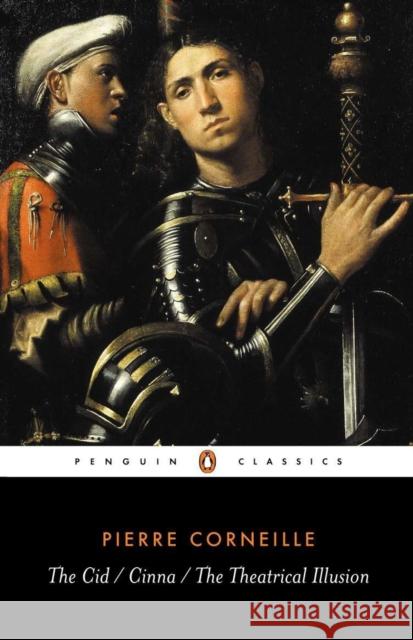
This volume compiles three of Corneille's most lauded plays: The Cid, Corneille's masterpiece set in medieval Spain, was the first great work of French classical drama; Cinna, written three years later in 1641, is a tense political drama; and The Theatrical Illusion, an earlier work, is reminiscent of Shakespeare's exuberant comedies. For more than seventy years, Penguin has been the leading publisher of classic literature in the English-speaking world. With more than 1,700 titles, Penguin Classics represents a global bookshelf of the best works throughout history...
This volume compiles three of Corneille's most lauded plays: The Cid, Corneille's masterpiece set in medieval Spain, was the first great work o...
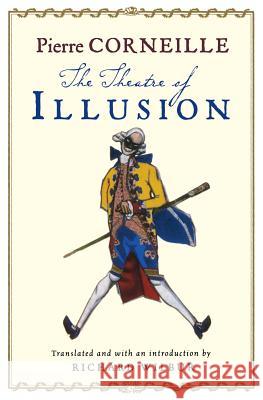
Pierre Corneille, in his original dedication for The Theatre of Illusion, described the play as a "strange monster." He first called these five acts a comedy; later, a "caprice" and an "extravagant trifle." Written in 1635 and staged in 1636, the play vanished from the stage for the next three hundred years to be revived in 1937 by Louis Jouvet and the Comedie Francaise. Since then it has been widely considered, in Virginia Scott s words, "Corneille s baroque masterpiece."
Today this brilliant piece of wit and drama is available in a new translation from one of America s finest poets...
Pierre Corneille, in his original dedication for The Theatre of Illusion, described the play as a "strange monster." He first called these five act...
The Liar is a hilarious comedy of the impossible situations which arise when a compulsive and incorrigible liar falls in love. The Illusion is a fascinating play within a play within a play with a strong mystical element. Le Cid, his most famous play, is a tragicomedy that caused a furious controversy between Corneille and his fellow-writers
The Liar is a hilarious comedy of the impossible situations which arise when a compulsive and incorrigible liar falls in love. The Illusion is a fasci...
Richard Wilbur's translations of the great French dramas have been a boon to acting troupes, students of French literature and history, and theater lovers. He continues this wonderful work with two plays from Pierre Corneille: Le Cid is Corneille's most famous play, a tragedy set in Seville that illuminates the dangers of being bound by honor and the limits of romantic love; The Liar is a farce, set in France and dealing with love, misperceptions, and downright falsifications, which ends, of course, happily ever after.
These two plays, together in one volume, work in perfect...
Richard Wilbur's translations of the great French dramas have been a boon to acting troupes, students of French literature and history, and theater...
This is a reproduction of a book published before 1923. This book may have occasional imperfections such as missing or blurred pages, poor pictures, errant marks, etc. that were either part of the original artifact, or were introduced by the scanning process. We believe this work is culturally important, and despite the imperfections, have elected to bring it back into print as part of our continuing commitment to the preservation of printed works worldwide. We appreciate your understanding of the imperfections in the preservation process, and hope you enjoy this valuable book.
This is a reproduction of a book published before 1923. This book may have occasional imperfections such as missing or blurred pages, poor pictures, e...
Titus avait exile Berenice dans le but de calmer le peuple romain qui voyait d'un mauvais il l'union de l'empereur avec une reine. Il doit maintenant epouser Domitie qui aime d'un amour reciproque Domitian, le frere de Titus. Berenice revient a Rome en apprenant le mariage prochain de Titus et lui demande d'y renoncer. Domitian, dans un but vengeur, demande a Berenice de l'epouser, cette derniere refuse et croit que Titus est l'unique responsable d'une telle demande. Elle court voir Titus qui est deja aneanti et lui accorde toutes ses demandes: il n'epousera pas Domitie. Par contre, Tite la...
Titus avait exile Berenice dans le but de calmer le peuple romain qui voyait d'un mauvais il l'union de l'empereur avec une reine. Il doit maintenant ...
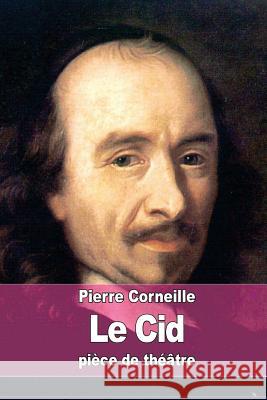
Don Diegue et le comte de Gomes projettent d'unir leurs enfants Rodrigue et Chimene, qui s'aiment. Mais le comte, jaloux de se voir preferer le vieux don Diegue pour le poste de precepteur du prince, offense ce dernier en lui donnant une gifle (un soufflet dans le langage de l'epoque). Don Diegue, trop vieux pour se venger par lui-meme, remet sa vengeance entre les mains de son fils Rodrigue qui, dechire entre son amour et son devoir, finit par ecouter la voix du sang et tue le pere de Chimene en duel. Chimene essaie de renier son amour et le cache au roi, a qui elle demande la tete de...
Don Diegue et le comte de Gomes projettent d'unir leurs enfants Rodrigue et Chimene, qui s'aiment. Mais le comte, jaloux de se voir preferer le vieux ...