George Berkeley (1685 1753) was a university teacher, a missionary, and later a Church of Ireland bishop. The over-riding objective of his long philosophical career was to counteract objections to religious belief that resulted from new philosophies associated with the Scientific Revolution. Accordingly, he argued against scepticism and atheism in the Principles and the Three Dialogues; he rejected theories of force in the Essay on Motion; he offered a new theory of meaning for religious language in Alciphron; and he modified his earlier immaterialism in Siris by speculating about the body's...
George Berkeley (1685 1753) was a university teacher, a missionary, and later a Church of Ireland bishop. The over-riding objective of his long philos...
George Berkeley (1685 1753) was a university teacher, a missionary, and later a Church of Ireland bishop. The over-riding objective of his long philosophical career was to counteract objections to religious belief that resulted from new philosophies associated with the Scientific Revolution. Accordingly, he argued against scepticism and atheism in the Principles and the Three Dialogues; he rejected theories of force in the Essay on Motion; he offered a new theory of meaning for religious language in Alciphron; and he modified his earlier immaterialism in Siris by speculating about the body's...
George Berkeley (1685 1753) was a university teacher, a missionary, and later a Church of Ireland bishop. The over-riding objective of his long philos...
In this Handbook twenty-six leading scholars survey the development of philosophy between the middle of the sixteenth century and the early eighteenth century. The five parts of the book cover metaphysics and natural philosophy; the mind, the passions, and aesthetics; epistemology, logic, mathematics, and language; ethics and political philosophy; and religion. The period between the publication of Copernicus's De Revolutionibus and Berkeley's reflections on Newton and Locke saw one of the most fundamental changes in the history of our way of thinking about the universe. This radical...
In this Handbook twenty-six leading scholars survey the development of philosophy between the middle of the sixteenth century and the early eighteenth...
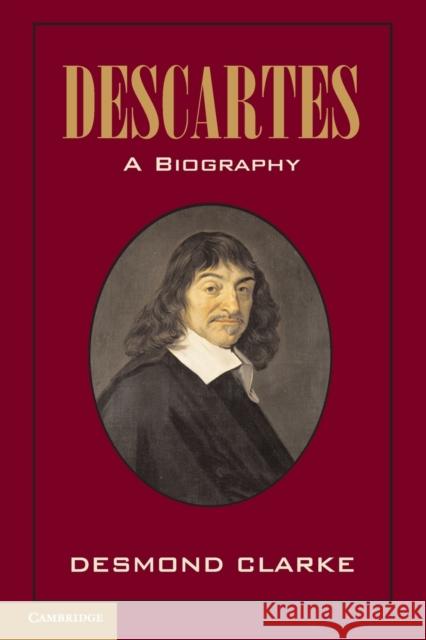
Although Rene Descartes' (1596-1650) is best remembered today for writing "I think, therefore, I am," his unique contribution to the history of ideas was his effort to construct a philosophy that would be sympathetic to the new sciences that emerged in the seventeenth century. In four major publications, he fashioned a philosophical system that accommodated the needs of these new sciences, thereby earning the unrelenting hostility of both Catholic and Calvinist theologians, who relied on the scholastic philosophy that Descartes hoped to replace. His contemporaries claimed that his proofs of...
Although Rene Descartes' (1596-1650) is best remembered today for writing "I think, therefore, I am," his unique contribution to the history of ideas ...
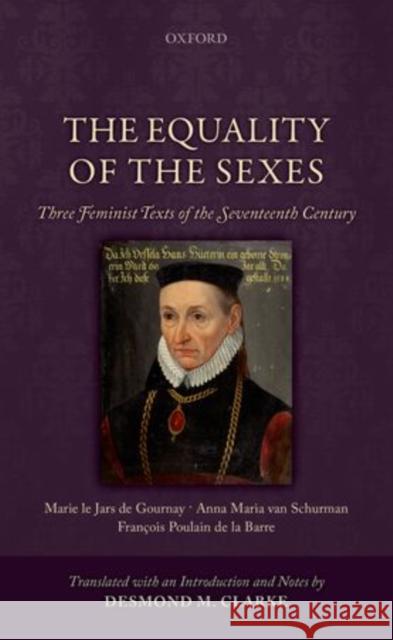
Desmond M. Clarke presents new translations of three of the first feminist tracts to support explicitly the equality of the sexes. The alleged inferiority of women's nature and the corresponding roles that women were (in)capable of exercising in society was debated in Western culture from the civilization of ancient Greece to the establishment of early Christian churches. There had also been some proponents of women's superiority (in comparison with men) prior to the early modern period. In contrast with both of these claims, the seventeenth century witnessed the first publications that...
Desmond M. Clarke presents new translations of three of the first feminist tracts to support explicitly the equality of the sexes. The alleged inferio...
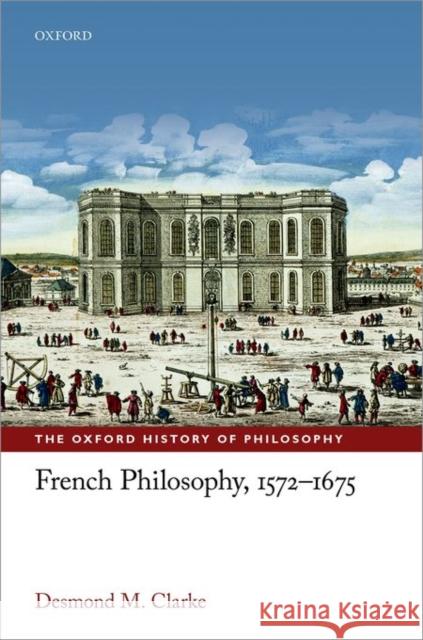
Desmond M. Clarke presents a thematic history of French philosophy from the middle of the sixteenth century to the beginning of Louis XIV's reign. While the traditional philosophy of the schools was taught throughout this period by authors who have faded into permanent obscurity, a whole generation of writers who were not professional philosophers--some of whom never even attended a school or college--addressed issues that were prominent in French public life. Clarke explores such topics as the novel political theory espoused by monarchomachs, such as Beze and Hotman, against Bodin's account...
Desmond M. Clarke presents a thematic history of French philosophy from the middle of the sixteenth century to the beginning of Louis XIV's reign. Whi...
Desmond M. Clarke presents a thematic history of French philosophy from the middle of the sixteenth century to the beginning of Louis XIV's reign. He explores the thought of lawyers, political leaders, theologians, and scholars, in relation to topics ranging from political theory, scepticism, and ethics, to philosophy of mind and women's equality.
Desmond M. Clarke presents a thematic history of French philosophy from the middle of the sixteenth century to the beginning of Louis XIV's reign. He ...