Donald E. Chipman Denise Josep Harriett Denise Joseph
Winner, Presidio La Bahia Award, Sons of the Republic of Texas, 2000 Texas Old Missions and Forts Restoration Association Book Award, the Texas Old Missions and Fort Restoration Association and the Texas Catholic Historical Society, 2001
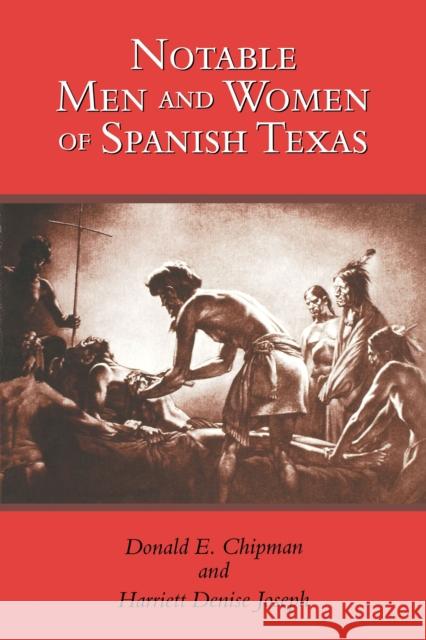
The Spanish colonial era in Texas (1528-1821) continues to emerge from the shadowy past with every new archaeological and historical discovery. In this book, years of archival sleuthing by Donald E. Chipman and Harriett Denise Joseph now reveal the real human beings behind the legendary figures who discovered, explored, and settled Spanish...
Winner, Presidio La Bahia Award, Sons of the Republic of Texas, 2000 Texas Old Missions and Forts Restoration Association Book Award, the Te...
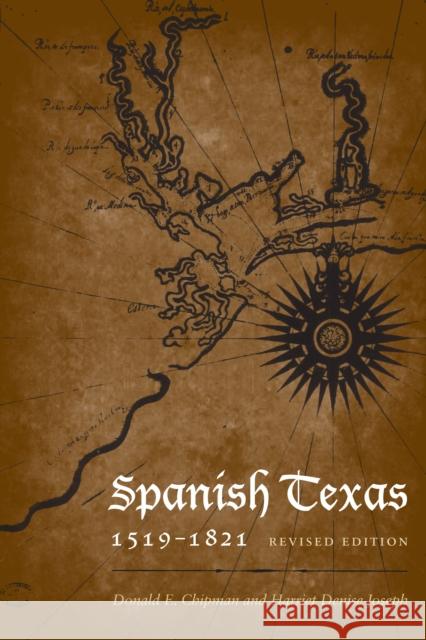
Modern Texas, like Mexico, traces its beginning to sixteenth-century encounters between Europeans and Indians who contested control over a vast land. Unlike Mexico, however, Texas eventually received the stamp of Anglo-American culture, so that Spanish contributions to present-day Texas tend to be obscured or even unknown. The first edition of Spanish Texas, 1519-1821 (1992) sought to emphasize the significance of the Spanish period in Texas history. Beginning with information on the land and its inhabitants before the arrival of Europeans, the original volume covered major...
Modern Texas, like Mexico, traces its beginning to sixteenth-century encounters between Europeans and Indians who contested control over a vast lan...
Cabeza de Vaca's mode of transportation, afoot on portions of two continents in the early decades of the sixteenth century, fits one dictionary definition of the word "pedestrian." By no means, however, should the ancillary meanings of "commonplace" or "prosaic" be applied to the man, or his remarkable adventures. Between 1528 and 1536, he trekked an estimated 2,480 to 2,640 miles of North American terrain from the Texas coast near Galveston Island to San Miguel de Culiacan near the Pacific Coast of Mexico. He then traveled under better circumstances, although still on foot, to Mexico City....
Cabeza de Vaca's mode of transportation, afoot on portions of two continents in the early decades of the sixteenth century, fits one dictionary defin...
Randolph B. Mike Campbell has spent the better part of the last five decades helping Texans rediscover their history, producing a stream of definitive works on the social, political, and economic structures of the Texas past. Through meticulous research and terrific prose, Campbell s collective work has fundamentally remade how historians understand Texan identity and the state s southern heritage, as well as our understanding of such contentious issues as slavery, westward expansion, and Reconstruction. Campbell s pioneering work in local and county records has defined the model for...
Randolph B. Mike Campbell has spent the better part of the last five decades helping Texans rediscover their history, producing a stream of definitive...
"Heaven's Messengers" begins with the death of six young people--three in Mexico, two in the United States, and one in Spain. All are admitted to heaven by St. Peter and given special assignments to interview six important personages in the conquest of Mexico: Hernando Cortes, Pedro de Alvarado, and Martin Lopez (the last far less well known, but he was a master carpenter and boat builder who constructed thirteen small vessels that were launched on Lake Texcoco and provided a naval component that proved vitally important to the success of the conquest); Dona Marina and Isabel Moctezuma,...
"Heaven's Messengers" begins with the death of six young people--three in Mexico, two in the United States, and one in Spain. All are admitted to...