In the months after Appomattox, the South was plunged into a chaos that surpassed even the disorder of the last hard months of the war itself. Peace brought, if anything, an increased level of violence to the region as local authorities of the former Confederacy were stripped of their power and the returning foot soldiers of the defeated army, hungry and without hope, raided the already impoverished countryside for food and clothing. In the wake of the devastation that followed surrender, even some of the most virulent Yankee-haters found themselves relieved as the Union army began to...
In the months after Appomattox, the South was plunged into a chaos that surpassed even the disorder of the last hard months of the war itself. Peac...
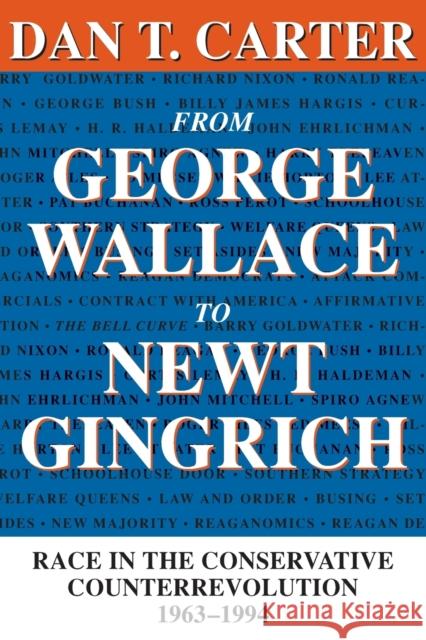
"Carter's essays present graphic evidence of the extent to which race continues to matter in American politics."-Journal of Southern History In this penetrating survey of the last three decades, Dan T. Carter examines race as an issue in presidential politics. Drawing on his broad knowledge of recent political history, he traces the "counterrevolutionary" response to the civil rights movement since Wallace's emergence on the national scene in 1963, and detects a gradual intersection of racial and economic conservatism in the coalition that re-shaped American politics from the 1970s through...
"Carter's essays present graphic evidence of the extent to which race continues to matter in American politics."-Journal of Southern History In this p...
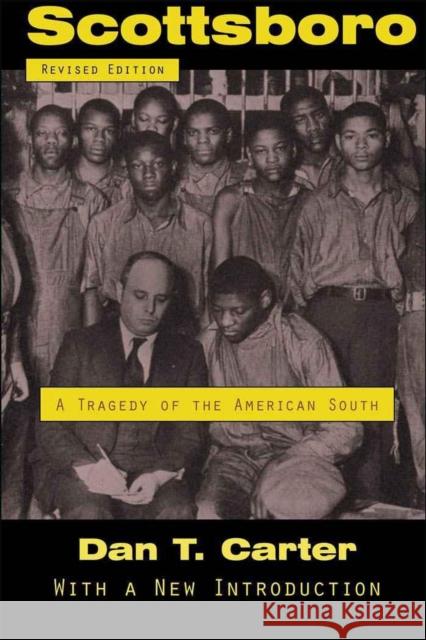
Scottsboro tells the riveting story of one of this country's most famous and controversial court cases and a tragic and revealing chapter in the history of the American South. In 1931, two white girls claimed they were savagely raped by nine young black men aboard a freight train moving across northeastern Alabama. The young men-ranging in age from twelve to nineteen-were quickly tried, and eight were sentenced to death. The age of the defendants, the stunning rapidity of their trials, and the harsh sentences they received sparked waves of protest and attracted national attention during...
Scottsboro tells the riveting story of one of this country's most famous and controversial court cases and a tragic and revealing chapter in the hi...
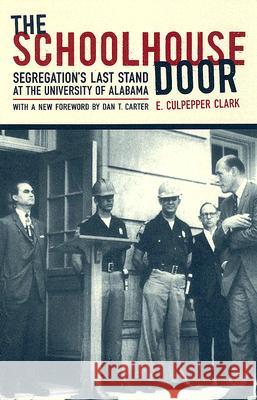
On June 11, 1963, in a dramatic gesture that caught the nation's attention, Governor George Wallace physically blocked the entrance to Foster Auditorium on the University of Alabama's campus. His intent was to defy Attorney General Nicholas Katzenbach, sent on behalf of the Kennedy administration to force Alabama to accept court-ordered desegregation. After a tense confrontation, President Kennedy federalized the Alabama National Guard and Wallace backed down, allowing Vivian Malone and James Hood to become the first African Americans to enroll successfully at their state's flagship...
On June 11, 1963, in a dramatic gesture that caught the nation's attention, Governor George Wallace physically blocked the entrance to Foster Auditori...
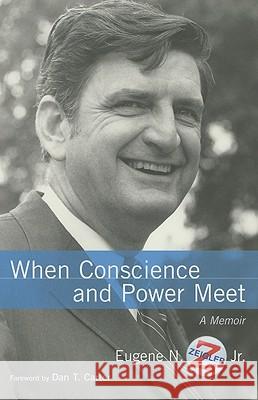
After more than a decade in the South Carolina legislature, Eugene N. Zeigler, Jr., made a name for himself in politics through his spirited campaign for the U.S. Senate in 1972 against incumbent Strom Thurmond and a subsequent candidacy in the state's 1974 Democratic gubernatorial primary. Unsuccessful on both fronts, Zeigler nonetheless distinguished himself as a man of passionate convictions in the value of public service. In his memoir, When Conscience and Power Meet, Zeigler recounts these and other defining moments from a life spent pursuing the public good, often against insurmountable...
After more than a decade in the South Carolina legislature, Eugene N. Zeigler, Jr., made a name for himself in politics through his spirited campaign ...
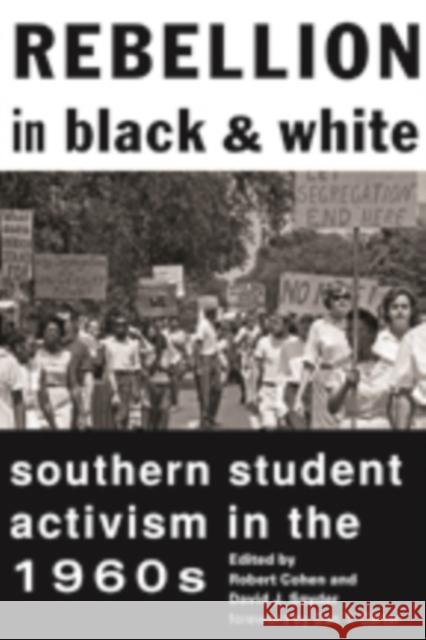
Rebellion in Black and White offers a panoramic view of southern student activism in the 1960s. Original scholarly essays demonstrate how southern students promoted desegregation, racial equality, free speech, academic freedom, world peace, gender equity, sexual liberation, Black Power, and the personal freedoms associated with the counterculture of the decade.
Most accounts of the 1960s student movement and the New Left have been northern-centered, focusing on rebellions at the University of California, Berkeley, Columbia University, and others. And yet, students at...
Rebellion in Black and White offers a panoramic view of southern student activism in the 1960s. Original scholarly essays demonstrate how s...