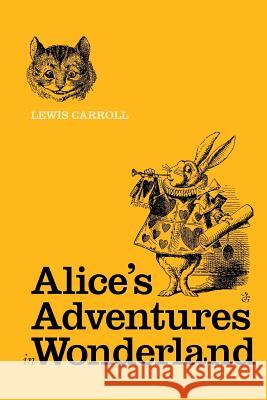
Journey with Alice down the rabbit hole into a world of wonder where oddities, logic and wordplay rule supreme. Encounter characters like the grinning Cheshire Cat who can vanish into thin air, the cryptic Mad Hatter who speaks in riddles and the harrowing Queen of Hearts obsessed with the phrase "Off with their heads " This is a land where rules have no boundaries, eating mushrooms will make you grow or shrink, croquet is played with flamingos and hedgehogs, and exorbitant trials are held for the theft of tarts. Amidst these absurdities, Alice will have to find her own way home. Alice's...
Journey with Alice down the rabbit hole into a world of wonder where oddities, logic and wordplay rule supreme. Encounter characters like the grinning...
When the self-aware young Alice, who grows bored of sitting by the river with her sister, and spots a peculiar looking rabbit, dressed in a waistcoat. She hears the rabbit, which is seemingly in a hurry, mumbling whilst dangling its pocket watch. Impulsively, Alice inquisitively rushes after it making her way down a rabbit-hole which descends to the fantasy realm of Wonderland. Finding herself in an unknown corridor encircled by doors of all shapes and sizes, Alice is subject to her first of many bizarre encounters. In order to fit through a tiny door, which separates her from a beautiful...
When the self-aware young Alice, who grows bored of sitting by the river with her sister, and spots a peculiar looking rabbit, dressed in a waistcoat....
Alice was published in 1865, three years after Charles Lutwidge Dodgson and the Reverend Robinson Duckworth rowed in a boat on 4 July 1862 (this popular date of the "golden afternoon" might be a confusion or even another Alice-tale, for that particular day was cool, cloudy, and rainy) up the Isis with the three young daughters of Henry Liddell (the Vice-Chancellor of Oxford University and Dean of Christ Church): Lorina Charlotte Liddell (aged 13, born 1849, "Prima" in the book's prefatory verse); Alice Pleasance Liddell (aged 10, born 1852, "Secunda" in the prefatory verse); Edith Mary...
Alice was published in 1865, three years after Charles Lutwidge Dodgson and the Reverend Robinson Duckworth rowed in a boat on 4 July 1862 (this popul...
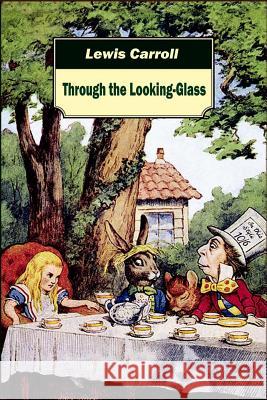
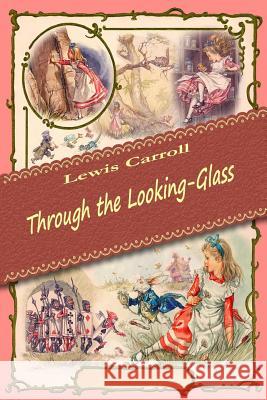
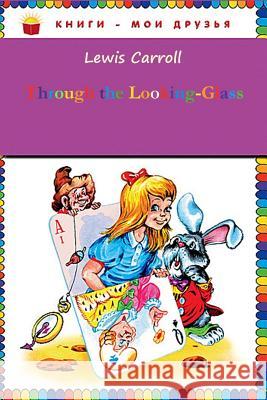
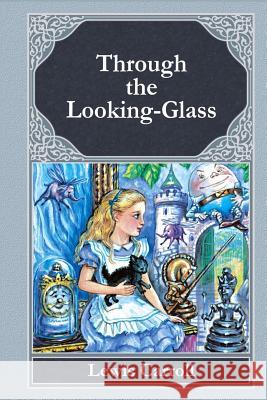
Alice is playing with a white kitten (whom she calls "Snowdrop") and a black kitten (whom she calls "Kitty")-the offspring of Dinah, Alice's cat in Alice's Adventures in Wonderland-when she ponders what the world is like on the other side of a mirror's reflection. Climbing up on the fireplace mantel, she pokes at the wall-hung mirror behind the fireplace and discovers, to her surprise, that she is able to step through it to an alternative world. In this reflected version of her own house, she finds a book with looking-glass poetry, "Jabberwocky," whose reversed printing she can read only by...
Alice is playing with a white kitten (whom she calls "Snowdrop") and a black kitten (whom she calls "Kitty")-the offspring of Dinah, Alice's cat in Al...
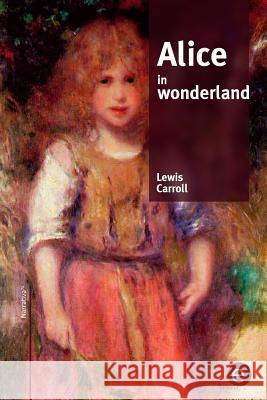
ALICE'S ADVENTURES IN WONDERLAND (commonly shortened to Alice in Wonderland) is an 1865 novel written by English author Charles Lutwidge Dodgson under the pseudonym Lewis Carroll. It tells of a girl named Alice falling through a rabbit hole into a fantasy world populated by peculiar, anthropomorphic creatures. The tale plays with logic, giving the story lasting popularity with adults as well as with children. It is considered to be one of the best examples of the literary nonsense genre. Its narrative course and structure, characters and imagery have been enormously influential in both...
ALICE'S ADVENTURES IN WONDERLAND (commonly shortened to Alice in Wonderland) is an 1865 novel written by English author Charles Lutwidge Dodgson under...