When the publishers asked me to write the Life of Watt, I declined, stating that my thoughts were upon other matters. This settled the question, as I supposed, but in this I was mistaken. Why shouldn't I write the Life of the maker of the steam-engine, out of which I had made fortune?
When the publishers asked me to write the Life of Watt, I declined, stating that my thoughts were upon other matters. This settled the question, as I ...
It seems almost unnecessary to say that "Round the World," like "An American Four-in-Hand in Britain," was originally printed for private circulation. My publishers having asked permission to give it to the public, I have been induced to undertake the slight revision, and to make some additions necessary to fit the original for general circulation, not so much by the favorable reception accorded to the "Four-in-Hand" in England as well as in America, nor even by the flattering words of the critics who have dealt so kindly with it, but chiefly because of many valued letters which entire...
It seems almost unnecessary to say that "Round the World," like "An American Four-in-Hand in Britain," was originally printed for private circulation....
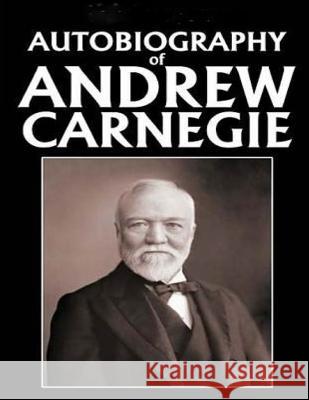
Andrew Carnegie (1835-1919) was a Scottish immigrant to the United States. He arrived as a poor child, but--as the epitome of the "rags to riches" story, built himself into one of the richest men in the world. As a young man, who worked as a telegraph operator, and used his wits and business acumen to parlay his job into greater investments during and after the Civil War. Those investments in railroads, bridges, oil derricks, and more made him very wealthy by the 1880s. Then he brought the Bessemer process for steel-making to the United States, and eventually sold his Carnegie Steel...
Andrew Carnegie (1835-1919) was a Scottish immigrant to the United States. He arrived as a poor child, but--as the epitome of the "rags to riches" ...
Before the concept of social justice had impinged on the social conscience...
Before the social safety net had even been conceived...
By the turn of the 20th Century, the era of the robber barons, Andrew Carnegie (1835-1919) had already accumulated a staggeringly large fortune; he was one of the wealthiest people on the globe. He guaranteed his position as one of the wealthiest men ever when he sold his steel business to create the United States Steel Corporation. Following that sale, he spent his last 18 years, he gave away...
Before the 99% occupied Wall Street...
Before the concept of social justice had impinged on the social conscience...