Native American languages are spoken from Siberia to Greenland, and from the Arctic to Tierra del Fuego; they include the southernmost language of the world (Yaghan) and some of the northernmost (Eskimoan). Campbell's project is to take stock of what is currently known about the history of Native American languages and in the process examine the state of American Indian historical linguistics, and the success and failure of its various methodologies. There is remarkably little consensus in the field, largely due to the 1987 publication of Language in the Americas by Joseph...
Native American languages are spoken from Siberia to Greenland, and from the Arctic to Tierra del Fuego; they include the southernmost language of the...
In this important new work, Alice Harris and Lyle Campbell set out to establish a general framework for the investigation of syntactic change. Using a cross-linguistic approach, they reveal shared properties of changes across languages, determine what mechanisms lie behind them, and how they correlate to the overall explanation of syntactic change. They draw on data drawn from a wide variety of languages, in particluar those from the Indo-European, Finno-Ugric, Kartvelian, and North East Caucasian families.
In this important new work, Alice Harris and Lyle Campbell set out to establish a general framework for the investigation of syntactic change. Using a...
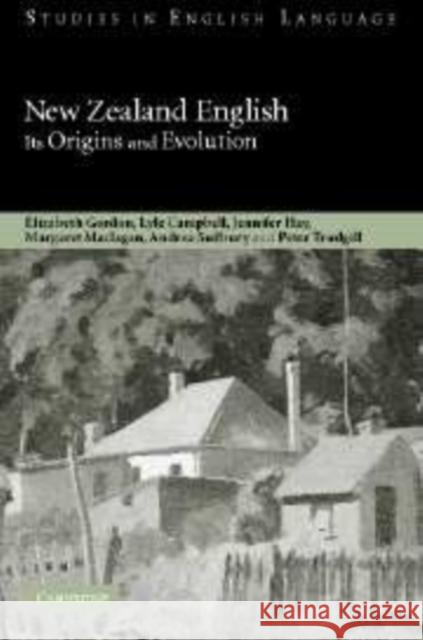
New Zealand English--at only 150 years old--is one of the newest varieties of English, and is unique in that its full history and development are documented in extensive audio-recordings. This book examines and analyzes the extensive linguistic changes New Zealand English has undergone over the past 150 years on the basis of these recordings. The authors, experts in phonetics and sociolinguistics, use the data to test previous explanations for new dialect formation, and to challenge current claims about the nature of language change.
New Zealand English--at only 150 years old--is one of the newest varieties of English, and is unique in that its full history and development are docu...
How are relationships established between the world's languages? This is one of the most topical and most controversial questions in contemporary linguistics. The central aims of this book are to answer this question, to cut through the controversies, and to contribute to research in distant genetic relationships. In doing this the authors aim to: (1) show how the methods have been employed; (2) reveal which methods, techniques, and strategies have proven successful and which ones have proven ineffective; (3) determine how particular language families were established; (4) evaluate several of...
How are relationships established between the world's languages? This is one of the most topical and most controversial questions in contemporary ling...
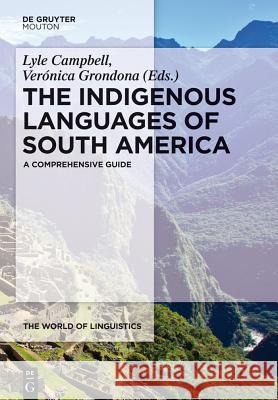
Excerpt Open publication The Indigenous Languages of South America: A Comprehensive Guide is a thorough guide to the indigenous languages of this part of the world. With more than a third of the linguistic diversity of the world (in terms of language families and isolates), South American languages contribute new findings in most areas of linguistics. Though formerly one of the linguistically least known areas of the world, extensive descriptive and historical linguistic research in recent years has expanded knowledge greatly. These advances are represented...
Excerpt Open publication The Indigenous Languages of South America: A Comprehensive Guide is a thorough guide to t...
Language Isolates is the first volume to explore this fascinating group of languages that comprise a third of the world's languages.
Individual chapters written by experts in the field examine the major language isolates by geographic regions with up-to-date descriptions of many previously undocumented language isolates. Each language isolate represents a unique lineage and a unique window on what is possible in human language making this an essential volume for anyone interested in understanding the diversity of human language.
Language...
Language Isolates is the first volume to explore this fascinating group of languages that comprise a third of the world's languages.
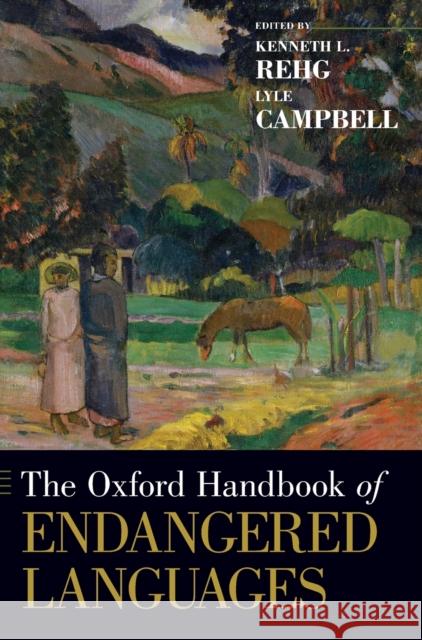
The Oxford Handbook of Endangered Languages, in 39 chapters, is a comprehensive resource on endangered languages. It broadens understanding of language endangerment, language documentation, and language revitalization, and in doing so encourages further research and support for endangered languages.
The Oxford Handbook of Endangered Languages, in 39 chapters, is a comprehensive resource on endangered languages. It broadens understanding of languag...