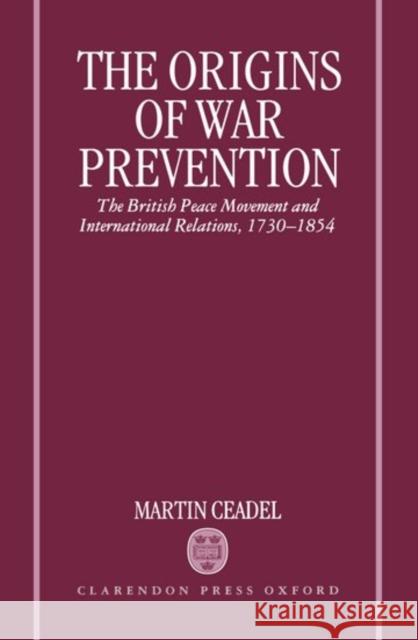
This book makes an original contribution to international relations and British politics. It identifies for the first time the dominant pre-modern theory of international relations, which fatalistically assumed that war was beyond human control. It then shows how this theory was undermined from the 1730s onwards, with the consequence that a debate began about how best to prevent war in which a vocal minority argued that war as an institution for settling disputes could be abolished. Britain led the way in this repudiation of fatalism and exploration of pacific alternatives: it produced the...
This book makes an original contribution to international relations and British politics. It identifies for the first time the dominant pre-modern the...