The authors of the highly acclaimed State of the World series elaborate upon their vision of a global economy that does not destroy its own natural support systems. Authoritative yet extremely readable, this book addresses control of energy resources, population, poverty, transportation, taxes, and other issues necessary to create an environmenatally sound global economy.
The authors of the highly acclaimed State of the World series elaborate upon their vision of a global economy that does not destroy its own natural su...
In a world where the need for seafood and grain for the 90 million people being added each year is being satisfied in part by reducing consumption among those already here, the world has little choice but to try and quickly slow population growth. Historically, farmers and fishermen bore the primary responsibility for balancing supply and demand. Now with the fish catch no longer expanding and with the growth in grain production slowing, the principal responsibility rests with the family planners.
In a world where the need for seafood and grain for the 90 million people being added each year is being satisfied in part by reducing consumption amo...
A new collection of articles drawn from World Watch magazine, winner of an Utne Reader Alternative Press Award for investigative reporting. A collection of the best and most-requested articles from the Worldwatch Institute's award-winning magazine, World Watch. What ails the earth and how can we fix it? People all over the world are wrestling with this question, and requesting reliable information on the nature of the environmental threats and how to deal with them. The World Watch Reader responds to this need for timely, authoritative information. Written by the world's preeminent...
A new collection of articles drawn from World Watch magazine, winner of an Utne Reader Alternative Press Award for investigative reporting. A collecti...
Human demands are pressing up against more and more of the Earth's limits. This book from the Worldwatch Institute examines the impacts of population growth on global resources and services, including food, fresh water, fisheries, jobs, education, income, and health. Despite the current hype of a "birth dearth" in parts of Europe and Japan, the fact remains that human numbers are projected to increase by over 3 billion by 2050. Rapidly growing nations are likely to outstrip the carrying capacity of their natural support systems. Governments worn down by several decades of rapid population...
Human demands are pressing up against more and more of the Earth's limits. This book from the Worldwatch Institute examines the impacts of population ...
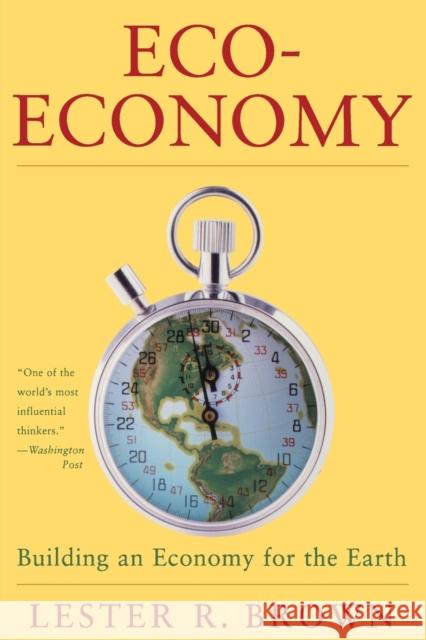
In 1543, Polish astronomer Nicolaus Copernicus challenged the view that the Sun revolved around the Earth, arguing instead that the Earth revolved around the Sun. His paper led to a revolution in thinking to a new worldview. "Eco-Economy" discusses the need today for a similar shift in our worldview. The issue now is whether the environment is part of the economy or the economy is part of the environment. Lester R. Brown argues the latter, pointing out that treating the environment as part of the economy has produced an economy that is destroying its natural support systems. Brown notes that...
In 1543, Polish astronomer Nicolaus Copernicus challenged the view that the Sun revolved around the Earth, arguing instead that the Earth revolved aro...
Brown explains, for example, why wind-generated electricity with its abundance and falling cost is emerging as the foundation of the new post-fossil fuel energy economy: now cheaper than electricity from coal, oil, or natural gas, it can be used to electrolyze water and produce hydrogen, the fuel of choice for the new fuel cell engines that every major automobile manufacturer is working on. And since an eco-economy relies heavily on recycling materials already in the system, such as steel and aluminum, we learn how, in this new economy, recycling industries will largely replace mining...
Brown explains, for example, why wind-generated electricity with its abundance and falling cost is emerging as the foundation of the new post-fossi...
If Osama bin Laden and his colleagues succeed in diverting our attention from the real threats to our future security, they may reach their goals for reasons that even they have not imagined.
If Osama bin Laden and his colleagues succeed in diverting our attention from the real threats to our future security, they may reach their goals for ...
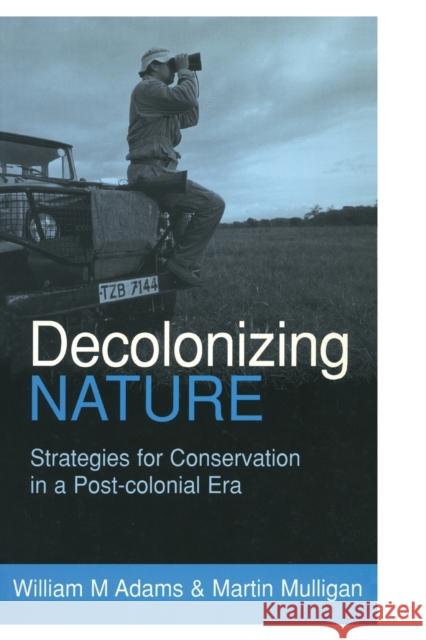
An exploration of the enduring influence of the colonial legacy on attitudes about relationships between people and nature in countries that were once part of the British Empire, either at the periphery or the centre. Colonial annexation and government were accompanied by the colonization and exploitation of nature, both for production and even in the name of conservation. At the start of the 21st century, the conservation of nature is still of vital importance in these countries, but what should this conservation look like? What ideas can it be based upon? This work argues that there is a...
An exploration of the enduring influence of the colonial legacy on attitudes about relationships between people and nature in countries that were once...
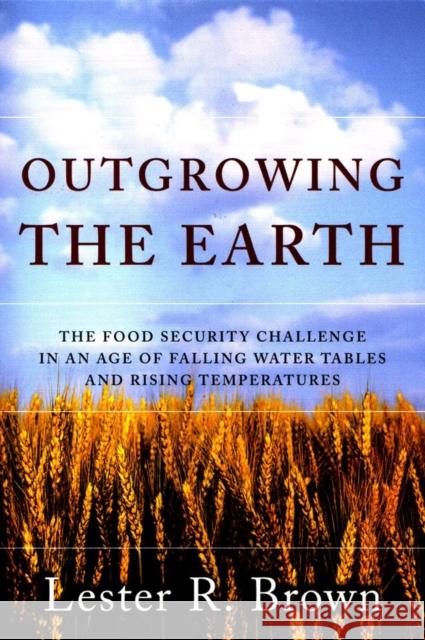
In an integrated world economy, China's rising food prices will become the world's rising food prices. China's land scarcity will become everyone's land scarcity. And water scarcity in China will affect the entire world. China's dependence on massive imports, like the collapse of the world's fisheries, will be a wake-up call that we are colliding with the earth's capacity to feed us. It could well lead us to redefine national security away from military preparedness and toward maintaining adequate food supplies.
In an integrated world economy, China's rising food prices will become the world's rising food prices. China's land scarcity will become everyone's la...
The newest volume in the annual series that has become the bible of the global environmental movement--and indispensable for anyone concerned with the future of our world. State of the World 2000 provides national leaders and concerned citizens with a comprehensive framework for the global debate about our future in the new century. This annual survey by the award-winning Worldwatch Institute has become an invaluable analysis of negative environmental trends and a guide to emerging solutions. The book shows how our current fossil-fueled, auto-centered, throwaway economy is steadily destroying...
The newest volume in the annual series that has become the bible of the global environmental movement--and indispensable for anyone concerned with the...