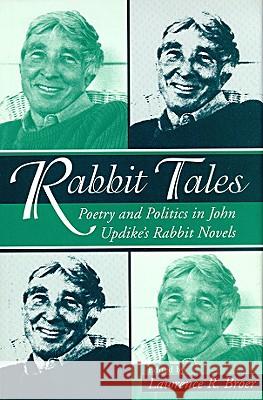
These essays show the Rabbit novels to be a carefully crafted fabric of changing hues and textures, of social realism and something of grandeur, worthy of Dickens, Thackeray, and Joyce.
In the tales of"Rabbit" Angstrom-Rabbit, Run (1960), Rabbit Redux (1971), Rabbit Is Rich (1981), and Rabbit at Rest (1990) John Updike has produced one of the most compelling literary tapestries of our time. Updike's Rabbit, the aging high-school basketball star adrift in the century's confusion, is an archetypal American hero, one strikingly real and...
These essays show the Rabbit novels to be a carefully crafted fabric of changing hues and textures, of social realism and something of grandeur, wo...
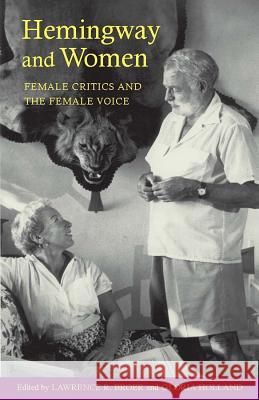
Female scholars reevaluate gender and the female presence in the life and work of one of America s foremost writers.
Ernest Hemingway has often been criticized as a misogynist because of his portrayal of women. But some of the most exciting Hemingway scholarship of recent years has come from women scholars who challenge traditional views of Hemingway and women. The essays in this collection range from discussions of Hemingway s famous heroines Brett Ashley and Catherine Barkley to examinations of the central role of gender in his short stories and in the novel The...
Female scholars reevaluate gender and the female presence in the life and work of one of America s foremost writers.
Lawrence R. Broer John D. Walther Lawrence R. Broer
Often, the decade of the 1920s has been stereotyped with such labels as The Roaring Twenties, The Jazz Age, or The Lost Generation. Historical perspective has forced reevaluation of this decade. Articles in this collection are presented in the most definitive anthology dealing with 1920s America. The contributors have put aside stereotypes to offer a valuable critique of the American dream during a time of major crises. Dancing Fools and Weary Blues also presents its readers a picture of the continual redemption and revitalization of that dream, and reasserts its basic democratic...
Often, the decade of the 1920s has been stereotyped with such labels as The Roaring Twenties, The Jazz Age, or The Lost Generation. Historical perspec...
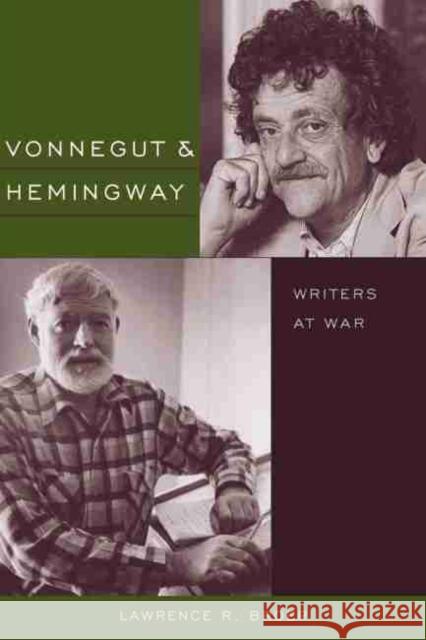
In this original comparative study of Kurt Vonnegut and Ernest Hemingway, Lawrence R. Broer maps the striking intersections of biography and artistry in works by both writers, and he compares the ways in which they blend life and art. Broer views Hemingway as the secret sharer of Vonnegut s literary imagination and argues that the two writers while traditionally considered as adversaries because of Vonnegut s rejection of Hemingway s emblematic hypermasculinism inevitably address similar deterministic wounds in their fiction: childhood traumas, family insanity, deforming wartime...
In this original comparative study of Kurt Vonnegut and Ernest Hemingway, Lawrence R. Broer maps the striking intersections of biography and artistry ...