Maurice Blanchot remains a writer whose work, though often cited, is little-known to the English-speaking reader. In The Blanchot Reader Michael Holland answers that urgent need and does so in a way that provides a coherent perspective on what by any standard is an extraordinary personal and intellectual career.
Maurice Blanchot remains a writer whose work, though often cited, is little-known to the English-speaking reader. In The Blanchot Reader Michael ...
This book is a translation of Maurice Blanchot's work that is of major importance to late 20th-century literature and philosophy studies. Using the fragmentary form, Blanchot challenges the boundaries between the literary and the philosophical. With the obsessive rigor that has always marked his writing, Blanchot returns to the themes that have haunted his work since the beginning: writing, death, transgression, the neuter, but here the figures around whom his discussion turns are Hegel and Nietzsche rather than Mallarme and Kafka. The metaphor Blanchot uses for writing in The Step Not...
This book is a translation of Maurice Blanchot's work that is of major importance to late 20th-century literature and philosophy studies. Using the fr...
A Voice from Elsewhere represents one of Maurice Blanchot's most important reflections on the enigma and secret of "literature." The essays here bear down on the necessity and impossibility of witnessing what literature transmits, and--like Beckett and Kafka--on what one might call the "default" of language, the tenuous border that binds writing and silence to each other. In addition to considerations of Rene Char, Paul Celan, and Michel Foucault, Blanchot offers a sustained encounter with the poems of Louis-Rene des Forets and, throughout, a unique and important concentration on music--on...
A Voice from Elsewhere represents one of Maurice Blanchot's most important reflections on the enigma and secret of "literature." The essays here bear ...
Maurice Blanchot has been for a half century one of France's leading authors of fiction and theory. Two of his most ambitious nonfiction works, The Space of Literature and The Writing of the Disaster, are also available from the University of Nebraska Press, as is The Most High, his third novel. John Gregg is the author of Maurice Blanchot and the Literature of Transgression.
Maurice Blanchot has been for a half century one of France's leading authors of fiction and theory. Two of his most ambitious nonfiction works, The Sp...
The world of Aminadab, Maurice Blanchot's second novel, is dark, bizarre, and fantastic. Reminiscent of Kafka's enclosed and allegorical spaces, Aminadab is both a reconstruction and a deconstruction of power, authority, and hierarchy. The novel opens when Thomas, upon seeing a woman gesture to him from a window of a large boarding house, enters the building and slowly becomes embroiled in its inscrutable workings. Although Thomas is constantly reassured that he can leave the building, he seems to be separated forever from the world he has left behind. The story consists of Thomas's...
The world of Aminadab, Maurice Blanchot's second novel, is dark, bizarre, and fantastic. Reminiscent of Kafka's enclosed and allegorical spaces, Amina...
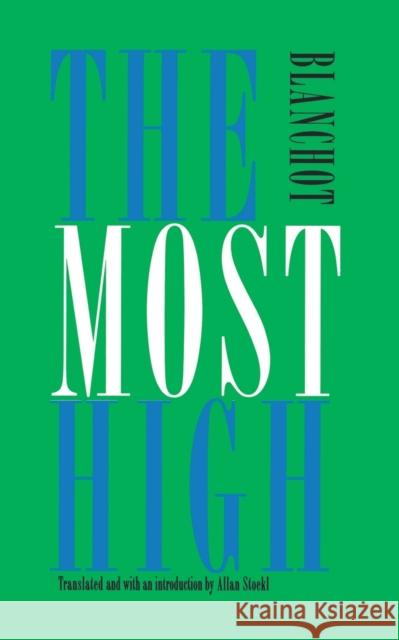
"Blanchot describes a world where the Absolute has finally overcome all other rivals to its authority. The State is unified, universal, and homogenous, promising perfect satisfaction. Why then does it find revolt everywhere? Could it be the omnipresent police? The plagues? The proliferating prisons and black markets? Written in part as a description of post-World War II Europe, Blanchot's dystopia charts with terrible clarity the endless death of god in an era of constantly metamorphosing but strangely definitive ideologies."-Translation Review Maurice Blanchot has been for a half century one...
"Blanchot describes a world where the Absolute has finally overcome all other rivals to its authority. The State is unified, universal, and homogenous...
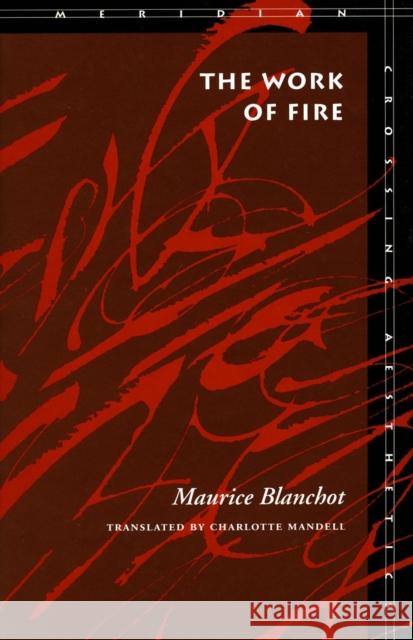
Maurice Blanchot is arguably the key figure after Sartre in exploring the relation between literature and philosophy. Blanchot developed a distinctive, limpid form of essay writing; these essays, in form and substance, left their imprint on the work of the most influential French theorists. The writings of Barthes, Foucault, and Derrida are unimaginable without Blanchot.
Maurice Blanchot is arguably the key figure after Sartre in exploring the relation between literature and philosophy. Blanchot developed a distinctive...
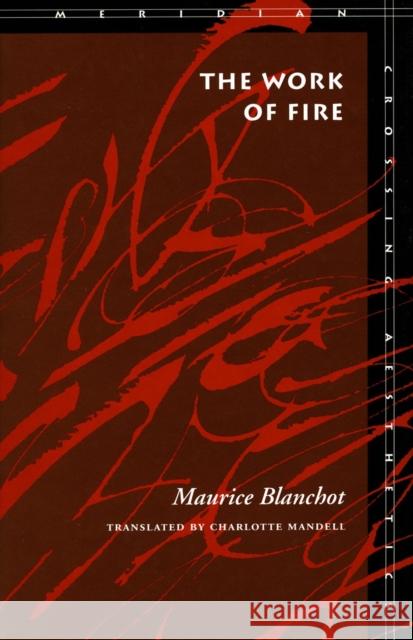
Maurice Blanchot is arguably the key figure after Sartre in exploring the relation between literature and philosophy. Blanchot developed a distinctive, limpid form of essay writing; these essays, in form and substance, left their imprint on the work of the most influential French theorists. The writings of Barthes, Foucault, and Derrida are unimaginable without Blanchot.
Maurice Blanchot is arguably the key figure after Sartre in exploring the relation between literature and philosophy. Blanchot developed a distinctive...
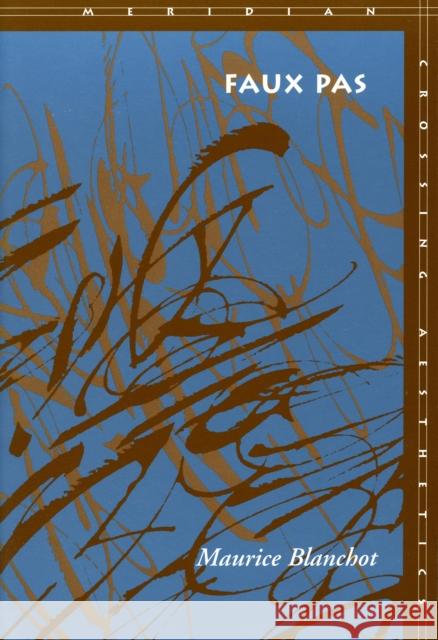
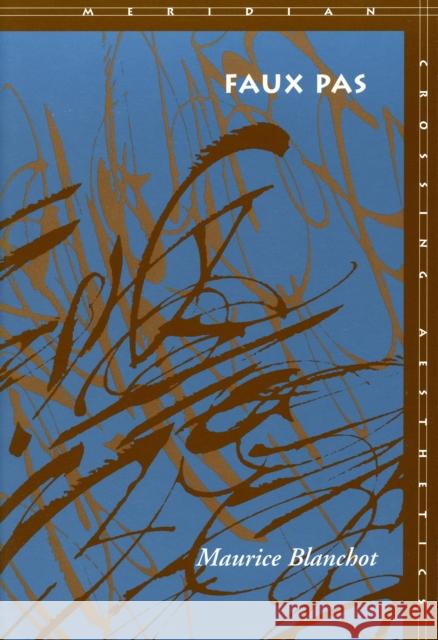
Published in France in 1943, Faux Pas is the first collection of Maurice Blanchot's essays on literature and language, consisting of fifty-four short pieces that were originally issued as reviews in literary journals, and one long introductory meditation that defines the trajectory of the whole volume. These essays--like those collected in the other five books of criticism published over several decades--have established Blanchot as the most lucid and powerful French critic of the second half of the twentieth century. Sober reconstructions of the main tenets of both classical and...
Published in France in 1943, Faux Pas is the first collection of Maurice Blanchot's essays on literature and language, consisting of fifty-four...
Published in France in 1943, Faux Pas is the first collection of Maurice Blanchot's essays on literature and language, consisting of fifty-four short pieces that were originally issued as reviews in literary journals, and one long introductory meditation that defines the trajectory of the whole volume. These essays--like those collected in the other five books of criticism published over several decades--have established Blanchot as the most lucid and powerful French critic of the second half of the twentieth century. Sober reconstructions of the main tenets of both classical and...
Published in France in 1943, Faux Pas is the first collection of Maurice Blanchot's essays on literature and language, consisting of fifty-f...