Popular music may be viewed as primary documents of society, and America's Musical Pulse documents the American experience as recorded in popular sound. Whether jazz, blues, swing, country, or rock, the music, the impulse behind it, and the reaction to it reveal the attitudes of an era or generation. Always a major preoccupation of students, music is often ignored by teaching professionals, who might profitably channel this interest to further understandings of American social history and such diverse fields as sociology, political science, literature, communications, and business...
Popular music may be viewed as primary documents of society, and America's Musical Pulse documents the American experience as recorded in po...
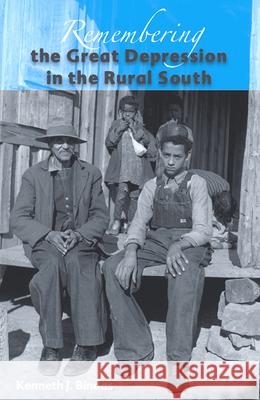
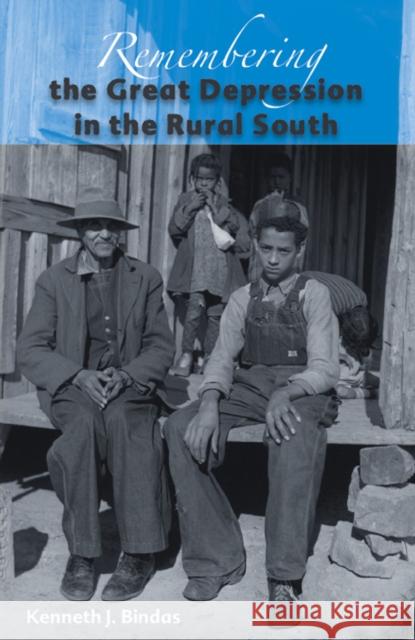
With this collection of more than 600 oral histories recalling the Great Depression, Bindas provides a detailed, personal chronicle of the 1930s from a rural Southern perspective and captures a historical era and its meaning. The Depression altered the basic structure of American society and changed the way government, business, and the American people interacted. Bindas finds his narrators saw the federal government as an agent of positive change. Though their stories reflect the general despair of the era, they also reveal the hope they found through the New Deal and their determination,...
With this collection of more than 600 oral histories recalling the Great Depression, Bindas provides a detailed, personal chronicle of the 1930s from ...
It was for stage bands, for dancing, and for a jiving mood of letting go. Throughout the nation swing re-sounded with the spirit of good times.
But this pop genre, for a decade America's favorite, arose during the worst of times, the Great Depression.
From its peak in the 1930s until bebop, r & b, and country swamped it after World War II, swing defined an American generation and measured America's musical heartbeat. In its heyday swing reached a mass audience of very disparate individuals and united them. They perceived in the tempers and tempos of swing the very...
It was for stage bands, for dancing, and for a jiving mood of letting go. Throughout the nation swing re-sounded with the spirit of good times.
It was for stage bands, for dancing, and for a jiving mood of letting go. Throughout the nation swing re-sounded with the spirit of good times.
But this pop genre, for a decade America's favorite, arose during the worst of times, the Great Depression.
From its peak in the 1930s until bebop, r & b, and country swamped it after World War II, swing defined an American generation and measured America's musical heartbeat. In its heyday swing reached a mass audience of very disparate individuals and united them. They perceived in the tempers and tempos of swing the very...
It was for stage bands, for dancing, and for a jiving mood of letting go. Throughout the nation swing re-sounded with the spirit of good times.
Popular music may be viewed as primary documents of society, and "America's Musical Pulse" documents the American experience as recorded in popular sound. Whether jazz, blues, swing, country, or rock, the music, the impulse behind it, and the reaction to it reveal the attitudes of an era or generation. Always a major preoccupation of students, music is often ignored by teaching professionals, who might profitably channel this interest to further understandings of American social history and such diverse fields as sociology, political science, literature, communications, and business as...
Popular music may be viewed as primary documents of society, and "America's Musical Pulse" documents the American experience as recorded in popular...
"An outstanding collection . . . Engaging and readable as well as cogently argued and well researched. The analysis of the 'collective consciousness' produced by the experience of the Great Depression is both original and useful."--Melissa Walker, Converse College
"A vivid portrait of how rural Southerners responded to the Great Depression and the New Deal . . . strikes a balance between letting the voices speak for themselves . . . and placing these voices within a coherent understanding of the existing historical literature of the 1930s."--Charles C. Bolton, University of North...
"An outstanding collection . . . Engaging and readable as well as cogently argued and well researched. The analysis of the 'collective consciousnes...
How the Civilian Conservation Corps transformed our understanding of nature
In the spring of 1933, the United States was in the midst of the worst economic calamity it had ever experienced. Newly inaugurated president Franklin D. Roosevelt asked Congress to approve funding allowing legions of out-of-work young men to find employment reclaiming and developing the nation's natural spaces. The Civilian Conservation Corps became a reality in April 1933 and forever changed the way the American people viewed their parks, rivers, lakes, and other natural areas.
...
How the Civilian Conservation Corps transformed our understanding of nature
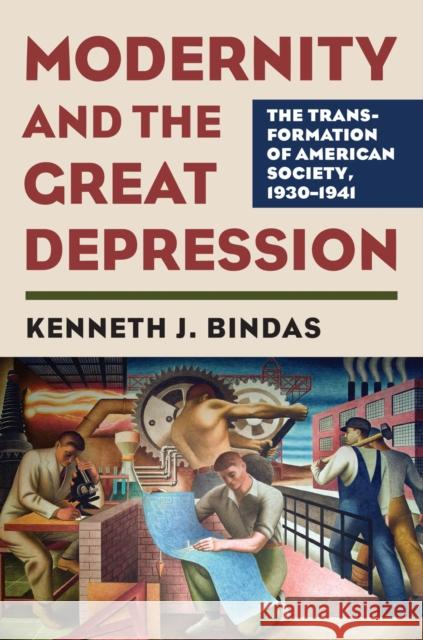
Order, planning, and reason--in the depths of the Great Depression, with the nation teetering on the brink of collapse, this was what was needed. And this, Kenneth J. Bindas suggests, was what the ideas and ideals of modernity offered--a way to make sense of the chaos all around. In Modernity and the Great Depression, Bindas offers a new perspective on the provenance and power of modernist thought and practice in early twentieth-century America. In the midst of a terrible economic, social, and political crisis, modernism provided an alternative to the response of many traditional...
Order, planning, and reason--in the depths of the Great Depression, with the nation teetering on the brink of collapse, this was what was needed. And ...