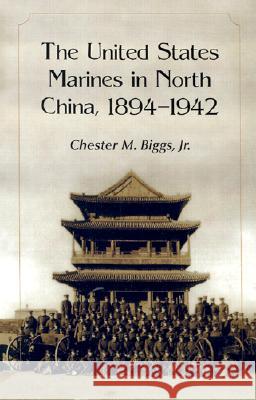
Like most foreign troops stationed in China, the United States Marines' mission was to protect the American embassy and American consulates, missionaries, tourists, and other citizens in China. During the half century covered by this book, the Marines saw China as it would never again be. The Opium Wars and Boxer Rebellion gave the Europeans a certain standing, with prerogatives and privileges that were looked upon by everyone, even the Chinese, as a natural order of existence. The author discusses early military operations in north China, the early legation guards, the Boxer Rebellion in...
Like most foreign troops stationed in China, the United States Marines' mission was to protect the American embassy and American consulates, missionar...
On December 8, 1941, Japanese troops methodically took over the U.S. Marine guard posts at Peiping and Tientsin, causing both to surrender. Imprisoned first at Woosung and then at Kiangwan in China, the men were forced to laboriously construct a replica of Mount Fujiyama. It soon became apparent that their mountain was to be used as a rifle range. In 1945 the author was among those transferred to the coal mining camp at Uteshinai in Japan. Recounted here are descriptions of the living and working conditions at the prison camps in China, the treatment of American prisoners by their Japanese...
On December 8, 1941, Japanese troops methodically took over the U.S. Marine guard posts at Peiping and Tientsin, causing both to surrender. Imprisoned...