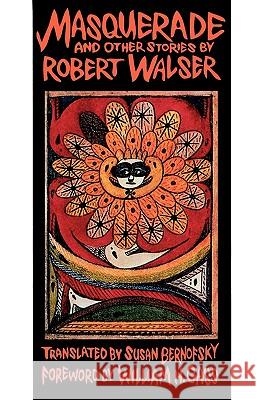
Born in Switzerland in 1878, Robert Walser worked as a bank clerk, a butler in a castle, and an inventor's assistant before discovering what William H. Gass calls his "true profession." From 1899 until he was misdiagnosed a schizophrenic and hospitalized in 1933, Walser produced nine novels and more than a thousand short stories and prose pieces.
Walser's contemporary admirers were few but well-placed. They included Franz Kafka, Hermann Hesse, Robert Musil, and Walter Benjamin. Today Robert Walser is widely regarded as one of the most important and original literary voices of the twentieth...
Born in Switzerland in 1878, Robert Walser worked as a bank clerk, a butler in a castle, and an inventor's assistant before discovering what William H...
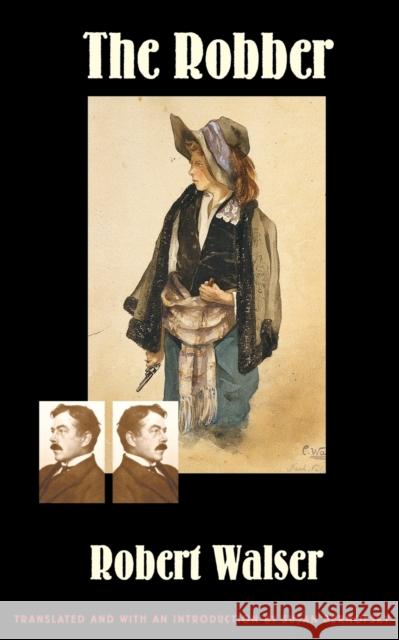
The Robber, Robert Walser's last novel, tells the story of a dreamer on a journey of self-discovery. It is a hybrid of love story, tragedy, and farce, with a protagonist who sweet-talks teaspoons, flirts with important politicians, plays maidservant to young boys, and uses a passerby's mouth as an ashtray. Walser's novel spoofs the stiff-upper-lipped European petit bourgeois and its nervous reactions to whatever threatens the stability of its worldview. Robert Walser (1878-1956), the Swiss-German master of high modernist prose, was once so well known that the novelist Robert Musil, reviewing...
The Robber, Robert Walser's last novel, tells the story of a dreamer on a journey of self-discovery. It is a hybrid of love story, tragedy, and farce,...
Peter Szondi's Celan Studies marked the beginning of critical work on Paul Celan, the most important German poet of the second half of the twentieth century. The book's three studies each concentrate on a different Celan poem. "The Poetry of Constancy: Paul Celan's Translation of Shakespeare's Sonnet 105" investigates a historical turn from a poetry that claims to present its object to a poetry that only promises to do so. "Reading 'Engfuhrung'" follows the movement of poetic language into territory undisclosed to epistemic reason. "Eden" addresses "Du liegst," a poem on the murder of...
Peter Szondi's Celan Studies marked the beginning of critical work on Paul Celan, the most important German poet of the second half of the twen...
Peter Szondi's Celan Studies marked the beginning of critical work on Paul Celan, the most important German poet of the second half of the twentieth century. The book's three studies each concentrate on a different Celan poem. "The Poetry of Constancy: Paul Celan's Translation of Shakespeare's Sonnet 105" investigates a historical turn from a poetry that claims to present its object to a poetry that only promises to do so. "Reading 'Engfuhrung'" follows the movement of poetic language into territory undisclosed to epistemic reason. "Eden" addresses "Du liegst," a poem on the murder of...
Peter Szondi's Celan Studies marked the beginning of critical work on Paul Celan, the most important German poet of the second half of the twen...
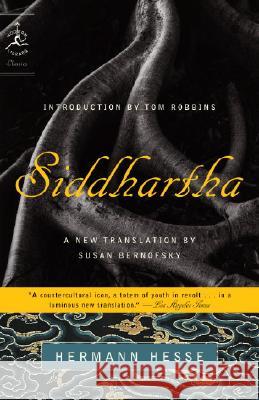
In the novel, Siddhartha, a young man, leaves his family for a contemplative life, then, restless, discards it for one of the flesh. He conceives a son, but bored and sickened by lust and greed, moves on again. Near despair, Siddhartha comes to a river where he hears a unique sound. This sound signals the true beginning of his life -- the beginning of suffering, rejection, peace, and, finally, wisdom. From the Paperback edition.
In the novel, Siddhartha, a young man, leaves his family for a contemplative life, then, restless, discards it for one of the flesh. He conceiv...
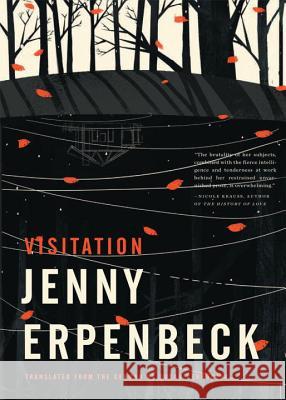
A house on the forested bank of a Brandenburg lake outside Berlin (once belonging to Erpenbeck s grandparents) is the focus of this compact, beautiful novel. Encompassing over one hundred years of German history, from the nineteenth century to the Weimar Republic, from World War II to the Socialist German Democratic Republic, and finally reunification and its aftermath, Visitation offers the life stories of twelve individuals who seek to make their home in this one magical little house. The novel breaks into the everyday life of the house and shimmers through it, while relating the passions...
A house on the forested bank of a Brandenburg lake outside Berlin (once belonging to Erpenbeck s grandparents) is the focus of this compact, beautiful...
A pseudo-biographical stroll through town and countryside rife with philosophical musings, The Walk has been hailed as the masterpiece of Walser s short prose. Walking features heavily in his writing, but nowhere else is it as elegantly considered. Without walking, I would be dead, Walser explains, and my profession, which I love passionately, would be destroyed. Because it is on walks that the lore of nature and the lore of the country are revealed, charming and graceful, to the sense and eyes of the observant walker. The Walk was the first piece of Walser s work to appear in English, and...
A pseudo-biographical stroll through town and countryside rife with philosophical musings, The Walk has been hailed as the masterpiece of Walser s sho...
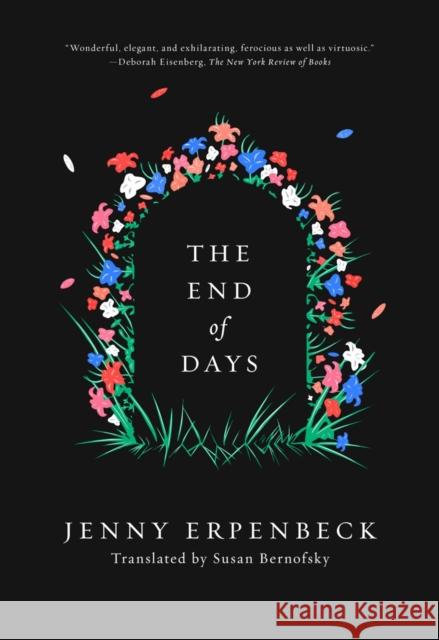
Winner of the Independent Foreign Fiction Prize and the Hans Fallada Prize, The End of Days, by the acclaimed German writer Jenny Erpenbeck, consists essentially of five -books, - each leading to a different death of the same unnamed female protagonist. How could it all have gone differently?--the narrator asks in the intermezzos. The first chapter begins with the death of a baby in the early twentieth-century Hapsburg Empire. In the next chapter, the same girl grows up in Vienna after World War I, but a pact she makes with a young man leads to a second death. In the next...
Winner of the Independent Foreign Fiction Prize and the Hans Fallada Prize, The End of Days, by the acclaimed German writer Jenny Erpenbe...