Was the Red Flag Flying There? examines the Palestinian/Arab-Israeli conflict through the lens of Marxist politics. Joel Beinin asks how the proposal to partition Palestine into an Arab and a Jewish state--a solution endorsed by international consensus in 1947-49--became an obscure and even unthinkable option by the mid-1960s. As the most consistent adherents of the two-state solution both before and after the establishment of the state of Israel in 1948, the Marxists serve as the focal point of his analysis. Beinin discusses three Marxist political formations in Egypt and Israel:...
Was the Red Flag Flying There? examines the Palestinian/Arab-Israeli conflict through the lens of Marxist politics. Joel Beinin asks how the pr...
The essays and case studies collected herefeaturing some of the best material from Middle East Report over the past decade as well as much original materialchallenge the facile generalizations about what Western media and political establishments usually call "Islamic fundamentalism." The authors demonstrate the complexity of these movements and offer complementary and contrasting interpretations of their origins and significance. The material included covers a broad range of themesincluding democracy and civil society, gender relations and popular cultureas they have emerged in...
The essays and case studies collected herefeaturing some of the best material from Middle East Report over the past decade as well as much orig...
In this provocative and wide-ranging history, Joel Beinin examines fundamental questions of ethnic identity by focusing on the Egyptian Jewish community since 1948. A complex and heterogeneous people, Egyptian Jews have become even more diverse as their diaspora continues to the present day. Central to Beinin's study is the question of how people handle multiple identities and loyalties that are dislocated and reformed by turbulent political and cultural processes. It is a question he grapples with himself, and his reflections on his experiences as an American Jew in Israel and Egypt offer a...
In this provocative and wide-ranging history, Joel Beinin examines fundamental questions of ethnic identity by focusing on the Egyptian Jewish communi...
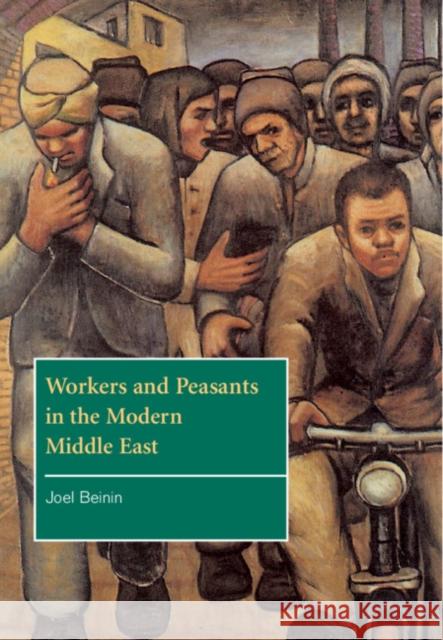
The working people, who constitute the majority in any society, can be and deserve to be subjects of history. Joel Beinin's state-of-the-art survey of subaltern history in the Middle East demonstrates lucidly how their lives, experiences, and culture can inform our historical understanding. Beginning in the eighteenth century, the book charts the history of the peasants and the modern working classes across the lands of the Ottoman Empire and its Muslim-majority successor-states. Inspired by the approach of the Indian subaltern Studies school, the book presents a synthetic assessment of the...
The working people, who constitute the majority in any society, can be and deserve to be subjects of history. Joel Beinin's state-of-the-art survey of...
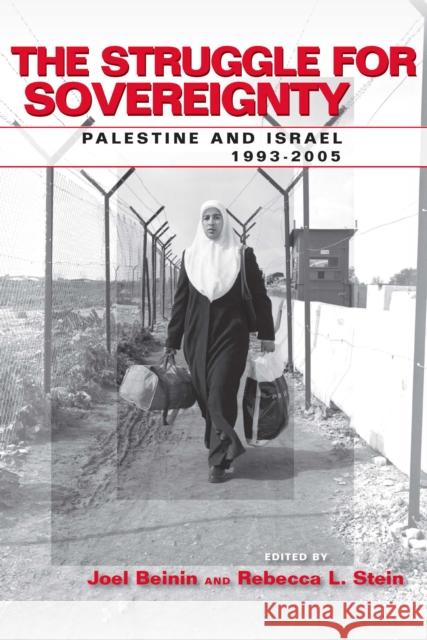
After the 1993 Oslo Accords people across the world anticipated the onset of peace and an end to the Palestinian-Israeli conflict. For Israelis, the Accords generated massive economic growth and a sense of security. For Palestinians in the West Bank and the Gaza Strip, they led to a dramatic rise in poverty and unemployment due to a complex array of closures, militarized checkpoints, and bypass roads, and a vast expansion of the settlement project that fractured Palestinian territories and communities. In 2000 popular Palestinian rage with the new shape of the Israeli occupation erupted in a...
After the 1993 Oslo Accords people across the world anticipated the onset of peace and an end to the Palestinian-Israeli conflict. For Israelis, the A...
After the 1993 Oslo Accords people across the world anticipated the onset of peace and an end to the Palestinian-Israeli conflict. For Israelis, the Accords generated massive economic growth and a sense of security. For Palestinians in the West Bank and the Gaza Strip, they led to a dramatic rise in poverty and unemployment due to a complex array of closures, militarized checkpoints, and bypass roads, and a vast expansion of the settlement project that fractured Palestinian territories and communities. In 2000 popular Palestinian rage with the new shape of the Israeli occupation erupted in...
After the 1993 Oslo Accords people across the world anticipated the onset of peace and an end to the Palestinian-Israeli conflict. For Israelis, th...
The working people, who constitute the majority in any society, can be and deserve to be subjects of history. Joel Beinin's state-of-the-art survey of subaltern history in the Middle East demonstrates lucidly how their lives, experiences, and culture can inform our historical understanding. Beginning in the eighteenth century, the book charts the history of the peasants and the modern working classes across the lands of the Ottoman Empire and its Muslim-majority successor-states. Inspired by the approach of the Indian subaltern Studies school, the book presents a synthetic assessment of the...
The working people, who constitute the majority in any society, can be and deserve to be subjects of history. Joel Beinin's state-of-the-art survey of...
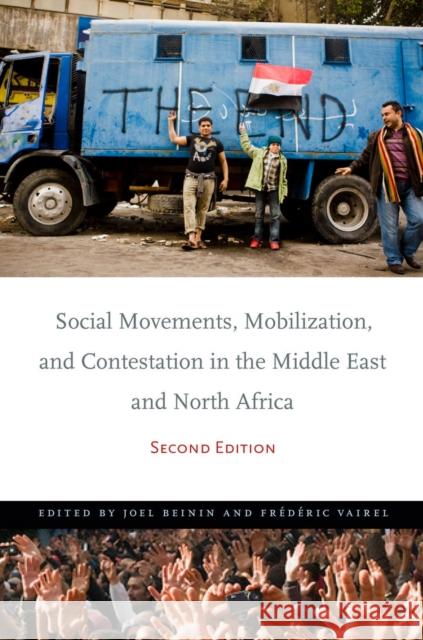
Before the 2011 uprisings, the Middle East and North Africa were frequently seen as a uniquely undemocratic region with little civic activism. The first edition of this volume, published at the start of the Arab Spring, challenged these views by revealing a region rich with social and political mobilizations. This fully revised second edition extends the earlier explorations of Egypt, Morocco, Lebanon, Saudi Arabia, and Turkey, and adds new case studies on the uprisings in Tunisia, Syria, and Yemen.
The case studies are inspired by social movement theory, but they also critique and...
Before the 2011 uprisings, the Middle East and North Africa were frequently seen as a uniquely undemocratic region with little civic activism. The ...
Before the 2011 uprisings, the Middle East and North Africa were frequently seen as a uniquely undemocratic region with little civic activism. The first edition of this volume, published at the start of the Arab Spring, challenged these views by revealing a region rich with social and political mobilizations. This fully revised second edition extends the earlier explorations of Egypt, Morocco, Lebanon, Saudi Arabia, and Turkey, and adds new case studies on the uprisings in Tunisia, Syria, and Yemen. The case studies are inspired by social movement theory, but they also critique and expand the...
Before the 2011 uprisings, the Middle East and North Africa were frequently seen as a uniquely undemocratic region with little civic activism. The fir...
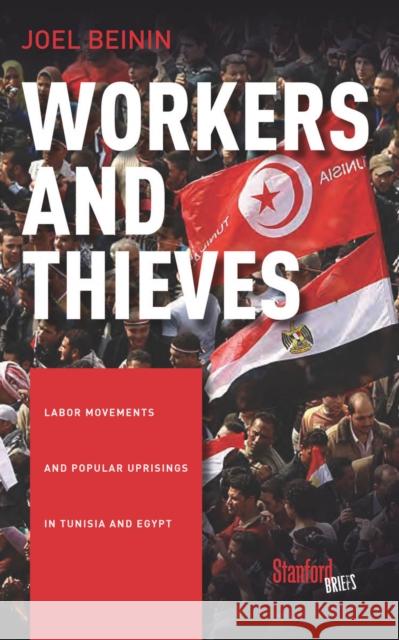
Since the 1990s, the Middle East has experienced an upsurge of wildcat strikes, sit-ins, and workers' demonstrations. Well before people gathered in Tahrir Square to demand the ouster of Hosni Mubarak, workers had formed one of the largest oppositional movements to authoritarian rule in Egypt. In Tunisia, years prior to the 2011 Arab uprisings, the unemployed chanted in protest, "A job is a right, you pack of thieves "
Despite this history, most observers have failed to acknowledge the importance of workers in the social ferment preceding the removal of Egyptian and Tunisian...
Since the 1990s, the Middle East has experienced an upsurge of wildcat strikes, sit-ins, and workers' demonstrations. Well before people gathered i...