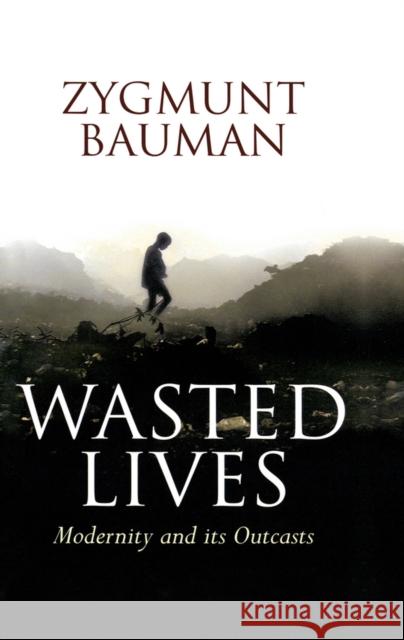
The production of 'human waste' - or more precisely, wasted lives, the 'superfluous' populations of migrants, refugees and other outcasts - is an inevitable outcome of modernization. It is an unavoidable side-effect of economic progress and the quest for order which is characteristic of modernity.
As long as large parts of the world remained wholly or partly unaffected by modernization, they were treated by modernizing societies as lands that were able to absorb the excess of population in the 'developed countries'. Global solutions were sought, and...
The production of 'human waste' - or more precisely, wasted lives, the 'superfluous' populations of migrants, refugees and other outcasts - is an inev...
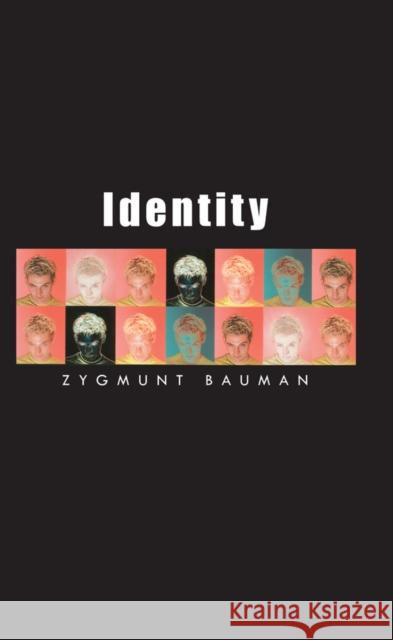
This topical new book by Zygmunt Bauman explores the notion of identity in the modern world.
As we grapple with the insecurity and uncertainty of liquid modernity, Bauman argues that our socio-political, cultural, professional, religious and sexual identities are undergoing a process of continual transformation. Identities the world over have become more precarious than ever: we live in an era of constant change and disposability - whether it's last season's outfit, or car, or even partner - and our identities as a result have become transient and...
This topical new book by Zygmunt Bauman explores the notion of identity in the modern world.
More than ever before, our conflict-ridden, drifting planet needs the qualities that Europe, unique among the continents, has developed in more than two millennia of history: its self-criticism, its urge to self-transcendence, exploration and experiment, its conviction that alternative and better forms of human togetherness can be achieved, as well as its dedication to the cause of seeking and promoting this improvement in practice. But today Europe is unsure of itself and its place in a fast-changing world; it is devoid of vision, limited in resources and lacking the will to pursue its...
More than ever before, our conflict-ridden, drifting planet needs the qualities that Europe, unique among the continents, has developed in more than t...
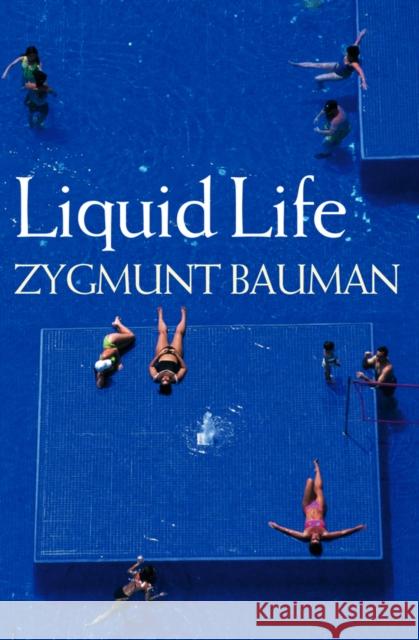
'Liquid life' is the kind of life commonly lived in our contemporary, liquid-modern society. Liquid life cannot stay on course, as liquid-modern society cannot keep its shape for long. Liquid life is a precarious life, lived under conditions of constant uncertainty.
The most acute and stubborn worries that haunt this liquid life are the fears of being caught napping, of failing to catch up with fast moving events, of overlooking the 'use by' dates and being saddled with worthless possessions, of missing the moment calling for a change of tack and being left behind. Liquid life is...
'Liquid life' is the kind of life commonly lived in our contemporary, liquid-modern society. Liquid life cannot stay on course, as liquid-modern socie...
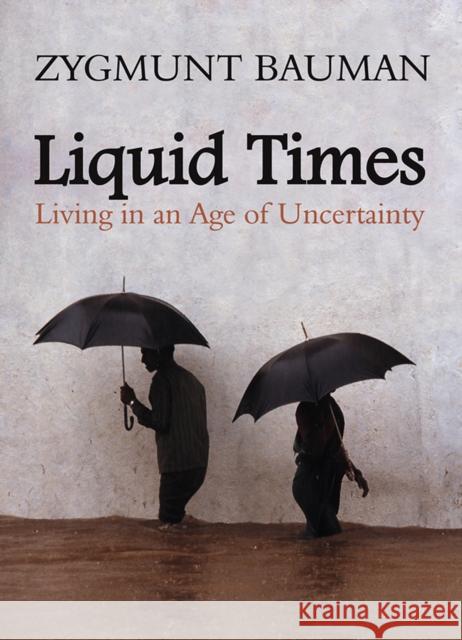
Modernity was supposed to be the period in human history when the fears that pervaded social life in the past could be left behind and human beings could at last take control of their lives and tame the uncontrolled forces of the social and natural worlds. And yet, at the dawn of the twenty-first century, we live again in a time of fear. Whether its the fear of natural disasters, the fear of environmental catastrophes or the fear of indiscriminate terrorist attacks, we live today in a state of constant anxiety about the dangers that could strike unannounced and at any moment. Fear is the name...
Modernity was supposed to be the period in human history when the fears that pervaded social life in the past could be left behind and human beings co...
The passage from 'solid' to 'liquid' modernity has created a new and unprecedented setting for individual life pursuits, confronting individuals with a series of challenges never before encountered. Social forms and institutions no longer have enough time to solidify and cannot serve as frames of reference for human actions and long-term life plans, so individuals have to find other ways to organise their lives. They have to splice together an unending series of short-term projects and episodes that don't add up to the kind of sequence to which concepts like 'career' and 'progress' could...
The passage from 'solid' to 'liquid' modernity has created a new and unprecedented setting for individual life pursuits, confronting individuals with ...
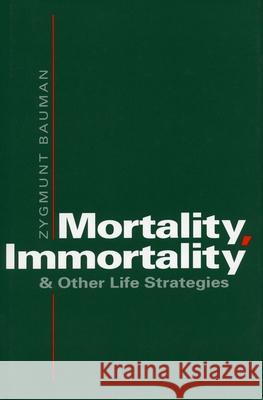
Zygmunt Bauman's book is a brilliant exploration, from a sociological point of view, of the -taboo- subject in modern societies: death and dying. The book develops a new theory of the ways in which human mortality is reacted to, and dealt with, in social institutions and culture. The hypothesis explored in the book is that the necessity of human beings to live with the constant awareness of death accounts for crucial aspects of the social organization of all known societies. Two different -life strategies- are distinguished in respect of reactions to mortality. One, -the modern strategy, -...
Zygmunt Bauman's book is a brilliant exploration, from a sociological point of view, of the -taboo- subject in modern societies: death and dying. The ...
The revised edition of Subject to Ourselves, a lively and provocative book that was a leader on its topic in England, uses psychoanalytic theory as the basis for a fresh reassessment of the nature of modernity and postmodernism. Analyzing changing experiences of selfhood, desire, interpersonal relations, culture and globalization, the author develops a novel account of postmodernity that supplants current understandings of "fragmented selves." Subject to Ourselves includes a diverse set of case studies, including the power of fantasy in military violence and war, the debate over sexual...
The revised edition of Subject to Ourselves, a lively and provocative book that was a leader on its topic in England, uses psychoanalytic theory as th...
The revised edition of Subject to Ourselves, a lively and provocative book that was a leader on its topic in England, uses psychoanalytic theory as the basis for a fresh reassessment of the nature of modernity and postmodernism. Analyzing changing experiences of selfhood, desire, interpersonal relations, culture and globalization, the author develops a novel account of postmodernity that supplants current understandings of "fragmented selves." Subject to Ourselves includes a diverse set of case studies, including the power of fantasy in military violence and war, the debate over sexual...
The revised edition of Subject to Ourselves, a lively and provocative book that was a leader on its topic in England, uses psychoanalytic theory as th...