Community service is increasingly recognized as an important vehicle for promoting positive development among adolescents. This book provides teenagers, parents, teachers, professionals, and concerned adults with current and useful information. Included are resources for middle school, high school, and college students.
Those organizing and running programs will find a wealth of material for development and improvement, including:
An examination of the characteristics of effective programs, the young people who engage in service, and those who benefit
Practical strategies for...
Community service is increasingly recognized as an important vehicle for promoting positive development among adolescents. This book provides teena...
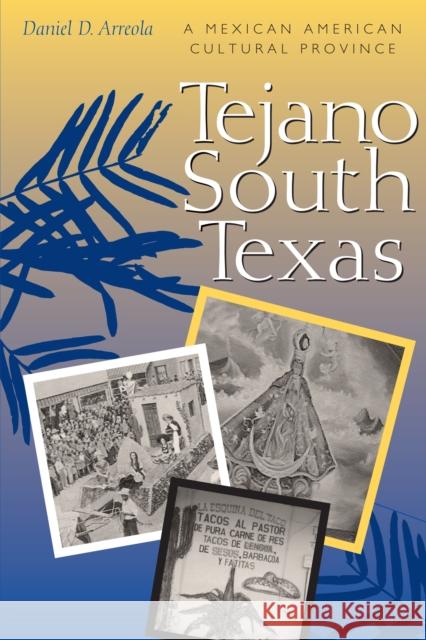
On the plains between the San Antonio River and the Rio Grande lies the heartland of what is perhaps the largest ethnic region in the United States, Tejano South Texas. In this cultural geography, Daniel Arreola charts the many ways in which Texans of Mexican ancestry have established a cultural province in this Texas-Mexico borderland that is unlike any other Mexican American region. Arreola begins by delineating South Texas as an environmental and cultural region. He then explores who the Tejanos are, where in Mexico they originated, and how and where they settled historically in South...
On the plains between the San Antonio River and the Rio Grande lies the heartland of what is perhaps the largest ethnic region in the United States, T...
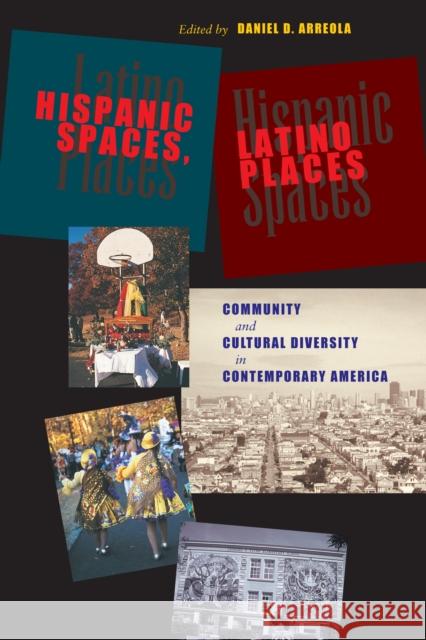
Hispanics/Latinos are the largest ethnic minority in the United States--but they are far from being a homogenous group. Mexican Americans in the Southwest have roots that extend back four centuries, while Dominicans and Salvadorans are very recent immigrants. Cuban Americans in South Florida have very different occupational achievements, employment levels, and income from immigrant Guatemalans who work in the poultry industry in Virginia. In fact, the only characteristic shared by all Hispanics/Latinos in the United States is birth or ancestry in a Spanish-speaking country.
In this...
Hispanics/Latinos are the largest ethnic minority in the United States--but they are far from being a homogenous group. Mexican Americans in the So...
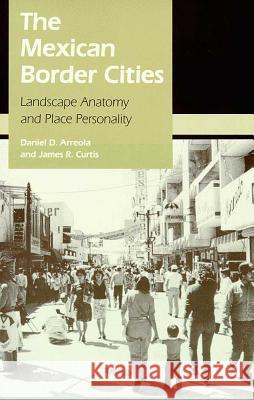
From Matamoros to Tijuana, Mexican border cities have long evoked for their neighbors to the north images of cheap tourist playgrounds and, more recently, industrial satellites of American industry. These sensationalized and simplified perceptions fail to convey the complexity and diversity of urban form and function--and of cultural personality--that characterize these places. The Mexican Border Cities draws on extensive field research to examine eighteen settlements along the 2,000-mile border, ranging from towns of less than 10,000 people to dynamic metropolises of...
From Matamoros to Tijuana, Mexican border cities have long evoked for their neighbors to the north images of cheap tourist playgrounds and, mo...
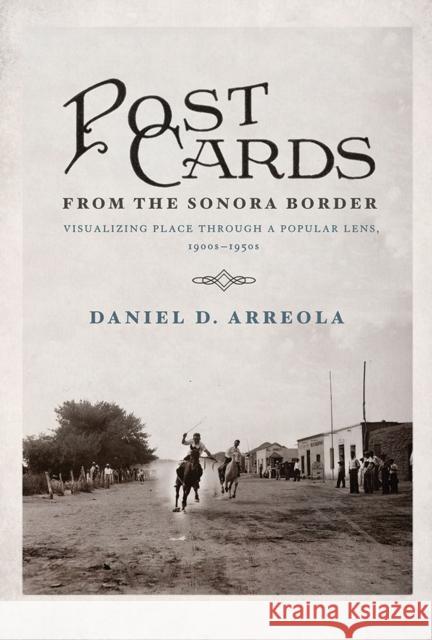
Young men ride horses on a dusty main road through town. Cars and gas stations gradually intrude on the land, and, years later, curiosity shops and cantinas change the face of Mexican border towns south of Arizona. Between 1900 and the late 1950s, Mexican border towns came of age both as centers of commerce and as tourist destinations. Postcards from the Sonora Border reveals how images--in this case the iconic postcard--shape the way we experience and think about place.
Making use of his personal collection of historic images, Daniel D. Arreola captures the evolution of...
Young men ride horses on a dusty main road through town. Cars and gas stations gradually intrude on the land, and, years later, curiosity shops and...