This is a book whose time has come-again. The first edition (published by McGraw-Hill in 1964) was written in 1962, and it celebrated a number of approaches to developing an automata theory that could provide insights into the processing of information in brainlike machines, making it accessible to readers with no more than a college freshman's knowledge of mathematics. The book introduced many readers to aspects of cybernetics-the study of computation and control in animal and machine. But by the mid-1960s, many workers abandoned the integrated study of brains and machines to pursue...
This is a book whose time has come-again. The first edition (published by McGraw-Hill in 1964) was written in 1962, and it celebrated a number of appr...
The study of formal languages and of related families of automata has long been at the core of theoretical computer science. Until recently, the main reasons for this centrality were connected with the specification and analy sis of programming languages, which led naturally to the following ques tions. How might a grammar be written for such a language? How could we check whether a text were or were not a well-formed program generated by that grammar? How could we parse a program to provide the structural analysis needed by a compiler? How could we check for ambiguity to en sure that a...
The study of formal languages and of related families of automata has long been at the core of theoretical computer science. Until recently, the main ...
In the 1930s, mathematical logicians studied the notion of "effective comput- ability" using such notions as recursive functions, A-calculus, and Turing machines. The 1940s saw the construction of the first electronic computers, and the next 20 years saw the evolution of higher-level programming languages in which programs could be written in a convenient fashion independent (thanks to compilers and interpreters) of the architecture of any specific machine. The development of such languages led in turn to the general analysis of questions of syntax, structuring strings of symbols which could...
In the 1930s, mathematical logicians studied the notion of "effective comput- ability" using such notions as recursive functions, A-calculus, and Turi...
The major goal of this book is to present the techniques of top-down program design and verification of program correctness hand-in-hand. It thus aims to give readers a new way of looking at algorithms and their design, synthesizing ten years of research in the process. It provides many examples of program and proof development with the aid of a formal and informal treatment of Hoare's method of invariants. Modem widely accepted control structures and data structures are explained in detail, together with their formal definitions, as a basis for their use in the design of correct algorithms....
The major goal of this book is to present the techniques of top-down program design and verification of program correctness hand-in-hand. It thus aims...
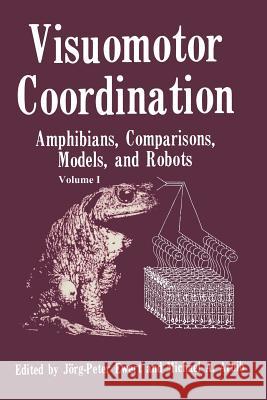
Various brain areas of mammals can phyletically be traced back to homologous structures in amphibians. The amphibian brain may thus be regarded as a kind of "microcosm" of the highly complex primate brain, as far as certain homologous structures, sensory functions, and assigned ballistic (pre-planned and pre-pro grammed) motor and behavioral processes are concerned. A variety of fundamental operations that underlie perception, cognition, sensorimotor transformation and its modulation appear to proceed in primate's brain in a way understandable in terms of basic principles which can be...
Various brain areas of mammals can phyletically be traced back to homologous structures in amphibians. The amphibian brain may thus be regarded as a k...