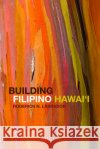
Drawing on ten years of interviews and ethnographic and archival research, Roderick Labrador delves into the ways Filipinos in Hawai'i have balanced their pursuit of upward mobility and mainstream acceptance with a desire to keep their Filipino identity. In particular, Labrador speaks to the processes of identity making and the politics of representation among immigrant communities striving to resist marginalization in a globalized, transnational era. Critiquing the popular image of Hawai'i as a postracial paradise, he reveals how Filipino immigrants talk about their relationships to the...
Drawing on ten years of interviews and ethnographic and archival research, Roderick Labrador delves into the ways Filipinos in Hawai'i have balanced t...
Drawing on ten years of interviews and ethnographic and archival research, Roderick Labrador delves into the ways Filipinos in Hawai'i have balanced their pursuit of upward mobility and mainstream acceptance with a desire to keep their Filipino identity. In particular, Labrador speaks to the processes of identity making and the politics of representation among immigrant communities striving to resist marginalization in a globalized, transnational era. Critiquing the popular image of Hawai'i as a postracial paradise, he reveals how Filipino immigrants talk about their relationships to the...
Drawing on ten years of interviews and ethnographic and archival research, Roderick Labrador delves into the ways Filipinos in Hawai'i have balanced t...
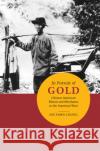
Both a history of an overlooked community and a well-rounded reassessment of prevailing assumptions about Chinese miners in the American West, In Pursuit of Gold brings to life in rich detail the world of turn-of-the-century mining towns in the Northwest. Sue Fawn Chung meticulously recreates the lives of Chinese immigrants, miners, merchants, and others who populated these towns and interacted amicably with their white and Native American neighbors, defying the common perception of nineteenth-century Chinese communities as insular enclaves subject to increasing prejudice and...
Both a history of an overlooked community and a well-rounded reassessment of prevailing assumptions about Chinese miners in the American West, In P...
The internet has transformed the idea of home for Indians and Indian Americans. In Virtual Homelands: Indian Immigrants and Online Cultures in the United States, Madhavi Mallapragada analyzes home pages and other online communities organized by diasporic and immigrant Indians from the late 1990s through the social media period. Engaging the shifting aspects of belonging, immigrant politics, and cultural citizenship by linking the home page, household, and homeland as key sites, Mallapragada illuminates the contours of belonging and reveals how Indian American struggles over it trace back to...
The internet has transformed the idea of home for Indians and Indian Americans. In Virtual Homelands: Indian Immigrants and Online Cultures in the Uni...
The internet has transformed the idea of home for Indians and Indian Americans. In Virtual Homelands: Indian Immigrants and Online Cultures in the United States, Madhavi Mallapragada analyzes home pages and other online communities organized by diasporic and immigrant Indians from the late 1990s through the social media period. Engaging the shifting aspects of belonging, immigrant politics, and cultural citizenship by linking the home page, household, and homeland as key sites, Mallapragada illuminates the contours of belonging and reveals how Indian American struggles over it trace back to...
The internet has transformed the idea of home for Indians and Indian Americans. In Virtual Homelands: Indian Immigrants and Online Cultures in the Uni...
When the United States acquired the Philippines and Puerto Rico, it reconciled its status as an empire with its anticolonial roots by claiming that it would altruistically establish democratic institutions in its new colonies. Ever since, Filipino and Puerto Rican artists have challenged promises of benevolent assimilation and portray U.S. imperialism as both self-interested and unexceptional among empires. Faye Caronan's examination interprets the pivotal engagement of novels, films, performance poetry, and other cultural productions as both symptoms of and resistance against American...
When the United States acquired the Philippines and Puerto Rico, it reconciled its status as an empire with its anticolonial roots by claiming that it...
When the United States acquired the Philippines and Puerto Rico, it reconciled its status as an empire with its anticolonial roots by claiming that it would altruistically establish democratic institutions in its new colonies. Ever since, Filipino and Puerto Rican artists have challenged promises of benevolent assimilation and portray U.S. imperialism as both self-interested and unexceptional among empires. Faye Caronan's examination interprets the pivotal engagement of novels, films, performance poetry, and other cultural productions as both symptoms of and resistance against American...
When the United States acquired the Philippines and Puerto Rico, it reconciled its status as an empire with its anticolonial roots by claiming that it...
Though recognized for their work in the mining and railroad industries, the Chinese also played a critical role in the nineteenth-century lumber trade. Sue Fawn Chung continues her acclaimed examination of the impact of Chinese immigrants on the American West by bringing to life the tensions, towns, and lumber camps of the Sierra Nevada during a boom period of economic expansion. Chinese workers labored as woodcutters and flume-herders, lumberjacks and loggers. Exploding the myth of the Chinese as a docile and cheap labor army, Chung shows Chinese laborers earned wages similar to those of...
Though recognized for their work in the mining and railroad industries, the Chinese also played a critical role in the nineteenth-century lumber trade...
An attempt to put an Asian woman on Canada's $100 bill in 2012 unleashed enormous controversy. The racism and xenophobia that answered this symbolic move toward inclusiveness revealed the nation's trumpeted commitment to multiculturalism as a lie. It also showed how multiple minor publics as well as the dominant public responded to the ongoing issue of race in Canada. In this new study, Christine Kim delves into the ways cultural conversations minimize race's relevance even as violent expressions and structural forms of racism continue to occur. Kim turns to literary texts, artistic works,...
An attempt to put an Asian woman on Canada's $100 bill in 2012 unleashed enormous controversy. The racism and xenophobia that answered this symbolic m...
An attempt to put an Asian woman on Canada's $100 bill in 2012 unleashed enormous controversy. The racism and xenophobia that answered this symbolic move toward inclusiveness revealed the nation's trumpeted commitment to multiculturalism as a lie. It also showed how multiple minor publics as well as the dominant public responded to the ongoing issue of race in Canada. In this new study, Christine Kim delves into the ways cultural conversations minimize race's relevance even as violent expressions and structural forms of racism continue to occur. Kim turns to literary texts, artistic works,...
An attempt to put an Asian woman on Canada's $100 bill in 2012 unleashed enormous controversy. The racism and xenophobia that answered this symbolic m...