Known for their fully drawn characters, artistic complexity, and a multifaceted engagement with social issues, the plays of Euripides inspire divergent critical views. While some scholars find that the dramatist writes from a traditional Greek perspective, others see a radically innovative artist who criticizes Athenian politics, the treatment of women, and the Olympian gods. Readers will find both views in this collection of essays designed to help teachers present Euripides and his plays to today's students.
Known for their fully drawn characters, artistic complexity, and a multifaceted engagement with social issues, the plays of Euripides inspire divergen...
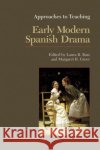
The distinctive voices of Renaissance playwrights can make a classroom come alive. This volume explores the compelling dramatic technique and rich language in a wide variety of well-known and less-familiar Renaissance plays. The essays collected here challenge teachers to help students, whose experience is usually limited to reading Shakespeare or seeing movie versions of his plays, see beyond the initial strangeness of Renaissance drama. A series of reading, performance, and research tools are outlined for teachers who wish to encourage students not only to understand the English Renaissance...
The distinctive voices of Renaissance playwrights can make a classroom come alive. This volume explores the compelling dramatic technique and rich lan...
Manuel Puig's 1976 Kiss of the Spider Woman, translated into English in 1979 and adapted as an Academy Award-winning film, expanded the idiom of the novel (mixing cinema, fiction, romance, and song) and challenged the third-person narration that was dominant in Latin American Boom fiction. Students are drawn to the conversational style of the novel and the melodramatic seductions of the tale, but they need guidance to appreciate the novel's richness as a work of literature. This volume of the MLA's Approaches to Teaching series suggests ways instructors can help students grasp the...
Manuel Puig's 1976 Kiss of the Spider Woman, translated into English in 1979 and adapted as an Academy Award-winning film, expanded the idio...
Manuel Puig's 1976 Kiss of the Spider Woman, translated into English in 1979 and adapted as an Academy Award-winning film, expanded the idiom of the novel (mixing cinema, fiction, romance, and song) and challenged the third-person narration that was dominant in Latin American Boom fiction. Students are drawn to the conversational style of the novel and the melodramatic seductions of the tale, but they need guidance to appreciate the novel's richness as a work of literature. This volume of the MLA's Approaches to Teaching series suggests ways instructors can help students grasp the...
Manuel Puig's 1976 Kiss of the Spider Woman, translated into English in 1979 and adapted as an Academy Award-winning film, expanded the idio...
Although the rediscovery in 1973 of the long-forgotten story "The Yellow Wall-Paper" (1892), by Charlotte Perkins Gilman, met an enthusiastic reception, no one expected the enormous impact it would have, resulting in dozens of articles and books, numerous dissertations, dramatizations on stage and in film, and inclusion in college literature anthologies. Not surprisingly, then, the story, often alongside Gilman's second-most-famous work, Herland (1915), is widely taught in a variety of disciplines. This volume addresses the rewards and challenges of teaching these two works and offers a...
Although the rediscovery in 1973 of the long-forgotten story "The Yellow Wall-Paper" (1892), by Charlotte Perkins Gilman, met an enthusiastic receptio...
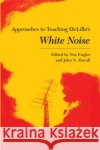
Don DeLillo's satiric novel White Noise, prophetic in 1985 about American society's rampant consumerism, information overload, overreliance on the media, and environmental problems, may seem to today's students simply a description of their lived reality. The challenge for teachers, then, is to help them appreciate both the postmodern qualities of the novel and its social critique.
Don DeLillo's satiric novel White Noise, prophetic in 1985 about American society's rampant consumerism, information overload, overreliance on the med...
Among the classroom strategies described in part 2, "Approaches," are the following: - Uncovering the hidden elements of race, gender, and class through close analysis of the narrative- Teaching the novel from the vantage point of gothic conventions, biographies of Bronte family members, and the debates about the place of the novel in the canon- Familiarizing students with historical and legal documents to reveal social and economic issues of the period like child custody and women's property rights- Comparing film and TV adaptations with one another and with the novel itself
Among the classroom strategies described in part 2, "Approaches," are the following: - Uncovering the hidden elements of race, gender, and class throu...
Now at ninety-three volumes, this popular MLA series addresses a broad range of literary texts. Each volume surveys teaching aids and critical material and brings together essays that apply a variety of perspectives to teaching the text. In these essays, experienced teachers discuss approaches and methods they have found effective in keeping classroom discussions lively.
Now at ninety-three volumes, this popular MLA series addresses a broad range of literary texts. Each volume surveys teaching aids and critical materia...