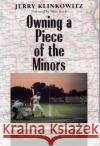
"Owning a Piece of the Minors" is by and about a man who lived his dream and acquired a baseball team. When Jerry Klinkowitz joined the group that ran the Waterloo, Iowa, Diamonds in the 1970s, ownership of a minor league baseball franchise conferred little mystique. Neglected for a half century, minor league baseball was at best obscure. Yet in the purchase of fantasy, what difference if your desire is out of style?
Klinkowitz continued his work with the Diamonds through the 1980s and much of the 1990s. In "Owning a Piece of the Minors," he maps out his personal journey through baseball...
"Owning a Piece of the Minors" is by and about a man who lived his dream and acquired a baseball team. When Jerry Klinkowitz joined the group that ...
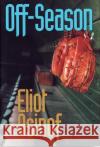
Eliot Asinof s newest baseball hero left tiny Gandee, Missouri, as John Clyde Cagle Jr., a hard-throwing lefthander who had pitched a perfect game in high school. Now he returns in triumph as the legendary Black Jack, superstar of the Los Angeles Dodgers, a stoic, menacing mound demon with a Fu Manchu moustache and a 106-mile-per-hour fastball.In a nationally televised event that, like everything else in his life, is precisely orchestrated by agent and money manager Gordon Stanley, Jack s return is to dedicate Black Jack Field, the two-million-dollar ballpark he has donated to his hometown....
Eliot Asinof s newest baseball hero left tiny Gandee, Missouri, as John Clyde Cagle Jr., a hard-throwing lefthander who had pitched a perfect game in ...
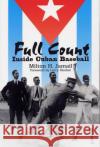
In his comprehensive and vibrant picture of baseball in Cuba, Milton H. Jamail explores the sport s relationship to U.S. baseball. Jamail, whose personal love of the game matches that of the Cubans, examines the roots and traditions of baseball on the island and explains why Cubans play such excellent baseball. His analysis of the development of Cuban baseball after the 1959 takeover by Fidel Castro includes a detailed description of the formation of the Cuban amateur baseball system that has dominated international competitions for more than three decades.
Before 1961, when the U.S....
In his comprehensive and vibrant picture of baseball in Cuba, Milton H. Jamail explores the sport s relationship to U.S. baseball. Jamail, whose pe...
These nine essays selected by Lawrence Baldassaro and Richard A. Johnson present for the first time in a single volume an ethnic and racial profile of American baseball. These essayists show how the gradual involvement by various ethnic and racial groups reflects the changing nature of baseballand of American society as a wholeover the course of the twentieth century.Although the sport could not truly be called representative of America until after Jackie Robinson broke the color line in 1947, fascination with the ethnic backgrounds of the players began more than a century ago when...
These nine essays selected by Lawrence Baldassaro and Richard A. Johnson present for the first time in a single volume an ethnic and racial profile of...
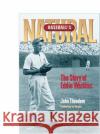
Baseball s Natural: The Story of Eddie Waitkus is John Theodore s true account of the slick-fielding first baseman who played for the Cubs and Phillies in the 1940s and became an immortalized figure in baseball lore as the inspiration for Roy Hobbs in Bernard Malamud s The Natural. The son of Lithuanian immigrants, Edward Stephen Waitkus (19191972) grew up in Boston and served in the Pacific during World War II. His army service in some of the war s bloodiest combat earned him four Bronze Stars. Following the war, Waitkus became one of the most popular players of his...
Baseball s Natural: The Story of Eddie Waitkus is John Theodore s true account of the slick-fielding first baseman who played for the Cubs and ...
"Dead Balls and Double Curves: An Anthology of Early Baseball Fiction "collects twenty-two classic stories from baseball s youth, presented in chronological order to capture the development of this most American of sports. Many of these tales have never before been reprinted, adding historical value to the rich literary merits of this anthology.
Editor Trey Strecker s collection begins with an informal village match in an excerpt from James Fenimore Cooper s "Home as Found "(1838), published the year prior to Abner Doubleday s alleged invention of the game outside Cooperstown, New York,...
"Dead Balls and Double Curves: An Anthology of Early Baseball Fiction "collects twenty-two classic stories from baseball s youth, presented in chro...