Fake documentaries mimic documentary genre expectations, unraveling the documentary's authority and dismantling understandings of identity, history, and nation. The interdisciplinary essays in F Is for Phony discuss a broad scope of works and explore issues raised by "fake docs" such as the fiction/documentary divide, the ethics of reality-based manipulation, and whether documentariness derives from form or reception. Defining the borderline between fact and fiction, the contributors reveal what fake documentaries imply and usually make explicit: that many documentaries lie to tell...
Fake documentaries mimic documentary genre expectations, unraveling the documentary's authority and dismantling understandings of identity, history, a...
"Extraordinarily valuable, illuminating, and even entertaining, Forest of Pressure brims with the types of information that only a key insider can get his hands on." --Mitsuhiro Yoshimoto, New York University
Ogawa Productions--known in Asia as Ogawa Pro--was an influential filmmaking collective that started in the 1960s under the direction of Ogawa Shinsuke (1936-1992). Between 1968 and the mid-1970s, Ogawa Pro electrified the Japanese student movement with its Sanrizuka documentary series--eight films chronicling the massive protests over the construction of the Narita...
"Extraordinarily valuable, illuminating, and even entertaining, Forest of Pressure brims with the types of information that only a key insider ...
Documentaries have increasingly used the first person, with a number of prominent filmmakers finding critical and commercial success with this intimate approach. Jewish filmmakers have particularly thrived in this genre, using it to explore disparate definitions of the self in relation to the larger groups of family and community.
In First Person Jewish, Alisa S. Lebow examines more than a dozen films from Jewish artists to reveal how the postmodern impulse to turn the lens inward intersects provocatively (and at times unwittingly) with historical tropes and stereotypes...
Documentaries have increasingly used the first person, with a number of prominent filmmakers finding critical and commercial success with this inti...
Finding the theoretical space where cinema and philosophy meet, Malin Wahlberg's sophisticated approach to the experience of documentary film aligns with attempts to reconsider the premises of existential phenomenology. The configuration of time is crucial in organizing the sensory affects of film in general but, as Wahlberg adroitly demonstrates, in nonfiction films the problem of managing time is writ large by the moving image's interaction with social memory and historical figures.
Wahlberg discusses a thought-provoking corpus of classical and recent experiments in film...
Finding the theoretical space where cinema and philosophy meet, Malin Wahlberg's sophisticated approach to the experience of documentary film align...
Documentary has once again emerged as one of the most vital cultural forms, whether seen in cinemas or inside the home, as digital, film, or video. In Recording Reality, Desiring the Real, Elizabeth Cowie looks at the history of documentary and its contemporary forms, showing how it has been simultaneously understood as factual, as story, as art, and as political, addressing the seeming paradox between the pleasures of spectacle in the documentary and its project of informing and educating. Cowie claims that, as a radical film form, documentary has been a way for filmmakers to...
Documentary has once again emerged as one of the most vital cultural forms, whether seen in cinemas or inside the home, as digital, film, or video. In...
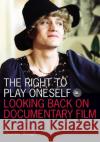
The Right to Play Oneself collects for the first time Thomas Waugh's essays on the politics, history, and aesthetics of documentary film, written between 1974 and 2008. The title, inspired by Walter Benjamin's and Joris Ivens's manifestos of "committed" documentary from the 19 0s, reflects the book's theme of the political potential of documentary for representing the democratic performance of citizens and artists. Waugh analyzes an eclectic international selection of films and issues from the 1920s to the present day. The essays provide a transcultural focus, moving from...
The Right to Play Oneself collects for the first time Thomas Waugh's essays on the politics, history, and aesthetics of documentary film, writt...
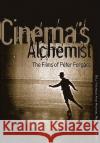
Peter Forgacs, based in Budapest, is best known for his award-winning films built on home movies from the 1930s to the 1960s that document ordinary lives soon to intersect with offscreen historical events. Cinema's Alchemist offers a sustained exploration of the imagination and skill with which Forgacs reshapes such film footage, originally intended for private and personal viewing, into extraordinary films dedicated to remembering the past in ways that matter for our future.
Contributors: Whitney Davis, U of California, Berkeley; Laszlo F. Foldenyi, U of Theatre, Film and...
Peter Forgacs, based in Budapest, is best known for his award-winning films built on home movies from the 1930s to the 1960s that document ordinary...
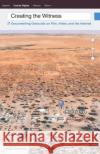
Since the beginning of the conflict in 2003, more than 300,000 lives have been lost in Darfur. Players of the video game Darfur Is Dying learn this sobering fact and more as they work to ensure the survival of a virtual refugee camp. The video game not only puts players in the position of a struggling refugee, it shows them how they can take action in the real world.
Creating the Witness examines the role of film and the Internet in creating virtual witnesses to genocide over the last one hundred years. The book asks, how do visual media work to produce...
Since the beginning of the conflict in 2003, more than 300,000 lives have been lost in Darfur. Players of the video game Darfur Is Dying lea...
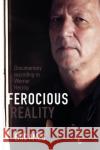
Over the course of his career Werner Herzog, known for such visionary masterpieces as Aguirre: The Wrath of God (1972) and The Enigma of Kaspar Hauser (1974), has directed almost sixty films, roughly half of which are documentaries. And yet, in a statement delivered during a public appearance in 1999, the filmmaker declared: "There are deeper strata of truth in cinema, and there is such a thing as poetic, ecstatic truth. It is mysterious and elusive, and can be reached only through fabrication and imagination and stylization." Ferocious Reality is the first book to ask...
Over the course of his career Werner Herzog, known for such visionary masterpieces as Aguirre: The Wrath of God (1972) and The Enigma of ...
Francois Truffaut called Night and Fog "the greatest film ever made." But when Alain Resnais finished his documentary, with its depiction of Nazi atrocities, the resistance of the French censors was fierce. A mere decade had passed since the end of the war, and the French public was unprepared to confront the horrors shown in the film--let alone the possibility of French complicity. In fact it would be through Night and Fog that many viewers first learned, as film critic Serge Daney put it, "that the worst had only just taken place."
An engrossing account of the...
Francois Truffaut called Night and Fog "the greatest film ever made." But when Alain Resnais finished his documentary, with its depictio...