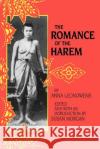
From setting foot in Asia in 1849 (or was it 1845?) as Anna Crawford (or was it Anna Edwards?) to waltzing with Yul Brynner in glorious technicolor, Anna Leonowens and her romanticized experiences as the only Westerner behind the walls of Nang Harm (the walled harem of the king of Siam) have had a long, colourful, and often controversial existence.
From setting foot in Asia in 1849 (or was it 1845?) as Anna Crawford (or was it Anna Edwards?) to waltzing with Yul Brynner in glorious technicolor, A...
Bringing together the critical strategies of both his new historicism and intertextual analysis, Victorian Poets and Romantic Poems questions the ideological operations of Victorian poems and the ideological dispositions of their authors, particularly in relation to Romantic presurcursors and pre-texts. By examining the works of eight Victorian poets - Matthew Arnold, Robert Browning, Alfred, Lord Tennyson, Dante Gabriel Rossetti, Christina Rossetti, Elizabeth Barrett Browning, William Morris, and A.C. Swinburne - Harrison demonstrates how the ideologies of Victorian poets are revealed by...
Bringing together the critical strategies of both his new historicism and intertextual analysis, Victorian Poets and Romantic Poems questions the ideo...
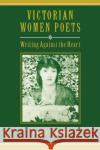
This book recovers and explores an important tradition of nineteenth-century women's poetry from Felicia Hemans to Charlotte Mew. Angela Leighton not only discusses the work of neglected poets such as Augusta Webster and ""Michael Field,"" but also charts the development of women's poetry from sentimentalism of Hemans and L.E.L. (Letitia Elizabeth Landon) to the various strategies of self-displacement employed by the best of the Victorians, especially Elizabeth Barrett Browning and Christina Rossetti. Combining biographical material with theoretical readings of the poems, Angela Leighton...
This book recovers and explores an important tradition of nineteenth-century women's poetry from Felicia Hemans to Charlotte Mew. Angela Leighton not ...
No figure among the Victorians surpasses John Ruskin in magnitude of genius, modernity of message, or mastery of prose. Yet for the first half-century after his death in 1900, his genius lay largely undiscovered. First published in 1963, John D. Rosenberg's The Genius of John Ruskin aimed to make Ruskin's ideas and writings accessible to the modern reader, and it quickly became a classic. Long out of print, this important anthology is now available with a new foreword by Herbert F. Tucker and an expanded and updated bibliography by the author that takes into account recent Ruskin...
No figure among the Victorians surpasses John Ruskin in magnitude of genius, modernity of message, or mastery of prose. Yet for the first half-cent...
Victorian women's autobiography emerged at a historical moment when the field of life writing was particularly rich. Spiritual autobiography was developing interesting variations in the heroic memoirs of pioneering missionary women and in probing intellectual analyses of Nonconformists, Anglicans, agnostics, and other religious thinkers. The chroniques scandaleuses of the eighteenth century were giving way to the respectable artist's life of the professional Victorian woman. The domestic memoir, a Victorian variation on the family histories of the seventeenth and eighteenth centuries,...
Victorian women's autobiography emerged at a historical moment when the field of life writing was particularly rich. Spiritual autobiography was de...
Use front of jacket for front paperback cover Back paperback cover camera-ready copy on sheet 1 Paperback title page and copyright page included to substitute for cloth edition pages. Please call Mark Saunders at 434-924-6064 if questions arise
Use front of jacket for front paperback cover Back paperback cover camera-ready copy on sheet 1 Paperback title page and copyright page included to su...
Emily Shore's journal is the unique self-representation of a prodigious young Victorian woman. From July 5, 1831, at the age of eleven, until June 24, 1839, two weeks before her death from consumption, Margaret Emily Shore recorded her reactions to the world around her. She wrote of political issues, natural history, her progress as a scholar and scientist, and the worlds of art and literature. In her brief life, this remarkable young woman also produced, but did not publish, three novels, three books of poetry, and histories of the Jews, the Greeks, and the Romans, and she published...
Emily Shore's journal is the unique self-representation of a prodigious young Victorian woman. From July 5, 1831, at the age of eleven, until June ...