In 2008 it was believed that HIV/AIDS was without doubt the worst epidemic to hit humankind since the Black Death. The first case was identified in 1981; by 2004 it was estimated that about 40 million people were living with the disease, and about 20 million had died. Yet the outlook today is a little brighter. Although HIV/ AIDS continues to be a pressing public health issue the epidemic has stabilised globally, and it has become evident it is not, nor will it be, a global issue. The worst affected regions are southern and eastern Africa. Elsewhere, HIV is found in specific, usually,...
In 2008 it was believed that HIV/AIDS was without doubt the worst epidemic to hit humankind since the Black Death. The first case was identified in 19...
Despite a long history of external threats and internal strife, the Roman Catholic Church remains a vast and influential presence in our modern world. But what were its origins, and how has it changed and adapted over the centuries? After Pope Benedict XVI dramatically resigned in early 2013 (the first Pope to resign since the fifteenth century), and Pope Francis was elected, many wondered what direction he would lead the Church in, and whether the Church could modernise in the face of the demands of our world. In this Very Short Introduction, Gerald O'Collins covers the history...
Despite a long history of external threats and internal strife, the Roman Catholic Church remains a vast and influential presence in our modern world....
Between 1964 and 1989, the US Supreme Court largely rewrote the constitutional law of the media. In doing so the Court protected virtually all materials from laws that penalized dissemination. But simultaneously the Court also approved some government policies that made access to information more difficult, causing Justice Potter Stewart to observe that the "Constitution is neither a Freedom of Information Act nor an Official Secrets Act." The media that existed during the twenty-five years of explosive legal change was relatively stable. Most Americans who wished to learn about news and...
Between 1964 and 1989, the US Supreme Court largely rewrote the constitutional law of the media. In doing so the Court protected virtually all materia...
Geophysics is the physics of the Earth. It encompasses seismology, volcanism, plate tectonics, gravitational anomalies, and changes in the Earth's magnetic field (present and past). William Lowrie describes how all these give clues to the structure and working of the planet.
Geophysics is the physics of the Earth. It encompasses seismology, volcanism, plate tectonics, gravitational anomalies, and changes in the Earth's mag...
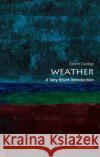
From deciding the best day for a picnic, to the devastating effects of hurricanes and typhoons, the weather impacts our lives on a daily basis. Although new techniques allow us to forecast the weather with increasing accuracy, most people do not realize the vast global movements and forces which result in their day-to-day weather. In this Very Short Introduction, Storm Dunlop explains what weather is and how it differs from climate, discussing what causes weather, and how we measure it. Analyzing the basic features and properties of the atmosphere, he shows how these are...
From deciding the best day for a picnic, to the devastating effects of hurricanes and typhoons, the weather impacts our lives on a daily basis. Althou...
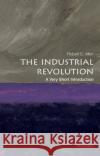
The Industrial Revolution was a pivotal point in British history that occurred between the mid-eighteenth and mid-nineteenth centuries and led to far reaching transformations of society. With the advent of revolutionary manufacturing technology productivity boomed. Machines were used to spin and weave cloth, steam engines were used to provide reliable power, and industry was fed by the construction of the first railways, a great network of arteries feeding the factories. Cities grew as people shifted from agriculture to industry and commerce. Hand in hand with the growth of cities came rising...
The Industrial Revolution was a pivotal point in British history that occurred between the mid-eighteenth and mid-nineteenth centuries and led to far ...
Traditionally, economists have based their economic predictions on the assumption that humans are super-rational creatures, using the information we are given efficiently and generally making selfish decisions. Economists also assume that we're doing the very best we can possibly do--not only for today, but over our whole lifetimes too. The study of behavioral economics is revealing that our lives are not that simple. Instead, our decisions are complicated by our own psychology. Each of us makes mistakes every day. We don't always know what's best for us and, even if we do, we might not...
Traditionally, economists have based their economic predictions on the assumption that humans are super-rational creatures, using the information we a...
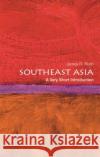
The eleven countries of Southeast Asia are diverse in every way, from the ethnicities and religions of their residents to their political systems and levels of prosperity. These nations -- Myanmar, Thailand, Malaysia, Indonesia, Vietnam, Singapore, the Philippines, Laos, Cambodia, Brunei, and East Timor -- are each undeniably unique, yet the vestiges of their shared traditions mean that each country is also characteristically Southeast Asian. In Southeast Asia: A Very Short Introduction, James R. Rush explains what makes each nation typically Southeast Asian. The book traces the...
The eleven countries of Southeast Asia are diverse in every way, from the ethnicities and religions of their residents to their political systems and ...
How have the Jews survived? For millennia, they have defied odds by overcoming the travails of exile, persecution, and recurring plans for their annihilation. Many have attempted to explain this singular success as a result of divine intervention. In this engaging book, David N. Myers charts the long journey of the Jews through history. At the same time, it points to two unlikely-and decidedly this-worldly--factors to explain the survival of the Jews: antisemitism and assimilation. Usually regarded as grave dangers, these two factors have continually interacted with one other to enable the...
How have the Jews survived? For millennia, they have defied odds by overcoming the travails of exile, persecution, and recurring plans for their annih...
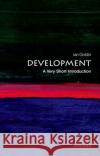
o How do nations escape poverty and achieve economic and social progress? Ian Goldin, a former vice-president of the World Bank, explains what development means in its broadest sense - encompassing education, health, and gender equality as well as economic growth. He discusses the shift from state-led strategies, to ones driven by market forces.
o How do nations escape poverty and achieve economic and social progress? Ian Goldin, a former vice-president of the World Bank, explains what develop...