William Olaf Stapledon is best remembered for the extraordinary works of speculative fiction he published between 1930 and 1950. As a novelist, he was known as the spokesman for the Age of Einstein and has influenced writers as diverse as Virginia Woolf, Arthur C. Clarke, and Doris Lessing. This biography is the first to draw on a vast body of unpublished and private documents - interviews, correspondence, archival material, and papers in private hands - to reveal fully the internal struggles that shaped Stapledon's life and reclaim for public attention a distinctive voice of the modern era....
William Olaf Stapledon is best remembered for the extraordinary works of speculative fiction he published between 1930 and 1950. As a novelist, he was...
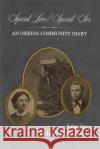
The Oneida Community was one of the more unusual utopian social experiments in 19th-century America. This volume reproduces the diary of a Community member written in 1876-7. It deals with love, aggression, jealousy and the conflict between private desire and public good.
The Oneida Community was one of the more unusual utopian social experiments in 19th-century America. This volume reproduces the diary of a Community m...
Interviews with 30 converts from the 1930s and 1940s are a component of Barry Chevanne's book, a look into the origins and practices of Rastafarianism. From the direct accounts of these early members, he is able to reconstruct pivotal episodes in Rastafarian history to offer a look into a subgroup of Jamaican society whose beliefs took root in the social unrest of the 1930s.
Interviews with 30 converts from the 1930s and 1940s are a component of Barry Chevanne's book, a look into the origins and practices of Rastafarianism...
Couched as sentimental romance and utopian fantasy, Jones and Merchant's work satirises 19th-century gender roles and discrimination against women, unveiling the absurdities of socially constructed femaleness and maleness.
Couched as sentimental romance and utopian fantasy, Jones and Merchant's work satirises 19th-century gender roles and discrimination against women, un...
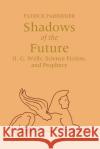
H.G. Wells - inventor of the concept of the time machine and the phrase the shape of things to come - described his life's work as one of critical anticipation. This book unravels the complex layers of meaning in The Time Machine, and shows how, throughout his life, he sought to exploit the potential of literary and cultural prophecy in new ways. Described by John Middleton Murry as the last prophet of bourgeois Europe, he was its first futurologist.
H.G. Wells - inventor of the concept of the time machine and the phrase the shape of things to come - described his life's work as one of critical ant...