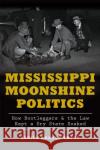
For most states, the repeal of prohibition meant a return to a state of legally drunken normalcy, but not so in Mississippi. The Magnolia State went dry over a decade before the nation, leaving bootleggers to establish political and financial holds they were unwilling to lose. For nearly sixty years, bootlegging flourished, and Mississippi became known as the "wettest dry state in the country." Law enforcement tried in vain to control crime that followed each empty bottle. Until statewide prohibition was finally repealed in 1966, illegal booze fueled a corrupt political machine that...
For most states, the repeal of prohibition meant a return to a state of legally drunken normalcy, but not so in Mississippi. The Magnolia State went d...
Timmy Overton of Austin and Jerry Ray James of Odessa were football stars who traded athletics for lives of crime. The original rebels without causes, nihilists with Cadillacs and Elvis hair, the Overton gang and their associates formed a ragtag white trash mafia that bedazzled Austin law enforcement for most of the 1960s. Tied into a loose network of crooked lawyers, pimps and used car dealers who became known as the traveling criminals, they burglarized banks and ran smuggling and prostitution rings all over Texas. Author Jesse Sublett presents a detailed account of these Austin miscreants,...
Timmy Overton of Austin and Jerry Ray James of Odessa were football stars who traded athletics for lives of crime. The original rebels without causes,...
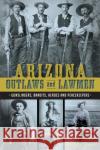
A refuge for outlaws at the close of the 1800s, the Arizona Territory was a wild, lawless land of greedy feuds, brutal killings and figures of enduring legend. These gunfighters included heroes as well as killers, and some were considered both. Bandit Pearl Hart committed one of the last recorded stagecoach robberies in the country, and James Addison Reavis pulled off the most extraordinary real estate scheme in the West. With fearless lawmen like C.P. Owens and George Ruffner at hand, swift justice was always nearby. In this collection, Arizona s official state historian and celebrated...
A refuge for outlaws at the close of the 1800s, the Arizona Territory was a wild, lawless land of greedy feuds, brutal killings and figures of endurin...
In April 1984, Foothill High freshman Tina Faelz took a shortcut on her walk home. About an hour later, she was found in a ditch, brutally stabbed to death. The murder shook the quiet East Bay suburb of Pleasanton and left investigators baffled. With no witnesses or leads, the case went cold and remained so for nearly thirty years. In 2011, the investigation finally got a break. Improved forensics recovered DNA from a drop of blood found at the scene matching Tina's classmate, Steven Carlson. Through dusty police files, personal interviews, letters and firsthand accounts, journalist Joshua...
In April 1984, Foothill High freshman Tina Faelz took a shortcut on her walk home. About an hour later, she was found in a ditch, brutally stabbed to ...
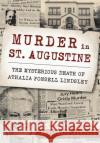
The murder of Athalia Ponsell Lindsley is notorious more than four decades after it occurred. The only eyewitness said a man attacked Lindsley with a machete in broad daylight on the front steps of her white mansion. Gossip swirled that neighbor Frances Bemis knew who killed Lindsley and would notify authorities. Bemis was later murdered on her nightly walk. Police arrested only one suspect for Lindsley's murder, which remains unsolved to this day. Author Elizabeth Randall puts the rumors to rest through research culled from over one thousand pages of depositions, records, official county...
The murder of Athalia Ponsell Lindsley is notorious more than four decades after it occurred. The only eyewitness said a man attacked Lindsley with a ...
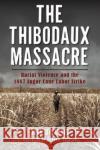
On November 23, 1887, white vigilantes gunned down unarmed black laborers and their families during a spree lasting more than two hours. The violence erupted due to strikes on Louisiana sugar cane plantations. Fear, rumor and white supremacist ideals clashed with an unprecedented labor action to create an epic tragedy. A future member of the U.S. House of Representatives was among the leaders of a mob that routed black men from houses and forced them to a stretch of railroad track, ordering them to run for their lives before gunning them down. According to a witness, the guns firing in the...
On November 23, 1887, white vigilantes gunned down unarmed black laborers and their families during a spree lasting more than two hours. The violence ...
Early Oklahoma was a haven for violent outlaws and a death trap for deputy U.S. marshals. The infamous Doolin gang's OK Hotel gunfight left five dead. Killers like Bible-quoting choir leader Deacon Jim Miller wreaked havoc. Gunslinger femme fatale Belle Starr specialized in horse theft. Wannabe outlaws like Al Jennings traded train robbing for politics and Hollywood films. And Elmer McCurdy's determination and inept skill earned him a carnival slot and the nickname "the Bandit Who Wouldn't Give Up." Historians Robert Barr Smith and Laurence J. Yadon dispel myths surrounding some of the most...
Early Oklahoma was a haven for violent outlaws and a death trap for deputy U.S. marshals. The infamous Doolin gang's OK Hotel gunfight left five dead....
In 1914, Poland, New York, was a picturesque slice of small-town America. But that innocence was shattered with the shocking murder of beloved schoolteacher Lida Beecher at the hands of her former student Jean Gianini. At twenty-one years old, Lida wasn't much older than her students. The son of a successful furniture dealer, Jean had all the advantages in life, but he had been labeled as different by all who encountered him. The shocking murder brought the world's best alienists to the packed Herkimer County Courthouse to try to prove that the teenager's mental development precluded his...
In 1914, Poland, New York, was a picturesque slice of small-town America. But that innocence was shattered with the shocking murder of beloved schoolt...
Detroit was full of stark contrasts in 1931. Political scandals, rumrunners and mobs lurked in the shadows of the city's soaring architecture and industrious population. As the Great Depression began to take hold, tensions grew, spilling over into the investigation of a mysterious murder at the boardinghouse of Hungarian immigrant Rose Veres. Amid accusations of witchcraft, Rose and her son Bill were convicted of the brutal killing and suspected in a dozen more. Their cries of innocence went unheeded--until one lawyer, determined to seek justice, took on the case. Author Karen Dybis follows...
Detroit was full of stark contrasts in 1931. Political scandals, rumrunners and mobs lurked in the shadows of the city's soaring architecture and indu...