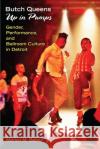
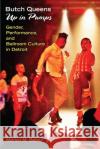
Butch Queens Up in Pumps examines Ballroom culture, in which inner-city LGBT individuals dress, dance, and vogue to compete for prizes and trophies. Participants are affiliated with a house, an alternative family structure typically named after haute couture designers and providing support to this diverse community. Marlon M. Bailey's rich first-person performance ethnography of the Ballroom scene in Detroit examines Ballroom as a queer cultural formation that upsets dominant notions of gender, sexuality, kinship, and community.
Butch Queens Up in Pumps examines Ballroom culture, in which inner-city LGBT individuals dress, dance, and vogue to compete for prizes and t...
Butch Queens Up in Pumps examines Ballroom culture, in which inner-city LGBT individuals dress, dance, and vogue to compete for prizes and trophies. Participants are affiliated with a house, an alternative family structure typically named after haute couture designers and providing support to this diverse community. Marlon M. Bailey's rich first-person performance ethnography of the Ballroom scene in Detroit examines Ballroom as a queer cultural formation that upsets dominant notions of gender, sexuality, kinship, and community.
Butch Queens Up in Pumps examines Ballroom culture, in which inner-city LGBT individuals dress, dance, and vogue to compete for prizes and t...
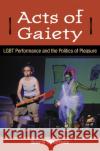
Against queer theory's long-suffering romance with mourning and melancholia and a national agenda that urges homosexuals to renounce pleasure if they want to be taken seriously, Acts of Gaiety seeks to reanimate notions of "gaiety" as a political value for LGBT activism by recovering earlier mirthful modes of political performance. The book mines the archives of lesbian-feminist activism of the 1960s-70s, highlighting the outrageous gaiety--including camp, kitsch, drag, guerrilla theater, zap actions, rallies, manifestos, pageants, and parades alongside "legitimate theater"-- at the...
Against queer theory's long-suffering romance with mourning and melancholia and a national agenda that urges homosexuals to renounce pleasure if they ...
The "villainous homosexual" has long stalked America's cultural imagination, most explicitly in the figure of the gay murderer, a character in dozens of plays. But as society's understanding of homosexuality has changed, so has the significance of these controversial characters, especially when employed by gay theater artists themselves to explore darker fears and desires. "Murder Most Queer" examines the shifting meanings of murderous gay characters in American theater over a century, showing how these representations wrestle with and ultimately subvert notions of gay villainy. "Murder...
The "villainous homosexual" has long stalked America's cultural imagination, most explicitly in the figure of the gay murderer, a character in dozens ...
Playwright, actor and director Charles Ludlam (1943-1987) helped to galvanize the Ridiculous style of theater in New York City starting in the 1960s. Decades after his death, his place in the chronicle of American theater has remained constant, but his influence has changed. Although his Ridiculous Theatrical Company shut its doors, the Ludlamesque Ridiculous has continued to thrive and remain a groundbreaking genre, maintaining its relevance and potency by metamorphosing along with changes in the LGBTQ community. Author Sean F. Edgecomb focuses on the neo-Ridiculous artists Charles...
Playwright, actor and director Charles Ludlam (1943-1987) helped to galvanize the Ridiculous style of theater in New York City starting in the 1960s. ...