Growing up in the interwar period in London, Rosalind Franklin was determined to become a scientist, defying her father's wishes. After World War II, Franklin worked at the French government's central chemical research laboratory, where she learned X-ray crystallography. This technique relies on a beam of X-rays that passes through a crystal and strikes photographic film, letting a trained reader to see a three-dimensional arrangement of atoms. Her training in this field led to opportunities to photograph DNA, which allowed researchers to study in depth this complex molecule and to come to...
Growing up in the interwar period in London, Rosalind Franklin was determined to become a scientist, defying her father's wishes. After World War II, ...
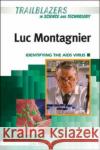
While studying retroviruses and cancers cells in the 1980s, researcher Luc Montagnier published a paper about the isolation of a virus from the immune system cells of a patient showing symptoms of what would soon be known as AIDS. That virus, HIV, was later proved to be related to AIDS, a disease that mystified doctors. Montagnier's work went unnoticed until Robert Gallo, an American scientist, published the same conclusions and sought to profit from kits to detect the virus. Montagnier sued, and the case, which went on for two decades, included the intervention of U.S. President Ronald...
While studying retroviruses and cancers cells in the 1980s, researcher Luc Montagnier published a paper about the isolation of a virus from the immune...
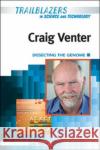
In the race to map the human genome, Craig Venter is credited with speeding up the discovery of the whole human genome by about five yearsuan incredible step forward for this type of research. Venter's whole-genome shotgun sequencing approach was cheaper, more accurate, and much faster than other mapping methods. Though his firm, Celera Genomics, shared credit with the rival Human Genome Project, Venter's method was undoubtedly the superior one and the catalyst for the record-breaking efforts. Personally, Venter has proved to be a passionate personality in the staid world of science, funding...
In the race to map the human genome, Craig Venter is credited with speeding up the discovery of the whole human genome by about five yearsuan incredib...
In the 20th century, the family name Leakey became synonymous with paleoanthropology and the search for human origins. Born to British missionaries in Kenya in the early 20th century, patriarch Louis S.B. Leakey explored East Africa and what is now Tanzania, finding skulls of human ancestors to fill in the evolutionary roadmap to modern man. Leakey worked alongside his wife, Mary, herself an experienced archaeologist and anthropologist at a time when women did not pursue science as a career. The Leakey Family outlines this fascinating family's struggles and accomplishments, including its...
In the 20th century, the family name Leakey became synonymous with paleoanthropology and the search for human origins. Born to British missionaries in...
Marie and Pierre Curie, their daughter IrYne Joliot-Curie, and her husband FrUdUric Joliot-Curie were one of science's most remarkable and influential families. Their painstaking research into the mysteries of radioactivity allowed scientists to reach a new understanding about the structure of atoms and opened a new field of medical treatment. The Curie Family: Exploring Radioactivity illustrates how the Curies' startling discoveries were major factors in the development of nuclear physics. This new branch of science would have profound implications for our understanding of matter and energy,...
Marie and Pierre Curie, their daughter IrYne Joliot-Curie, and her husband FrUdUric Joliot-Curie were one of science's most remarkable and influential...