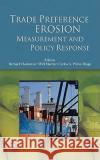
The multilateral trade system rests on the principle of nondiscrimination. Unilateral trade preferences granted by developed countries can help beneficiary countries but can create tensions between 'preferred' developing countries typically beneficiaries from pre-existing colonial regimes and other developing countries. There is also concern about the potential erosion of these preferences through trade liberalization in the importing countries, an issue that has been important in the current negotiations under the Doha Development Agenda of the World Trade Organization. 'Trade Preference...
The multilateral trade system rests on the principle of nondiscrimination. Unilateral trade preferences granted by developed countries can help benefi...
The prices of farm products are crucial determinants of the extent of poverty and inequality in the world. The vast majority of the world's poorest households depend to a considerable extent on farming for their incomes, while food represents a large component of the consumption of all poor households. For generations, food prices have been heavily distorted by government policies in high-income and developing countries. Many countries began to reform their agricultural price and trade policies in the 1980s, but government policy intervention is still considerable and still favors farmers in...
The prices of farm products are crucial determinants of the extent of poverty and inequality in the world. The vast majority of the world's poorest ho...
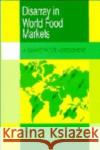
Why have agricultural policies become more inward-looking as the world becomes increasingly interdependent economically? Disarray in World Food Markets addresses the nature and causes of this crisis in international trade policy. Its analysis of the effects of these food policies is complemented by a quantitative review of the long term trends in world food markets. The study also extensively examines the reasons why governments choose to implement distortionary policies. These issues have been widely discussed, particularly because of the interest generated by the so-called Uruguay Round of...
Why have agricultural policies become more inward-looking as the world becomes increasingly interdependent economically? Disarray in World Food Market...
For the first time since World War II, global output will drop (-1.7%); per capita income will fall in more than 50 developing countries; net private capital flows will likely turn negative a more than $700 billion drop from the 2007 peak; and trade is expected to decline by 6.1% in 2009 the worst decline in 80 years. In response to this global downturn, a number of governments have passed stimulus packages and other measures that aim to preserve domestic industries and jobs, and sometimes discriminate against foreign producers (e.g. buy local laws). The most recent forecasts announce a...
For the first time since World War II, global output will drop (-1.7%); per capita income will fall in more than 50 developing countries; net private ...
The global financial crisis triggered a broad reassessment of economic integration policies in developed and developing countries worldwide. The crisis-induced collapse in trade was the sharpest ever since World War II, affecting all countries and all product categories. A huge shock to the trading system, combined with severe macroeconomic instability, makes it natural for policymakers to call into question the basic underlying assumptions of trade liberalization and openness. In particular, outward-oriented or export-led growth strategies are being reassessed as openness is increasingly...
The global financial crisis triggered a broad reassessment of economic integration policies in developed and developing countries worldwide. The crisi...
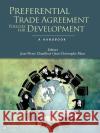
Economists have repeatedly warned against them, NGOs have fought them, and some governments have begrudgingly (at least in appearance) signed them. Yet, in the last twenty years the growth in number of preferential trade agreements (PTAs) has been unabated. Even more strikingly, their scope has broadened while their number was increasing. Deep integration provisions in PTAs have now become ubiquitous. Gaining market access or preserving existing preferences has remained an important motivation for acceding to PTAs. But with the liberalization of trade around the world and the related...
Economists have repeatedly warned against them, NGOs have fought them, and some governments have begrudgingly (at least in appearance) signed them. Ye...
The past two decades have seen exciting changes with developing countries emerging as exporters of services. Technological developments now make it easier to trade services across borders. But other avenues are being exploited: tourists visit not just to sightsee but also to be treated and educated, service providers move abroad under innovative new schemes, and some developing countries defy traditional notions by investing abroad in services. 'Exporting Services: A Developing Country Perspective' takes a brave approach, combining exploratory econometric analysis with detailed case studies...
The past two decades have seen exciting changes with developing countries emerging as exporters of services. Technological developments now make it ea...
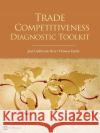
This toolkit provides a framework, guidelines, and practical tools for conducting an analysis of a country's trade competitiveness in terms of growth and share performance, diversification, and quality. It aims to facilitate the identification of the main constraints to improved trade competitiveness and the policy responses to overcome these constraints.
This toolkit provides a framework, guidelines, and practical tools for conducting an analysis of a country's trade competitiveness in terms of growth ...