It has long been assumed that people who prefer Led Zeppelin to Mozart live aesthetically impoverished lives. But why? In Listening to Popular Music, award-winning popular music scholar Theodore Gracyk argues that aesthetic value is just as important in popular listening as it is with "serious" music. And we don't have to treat popular music as art in order to recognize its worth. Aesthetic values are realized differently in different musical styles, and each requires listening skills that people must learn. Boldly merging insights from popular music studies, aesthetic theory,...
It has long been assumed that people who prefer Led Zeppelin to Mozart live aesthetically impoverished lives. But why? In Listening to Popular Musi...
"A variety of approaches are brought to bear on fascinating repertoire, but with the underlying aim of better understanding some brilliant music. There s nothing more exciting in music writing than something which entices you to listen to what s familiar to you in a new way, and this collection brings such excitement in abundance." ---Allan Moore, author of Jethro Tull: Aqualung and Rock: The Primary Text
"These essays bring together a remarkable range of tools and perspectives to such diverse topics and contexts as the behind-the-scenes collaborations of composers,...
"A variety of approaches are brought to bear on fascinating repertoire, but with the underlying aim of better understanding some brilliant music. T...
"Exceptionally illuminating and philosophically sophisticated." ---Ted Cohen, Professor of Philosophy, University of Chicago
"In this audacious and long-awaited book, Joel Rudinow takes seriously a range of interrelated issues that most music theorizing is embarrassed to tackle. People often ask me about music and spirituality. With Soul Music, I can finally recommend a book that offers genuine philosophical insight into the topic." ---Theodore Gracyk, Professor of Philosophy, Minnesota State University Moorhead
The idea is as strange as it is commonplace---that the...
"Exceptionally illuminating and philosophically sophisticated." ---Ted Cohen, Professor of Philosophy, University of Chicago
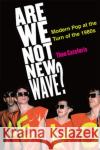
In Are We Not New Wave? Theo Cateforis provides the first musical and cultural history of the new wave movement, charting its rise out of mid-1970s punk to its ubiquitous early 1980s MTV presence and downfall in the mid-1980s. The book also explores the meanings behind the music's distinctive traits-its characteristic whiteness and nervousness; its playful irony, electronic melodies, and crossover experimentations. Cateforis traces new wave's modern sensibilities back to the space-age consumer culture of the late 1950s/early 1960s. Theo Cateforis is Assistant Professor of Music History and...
In Are We Not New Wave? Theo Cateforis provides the first musical and cultural history of the new wave movement, charting its rise out of mid-1970s pu...
Are We Not New Wave? is destined to become the definitive study of new wave music. Mark Spicer, coeditor of Sounding Out Pop
New wave emerged at the turn of the 1980s as a pop music movement cast in the image of punk rock s sneering demeanor, yet rendered more accessible and sophisticated. Artists such as the Cars, Devo, the Talking Heads, and the Human League leapt into the Top 40 with a novel sound that broke with the staid rock cliches of the 1970s and pointed the way to a more modern pop style.
In Are We Not New Wave? Theo Cateforis provides the...
Are We Not New Wave? is destined to become the definitive study of new wave music. Mark Spicer, coeditor of Sounding Out Pop
"In Albin J. Zak III's highly original study, phonograph records are not just the medium for disseminating songs but musical works unto themselves. Fashioned from a mix of copyright law, recording studios and techniques, the talent of musicians and disc jockeys, the ingenuity and avarice of producers, and the appetites of record buyers, the all-powerful marketplace Zak describes is an unruly zone where music of, by, and for the people is made and anointed." ---Richard Crawford, author of America's Musical Life: A History
"Wrestling clarity from the exuberant chaos of early...
"In Albin J. Zak III's highly original study, phonograph records are not just the medium for disseminating songs but musical works unto themselves....
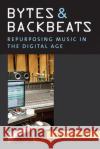
From Attali's "cold social silence" to Baudrillard's hallucinatory reality, reproduced music has long been the target of critical attack. In Bytes and Backbeats, however, Steve Savage deploys an innovative combination of designed recording projects, ethnographic studies of contemporary music practice, and critical analysis to challenge many of these traditional attitudes about the creation and reception of music. Savage adopts the notion of "repurposing" as central to understanding how every aspect of musical activity, from creation to reception, has been transformed, arguing that...
From Attali's "cold social silence" to Baudrillard's hallucinatory reality, reproduced music has long been the target of critical attack. In Byt...
Rhymin' and Stealin' begins with a crucial premise: the fundamental element of hip-hop culture and aesthetics is the overt use of preexisting material to new ends. Whether it is taking an old dance move for a breakdancing battle, using spray paint to create street art, quoting from a famous speech, or sampling a rapper or 1970s funk song, hip-hop aesthetics involve borrowing from the past. By appropriating and reappropriating these elements, they become transformed into something new, something different, something hip-hop. Rhymin' and Stealin' is the first book-length study...
Rhymin' and Stealin' begins with a crucial premise: the fundamental element of hip-hop culture and aesthetics is the overt use of preexistin...
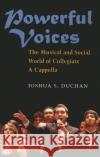
Collegiate a cappella, part of a long tradition of unaccompanied singing, is known to date back on American college campuses to at least the colonial era. Considered in the context of college glee clubs, barbershop quartets, early-twentieth-century vocal pop groups, doo-wop groups, and contemporary a cappella manifestations in pop music, collegiate a cappella is an extension of a very old tradition of close harmony singing---one that includes but also goes beyond the founding of the Yale Whiffenpoofs. Yet despite this important history, collegiate a cappella has until now never been the...
Collegiate a cappella, part of a long tradition of unaccompanied singing, is known to date back on American college campuses to at least the coloni...
Krautrock is a catch-all term for the music of various white German rock groups of the 1970s that blended influences of African American and Anglo-American music with the experimental and electronic music of European composers. Groups such as Can, Popol Vuh, Faust, and Tangerine Dream arose out of the German student movement of 1968 and connected leftist political activism with experimental rock music and, later, electronic sounds. Since the 1970s, American and British popular genres such as indie, post-rock, techno, and hip-hop have drawn heavily on krautrock, ironically reversing a...
Krautrock is a catch-all term for the music of various white German rock groups of the 1970s that blended influences of African American and An...