The nineteenth century represents a crucial historical and cultural phase in the development of modern Italy. Writing to Delight provides a selection of short stories written by some of the most accomplished and acclaimed female authors of nineteenth-century Italy, made available to an English-speaking audience for the first time through this translation. The stories that make up this anthology are written in a realistic vein and describe the life and concerns of women at a time when Italy was going through major social and economic changes. Imbued with didactic aims, the authors...
The nineteenth century represents a crucial historical and cultural phase in the development of modern Italy. Writing to Delight provides ...
The ugly woman is a surprisingly common figure in Italian poetry, one that has been frequently appropriated by male poetic imagination to depict moral, aesthetic, social, and racial boundaries. Mostly used between the thirteenth and seventeenth centuries - from the invectives of Rustico Filippi, Franco Sacchetti, and Burchiello, to the paradoxical praises of Francesco Berni, Niccolo Campani and Pietro Aretino, and further to the conceited encomia of Giambattista Marino and Marinisti - the portrayal of female unattractiveness was, argues Patrizia Bettella in The Ugly Woman, one way...
The ugly woman is a surprisingly common figure in Italian poetry, one that has been frequently appropriated by male poetic imagination to depict mo...
In Lodovico Dolce: Renaissance Man of Letters, Ronnie Terpening revives and reassesses the work of a minor but significant sixteenth-century humanist, said to have led a life 'both wretched and glorious.' Although Dolce (1510? - 1568) gained universal renown in his own century and was considered a cultivated scholar and writer, few today recognize his importance as one of the major transmitters of culture in Cinquecento Italy. This is the first comprehensive study in English of the literary works of Dolce. It integrates a critical rereading of his writings with a history of the...
In Lodovico Dolce: Renaissance Man of Letters, Ronnie Terpening revives and reassesses the work of a minor but significant sixteenth-centu...
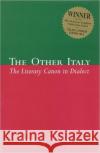
Italy possesses two literary canons, one in the Tuscan language and the other made up of the various dialects of its many regions. The Other Italy presents for the first time an overview of the principal authors and texts of Italy's literary canon in dialect. It highlights the cultivated dialect poetry, drama, and narrative prose since the codification of the Tuscan literary language in the early sixteenth century, when writing in dialect became a deliberate and conscious alternative to the official literary standard.
The book offers a panorama of the literary dialects of Italy over...
Italy possesses two literary canons, one in the Tuscan language and the other made up of the various dialects of its many regions. The Other Italy ...
Giovanni Boccaccio's Decameron is the best known and most read work in Italian literature next to Dante's Divine Comedy. In the tradition of Lectura Dantis, the practice of story-by-story critical readings of Dante's work, Elissa Weaver has collected essays from some of the most prominent American Boccaccio scholars to provide critical readings of the Decameron Proem, Introduction, and the ten stories that constitute the first of the ten 'days' of storytelling.
The first of the twelve essays opens the volume with a consideration of the Proem, demonstrating...
Giovanni Boccaccio's Decameron is the best known and most read work in Italian literature next to Dante's Divine Comedy. In the tradi...
Although there exist a number of studies on prison writing from various countries, Sentences is the first comprehensive examination of autobiographical prison literature from Italy. Klopp has assembled a gallery of fascinating portraits in this chronological survey of prison writings by more than three dozen Italian political figures and intellectuals - including Cellini, Casanova, Tasso, the Martyrs of Mantua, Enrichetta Caracciolo, Gramsci - all of whom were imprisoned for their political convictions. Drawing on prison writings from periods that include the Renaissance, the...
Although there exist a number of studies on prison writing from various countries, Sentences is the first comprehensive examination of autobiograph...
In an imaginary dialogue with his editor, Carlo Emilio Gadda wrote that 'the world is baroque', adding that as a writer he had simply 'perceived and depicted its baroqueness.' For Gadda the baroque was not a style but a reality. In Creative Entanglements Robert Dombroski critically examines the nature of that reality. A profound understanding of the Baroque's critical heritage, in areas as diverse as aesthetics, epistemology, politics, and psychoanalysis, informs this groundbreaking study of Gadda's narrative form. Through sustained readings of such thinkers as Leibnitz, Walter Benjamin,...
In an imaginary dialogue with his editor, Carlo Emilio Gadda wrote that 'the world is baroque', adding that as a writer he had simply 'perceived an...
A prominent and prolific Italian writer, Natalia Ginzburg (1916-1991) is known for her novels, plays, short stories, and essays. This collection brings together, for an English-speaking audience, a variety of critical perspectives on Ginzburg's work.
The essays, all by North American scholars, examine the author's entire production. The topics examined include Ginzburg's struggle to define herself as a woman, a writer, and an intellectual; her interpretation of the relationship between historical events and private lives; her reflections on the women's movement and the changing...
A prominent and prolific Italian writer, Natalia Ginzburg (1916-1991) is known for her novels, plays, short stories, and essays. This collection br...
Although Italo Calvino (1923-1985) is one of the most widely read and translated Italian novelists of the century, a comprehensive analytical work in English of his writings has been unavailable until now. In this new study Angela Jeannet offers a rich and vibrant critical portrait that integrates Calvino the creative writer with Calvino the critical thinker, two roles that the novelist himself saw as intimately connected. "Under the Radiant Sun and the Crescent Moon" examines the cultural and literary matrix of Calvino's complex fictional universe, focusing on his passion for storytelling...
Although Italo Calvino (1923-1985) is one of the most widely read and translated Italian novelists of the century, a comprehensive analytical work ...
In this book, Guy Raffa offers a fresh reading of Dante's major literary works - the Divine Comedy and the Vita nuova - that combines central tenets of incarnational theology and dialectical thought to illuminate the poet's renowned ability to 'have it both ways' on issues that conventionally elicit an 'either/or' response. Viewing Dante as a poet of revision, not conversion, Raffa challenges a dominant paradigm in Dante criticism and takes full account of the poet's unconventional approach to such conventional dichotomies as eros and spirituality, fame and humility, action and...
In this book, Guy Raffa offers a fresh reading of Dante's major literary works - the Divine Comedy and the Vita nuova - that combines central tenet...