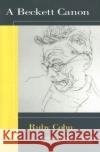
Samuel Beckett is unique in literature. Born and educated in Ireland, he lived most of his life in Paris. His literary output was rendered in either English or French, and he often translated one to the other, but there is disagreement about the contents of his bilingual corpus. A Beckett Canon by renowned theater scholar Ruby Cohn offers an invaluable guide to the entire corpus, commenting on Beckett's work in its original language. Beginning in 1929 with Beckett's earliest work, the book examines the variety of genres in which he worked: poems, short stories, novels, plays, radio...
Samuel Beckett is unique in literature. Born and educated in Ireland, he lived most of his life in Paris. His literary output was rendered in either E...
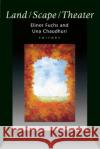
Land/Scape/Theater proposes landscape as a necessary paradigm for understanding modern theater's increasingly spatialized aesthetic as well as its engagement with the cultural meanings of place and space. Embracing subjects as diverse as the "landscape dramaturgy" of Suzan-Lori Parks, Artaud's trip to the Sierra Madre, Gertrude Stein's landscape theory and practice, Guillermo Gomez-Pena's "border subjects," and Bayreuth and Disneyland as cultic sites, Land/Scape/Theater draws on a broad range of theory, dramatic texts, and performance. All aspects of modern theater, these...
Land/Scape/Theater proposes landscape as a necessary paradigm for understanding modern theater's increasingly spatialized aesthetic as well as ...
From the earliest Puritan displays of piety and rectitude to the present-day epidemic of staged school massacres, the history of America has been characterized by a dual impulse: to cast public event and character as high drama, and to dismiss theater and theatricalization as un-American, even evil. This book rethinks American history as theater, and theater as the ethos and substance of American life, ironically repudiated at every turn by the culture it produces. Beginning with the writings of John Winthrop and others, through the Federalist and "romantic" stages of American cultural...
From the earliest Puritan displays of piety and rectitude to the present-day epidemic of staged school massacres, the history of America has been char...
Theater is, first and foremost, a visual art; Looking Into the Abyss examines the ways in which the visual theater affects our understanding of the dramatic event. Arnold Aronson, an internationally prominent historian and theorist of theater set design, opens with an overview of scenographic concepts, including postmodern design and the use of new media in the theater, and continues with analyses of the work of specific designers (including Richard Foreman and David Rockwell) and scenographic responses to playwrights like Chekhov and Tony Kushner. These essays serve to open a dialogue...
Theater is, first and foremost, a visual art; Looking Into the Abyss examines the ways in which the visual theater affects our understanding of the...