The first modern study of Nicholas of Lyra. A Franciscan teacher at the University of Paris, Nicholas (d. 1349) was an immensely important biblical commentator whose works influenced generations of scholars including Luther. Famed for his knowledge of Hebrew learning, as well as of the Latin Fathers, Nicholas was also highly conscious of interpretative method and of the Bible as literary artefact. In his massive Postillae, Nicholas commented on the entire Bible according to both literal and spiritual senses. This masterpiece is the basis for fifteen essays which cover major biblical...
The first modern study of Nicholas of Lyra. A Franciscan teacher at the University of Paris, Nicholas (d. 1349) was an immensely important biblical co...
The first part of this study on the famous chancellor of the Paris University, contains a chronological survey of Gerson's position in the development of the church-politics of his days. It is shown how he became a convinced adherent of a conciliar solution of the Western schism, without betraying the idea of the Church as hierarchical entity. In the second part his ecclesiological ideas are treated more systematically. Gerson's critical attitude towards canon lawyers and papal absolutism is examined, followed by an analysis of the background of his ideas about the Church as hierarchy and...
The first part of this study on the famous chancellor of the Paris University, contains a chronological survey of Gerson's position in the development...
This study deals with medieval views of the function of objets d'art in liturgy and the symbolism of church space. Its source is the Rationale divinorum officiorum, a liturgical handbook by Durandus of Mende (1230/1-1296) which was widely available in the Middle Ages. The first part treats the figurative hermeneutics of the Rationale and its premises in Augustine's doctrine of signs and in the symbolic universal system of Hugh of St. Victor. Its main section deals with the medieval system of rules for dealing with objects, particularly pictures, movable inventory and...
This study deals with medieval views of the function of objets d'art in liturgy and the symbolism of church space. Its source is the Rationa...
Chretien de Troyes's reference to Macrobius on the art of description is indicative of the link between the vernacular literary tradition of rewriting and the Latin tradition of imitation. Crucial to this study are writings that bridge the span between elementary school exercises in imitation and the masterpieces of the art in Latin and French. The book follows the development of the medieval art of imitation through Macrobius and commentaries on Horace's Art of Poetry and then applies it to the interpretation of works on the Trojan War, consent in love and marriage, and lyric and vernacular...
Chretien de Troyes's reference to Macrobius on the art of description is indicative of the link between the vernacular literary tradition of rewriting...
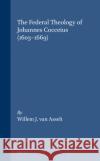
This volume deals with the Federal theology of Johannes Cocceius, who lived in the seventeenth century (1603-1669). German by birth, he taught at Bremen, Franeker and Leiden, where he was Professor of Theology (1650-1669). As foremost biblical interpreter he sought to formulate a Covenant theory which described all of human history by introducing the structure of consecutive covenants or foedera. The book poses a surprising alternative to the readings of earlier scholarship on Cocceius by its careful presentation of the pneumatological components of the doctrine of covenants. Cocceius'...
This volume deals with the Federal theology of Johannes Cocceius, who lived in the seventeenth century (1603-1669). German by birth, he taught at Brem...
This volume sheds light on the transitions in the intellectual life of Renaissance Florence in the last quarter of the fifteenth century. Its point of departure is a hitherto unedited Latin text, the Symbolum Nesianum, whose original version was written by Giovanni Nesi, a follower of the famous Platonist Marsilio Ficino and then of the austere, fiery reformer, Girolamo Savonarola. The first part of the book presents a lengthy introductory study that illuminates the text's cultural context. The second part offers a critical edition, translation, and commentary for the text. The book...
This volume sheds light on the transitions in the intellectual life of Renaissance Florence in the last quarter of the fifteenth century. Its point of...
The Vita Augustini of Possidius has long stood in the shadow of the Confessions, in comparison to which it was considered the unremarkable work of a mediocre author. Only in the last decade have scholars begun to appreciate its value as an historical and hagiographical text. The present study extends the lines of reappraisal by making the entire literary genre 'the episcopal biography' the subject of its investigation. It offers detailed analysis of the episcopal biography from late antiquity through the ninth century, together with its most important model, the hellenistic...
The Vita Augustini of Possidius has long stood in the shadow of the Confessions, in comparison to which it was considered the unremarkab...
What does it really mean, to know God? What are the grounds for knowing God, what feeds that knowledge, and what is really known? In his search for answers to these questions, in two panels the author paints for us a clear picture of what Calvin and Barth had to say about knowing God: Calvin against the background of pre-modern culture, Barth in response to a post-Kantian culture inclined to agnosticism. Between them, like a hinge between the two panels, we find the philosophy of Kant. The two epochal theological figures are placed next to each other, but without this being at the expense of...
What does it really mean, to know God? What are the grounds for knowing God, what feeds that knowledge, and what is really known? In his search for an...
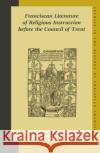
This book provides, for the first time, an exhaustive discussion of the Franciscan production of texts of religious instruction during the later medieval period (c. 1210-c. 1550). In eight chapters, it introduces the reader to the most important Franciscan sermon cycles, the Franciscan guidelines for living the life of evangelical perfection, the many Franciscan novice training manuals, the Franciscan catechisms and confession manuals, the Franciscan output of liturgical handbooks, the large number of Franciscan texts containing more wide-ranging forms of religious edification, and Franciscan...
This book provides, for the first time, an exhaustive discussion of the Franciscan production of texts of religious instruction during the later medie...
This book, newly revised and updated, examines the Eastern Church's theology of icons chiefly on the basis of the acta of the Seventh Ecumenical Council of 787. The political circumstances leading to the outbreak of the iconclast controversy in the eighth century are discussed in detail, but the main emphasis is on the theological arguments and assumptions of the council participants. Major themes include the nature of tradition, the relationship between image and reality, and the place of christology. Ultimately the argument over icons was about the accessibility of the divine. Icons were...
This book, newly revised and updated, examines the Eastern Church's theology of icons chiefly on the basis of the acta of the Seventh Ecumenical Counc...