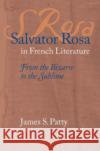
Salvator Rosa (1615--1673) was a colorful and controversial Italian painter, talented musician, a notable comic actor, a prolific correspondent, and a successful satirist and poet. His paintings, especially his rugged landscapes and their evocation of the sublime, appealed to Romantic writers, and his work was highly influential on several generations of European writers. James S. Patty analyzes Rosa's tremendous influence on French writers, chiefly those of the nineteenth century, such as Stendhal, Honore de Balzac, Victor Hugo, George Sand, and Theophile Gautier. Arranged in...
Salvator Rosa (1615--1673) was a colorful and controversial Italian painter, talented musician, a notable comic actor, a prolific correspondent, an...
"The evil that men do" has been chronicled for thousands of years on the European stage, and perhaps nowhere else is human fear of our own evil more detailed than in its personifications in theater. Early writers used theater to communicate human experiences and to display reverence for the gods governing daily life. Playwrights from Euripides onward sought inspiration from this interplay between the worldly and the occult, using human belief in the divine to govern characters' actions within a dramatic arena. The constant adherence to the supernatural, despite changing religious...
"The evil that men do" has been chronicled for thousands of years on the European stage, and perhaps nowhere else is human fear of our own evil mor...
In the long history of European prose, few works have been more influential and popular than Amadis of Gaul. It is a landmark work among the knight-errantry tales and probably derives from an oral tradition. Although its original author is unknown, it was likely written during the early fourteenth century, with the first known version of this work, dating from 1508, written in Spanish by Garci Ordonez (or Rodriguez) de Montalvo. An early bestseller of the age of printing, Amadis of Gaul was translated into dozens of languages and spawned sequels and imitators over the...
In the long history of European prose, few works have been more influential and popular than Amadis of Gaul. It is a landmark work among the...
The marriage of philosophy and fiction in the first third of Spain's twentieth century was a fertile one. It produced some truly notable offspring -- novels that cross genre boundaries to find innovative forms, and treatises that fuse literature and philosophy in new ways. In her illuminating interdisciplinary study of Spanish fiction of the "Silver Age," Roberta Johnson places this important body of Spanish literature in context through a synthesis of social, literary, and philosophical history.
Her examination of the work of Miguel de Unamuno, Pio Baroja, Azorin, Ramon Perez de...
The marriage of philosophy and fiction in the first third of Spain's twentieth century was a fertile one. It produced some truly notable offspring ...
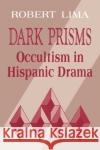
The mythological, folkloric, and religious beliefs of Western culture have resulted in a long and ongoing history of esoteric themes in theatre from the Middle Ages to the present in Spain and the America. Now Robert Lima, a noted comparatist, brings to bear on this material his wide knowledge of the world of the occult. Lima defines the terms "occult" and "occultism" broadly to embrace the many ways in which humans have sought to fathom a secret knowledge held to be accessible only through such supernatural agencies as alchemy, angelology, asceticism, astrology, demonolatry, divination,...
The mythological, folkloric, and religious beliefs of Western culture have resulted in a long and ongoing history of esoteric themes in theatre fro...